Psychologist · 1856 – 1939
Sigmund Freud
If you're interested in Sigmund Freud, these historical figures share a similar impact, discipline, philosophy, or era. Each recommendation explains why the connection exists.
Similar Impact & Significance

Friedrich Nietzsche
92Friedrich Nietzsche was a German philosopher whose radical critiques of morality, religion, and truth—including the proclamation that "God is dead" and the ideal of the Übermensch—made him one of the most influential and provocative thinkers of the modern era.
Why A philosopher whose insights into hidden drives anticipated Freud's view of the unconscious.

Charles Darwin
96Charles Darwin was an English naturalist whose theory of evolution by natural selection became the unifying foundation of modern biology and transformed humanity's understanding of life.
Why Darwin's evolutionary view of human nature shaped Freud's biological approach to the mind.

John Locke
93John Locke was an English philosopher and physician, widely regarded as the father of liberalism, whose theories of empiricism, natural rights, and government by consent shaped the Enlightenment and the founding of modern democracies.
Why Also a physician · Comparable historical impact

Florence Nightingale
86Florence Nightingale was an English social reformer and statistician, the founder of modern nursing, whose work in the Crimean War and pioneering use of data transformed hospital care and public health.
Why Worked in medicine · Comparable historical impact

Fyodor Mikhailovich Dostoevsky
91Fyodor Dostoevsky was a Russian novelist whose psychologically penetrating works, including Crime and Punishment and The Brothers Karamazov, probe faith, guilt, and freedom and helped shape modern existential thought.
Why Active in the same era · Comparable historical impact

Hildegard of Bingen
84Hildegard of Bingen was a German Benedictine abbess and one of the most remarkable polymaths of the Middle Ages — a visionary, composer, writer, healer and natural philosopher.
Why Worked in medicine · Comparable historical impact

Louis Pasteur
90Louis Pasteur was a French chemist and microbiologist whose work on germ theory, vaccination, and pasteurization revolutionized medicine and saved countless lives.
Why Worked in medicine · Comparable historical impact

Abraham Lincoln
92Abraham Lincoln was the 16th President of the United States, who led the nation through its Civil War, preserved the Union, and abolished slavery before his assassination in 1865.
Why Active in the same era · Comparable historical impact

Agatha Christie
81Agatha Christie was an English writer, the best-selling novelist of all time, whose ingenious detective stories featuring Hercule Poirot and Miss Marple made her the undisputed "Queen of Crime".
Why Active in the same era · Comparable historical impact

Alan Turing
91Alan Turing was an English mathematician and computer scientist who founded theoretical computer science, helped break the German Enigma cipher in World War II, and pioneered the study of artificial intelligence.
Why Active in the same era · Comparable historical impact

Aldous Huxley
80Aldous Huxley was an English writer and philosopher whose dystopian novel Brave New World became one of the most influential warnings of the 20th century, imagining a future enslaved not by terror but by pleasure and conditioning.
Why Active in the same era · Comparable historical impact

Alexander Pushkin
81Alexander Pushkin was a Russian poet, playwright and novelist, regarded as the founder of modern Russian literature, whose verse novel Eugene Onegin and other works shaped the language and the writers who followed him.
Why Active in the same era · Comparable historical impact

Alexander von Humboldt
81Alexander von Humboldt was a Prussian naturalist and explorer whose pioneering expeditions and best-selling books — including the vast Cosmos — founded modern geography and ecology and made him one of the most famous scientists and authors of his age.
Why Active in the same era · Comparable historical impact

Alexandre Dumas
81Alexandre Dumas was a French writer whose swashbuckling historical novels — The Three Musketeers and The Count of Monte Cristo — became some of the most popular and widely adapted stories in the world.
Why Active in the same era · Comparable historical impact

Anne Frank
81Anne Frank was a German-Dutch Jewish girl whose diary, written while hiding from the Nazis in occupied Amsterdam, became one of the most widely read accounts of the Holocaust and a lasting testament to humanity amid persecution.
Why Active in the same era · Comparable historical impact
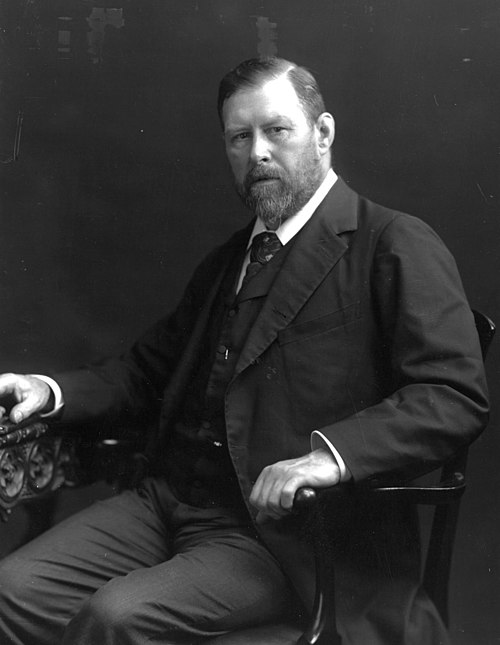
Bram Stoker
78Bram Stoker was an Irish writer and theatre manager whose 1897 Gothic novel Dracula created the modern vampire and became one of the most influential works of horror fiction ever written.
Why Active in the same era · Comparable historical impact

Carl Sagan
82Carl Sagan was an American astronomer and planetary scientist who became the world's most famous communicator of science, reaching millions through the television series Cosmos and best-selling books that made him a celebrated author as well as a researcher.
Why Active in the same era · Comparable historical impact

Charles Dickens
86Charles Dickens was an English novelist of the Victorian age, the most popular writer of his time and one of the greatest in the English language, whose vivid characters and social conscience defined the 19th-century novel.
Why Active in the same era · Comparable historical impact

Claude Monet
90Claude Monet was a French painter and the leading founder of Impressionism, whose studies of light and atmosphere — from Impression, Sunrise to the Water Lilies — revolutionized modern painting.
Why Active in the same era · Comparable historical impact
Same Field or Discipline

Averroes
87Averroes was a philosopher and polymath of Al-Andalus whose commentaries on Aristotle profoundly shaped medieval European philosophy and the relationship between reason and faith.
Why Also a physician · Worked in medicine

Avicenna
90Avicenna was a Persian polymath of the Islamic Golden Age, one of the greatest physicians and philosophers of the medieval world, whose Canon of Medicine was a standard text for six centuries.
Why Also a physician · Worked in medicine

Hippocrates
88Hippocrates was an ancient Greek physician regarded as the father of Western medicine, who established medicine as a rational discipline distinct from superstition and inspired the Hippocratic Oath.
Why Also a physician · Worked in medicine

Anton Chekhov
81Anton Chekhov was a Russian playwright and short-story writer — and a practising physician — widely regarded as among the greatest masters of both the short story and modern drama, whose plays like The Cherry Orchard transformed the theatre.
Why Also a physician · Active in the same era

Arthur Conan Doyle
81Arthur Conan Doyle was a British writer and physician who created Sherlock Holmes, the most famous detective in fiction, whose stories of brilliant deduction defined the detective genre and remain among the best-loved in the world.
Why Also a physician · Active in the same era