Theologian · 1483 – 1546
Martin Luther
If you're interested in Martin Luther, these historical figures share a similar impact, discipline, philosophy, or era. Each recommendation explains why the connection exists.
Similar Impact & Significance

Johannes Gutenberg
93Johannes Gutenberg was a German inventor and printer who introduced movable-type printing to Europe around 1440, an innovation that transformed the spread of knowledge and helped launch the modern world.
Why The inventor whose printing press allowed Luther's writings to spread across Europe with unprecedented speed.

Thomas Aquinas
91Thomas Aquinas was a medieval Italian theologian and philosopher whose synthesis of Christian theology and Aristotelian philosophy became central to Catholic thought and the high point of scholasticism.
Why The great medieval theologian whose scholastic synthesis Luther studied and ultimately challenged.

Augustine of Hippo
92Augustine of Hippo was a Roman North African theologian and philosopher whose works, including Confessions and City of God, shaped Western Christianity and laid intellectual foundations for medieval and modern thought.
Why An early Church father whose teaching on grace deeply shaped Luther's theology of salvation by faith.

Elizabeth I
89Elizabeth I was Queen of England from 1558 to 1603, whose long and stable reign — the Elizabethan era — saw a golden age of culture, the defeat of the Spanish Armada, and England's rise as a sea power.
Why A later Protestant monarch whose reign reflected the lasting divisions in Christianity that Luther's Reformation set in motion.

Hildegard of Bingen
84Hildegard of Bingen was a German Benedictine abbess and one of the most remarkable polymaths of the Middle Ages — a visionary, composer, writer, healer and natural philosopher.
Why Also a theologian & writer · Comparable historical impact

Agatha Christie
81Agatha Christie was an English writer, the best-selling novelist of all time, whose ingenious detective stories featuring Hercule Poirot and Miss Marple made her the undisputed "Queen of Crime".
Why Also a writer · Comparable historical impact

Alexander von Humboldt
81Alexander von Humboldt was a Prussian naturalist and explorer whose pioneering expeditions and best-selling books — including the vast Cosmos — founded modern geography and ecology and made him one of the most famous scientists and authors of his age.
Why Also a writer · Comparable historical impact

Alexandre Dumas
81Alexandre Dumas was a French writer whose swashbuckling historical novels — The Three Musketeers and The Count of Monte Cristo — became some of the most popular and widely adapted stories in the world.
Why Also a writer · Comparable historical impact

Anne Frank
81Anne Frank was a German-Dutch Jewish girl whose diary, written while hiding from the Nazis in occupied Amsterdam, became one of the most widely read accounts of the Holocaust and a lasting testament to humanity amid persecution.
Why Also a writer · Comparable historical impact

Anton Chekhov
81Anton Chekhov was a Russian playwright and short-story writer — and a practising physician — widely regarded as among the greatest masters of both the short story and modern drama, whose plays like The Cherry Orchard transformed the theatre.
Why Also a writer · Comparable historical impact

Arthur Conan Doyle
81Arthur Conan Doyle was a British writer and physician who created Sherlock Holmes, the most famous detective in fiction, whose stories of brilliant deduction defined the detective genre and remain among the best-loved in the world.
Why Also a writer · Comparable historical impact

Benjamin Franklin
90Benjamin Franklin was an American polymath — a founding father, scientist, inventor, writer and diplomat — whose work on electricity and statesmanship made him one of the most admired figures of the 18th century.
Why Also a writer · Comparable historical impact

Carl Linnaeus
81Carl Linnaeus was a Swedish naturalist whose book Systema Naturae established the modern system for naming and classifying living things, earning him the title "father of taxonomy" and making him one of the most influential scientific authors in history.
Why Also a writer · Comparable historical impact

Carl Sagan
82Carl Sagan was an American astronomer and planetary scientist who became the world's most famous communicator of science, reaching millions through the television series Cosmos and best-selling books that made him a celebrated author as well as a researcher.
Why Also a writer · Comparable historical impact

Charles Dickens
86Charles Dickens was an English novelist of the Victorian age, the most popular writer of his time and one of the greatest in the English language, whose vivid characters and social conscience defined the 19th-century novel.
Why Also a writer · Comparable historical impact

Cicero
88Cicero was a Roman statesman, orator and philosopher whose speeches and writings defined Latin prose, transmitted Greek philosophy to Rome, and championed the values of the Roman Republic.
Why Also a writer · Comparable historical impact

Dante Alighieri
93Dante Alighieri was an Italian poet of the late Middle Ages whose masterpiece, the Divine Comedy, is considered one of the greatest works of world literature and helped establish the Italian language.
Why Also a writer · Comparable historical impact

Edgar Allan Poe
81Edgar Allan Poe was an American writer and poet, a master of the macabre, who invented the detective story, helped shape the modern short story and science fiction, and gave the world haunting tales and poems such as "The Raven".
Why Also a writer · Comparable historical impact

Ernest Hemingway
82Ernest Hemingway was an American novelist and short-story writer whose spare, understated prose style revolutionized 20th-century fiction, winning the Nobel Prize in Literature for works such as The Old Man and the Sea.
Why Also a writer · Comparable historical impact

Florence Nightingale
86Florence Nightingale was an English social reformer and statistician, the founder of modern nursing, whose work in the Crimean War and pioneering use of data transformed hospital care and public health.
Why Also a reformer · Comparable historical impact
Same Field or Discipline

Erasmus
80Erasmus was a Dutch humanist, scholar and writer, the leading intellectual of the Northern Renaissance, whose satire In Praise of Folly and pioneering edition of the Greek New Testament shaped both literature and the coming Reformation.
Why Also a writer & theologian · Active in the same era

Miguel de Cervantes
91Miguel de Cervantes was a Spanish writer whose novel Don Quixote is widely regarded as the first modern novel and one of the greatest works in world literature.
Why Also a writer · Active in the same era

Niccolò Machiavelli
88Niccolò Machiavelli was a Renaissance Italian diplomat, political philosopher and writer whose treatise The Prince founded modern political science and gave his name to ruthless statecraft.
Why Also a writer · Active in the same era
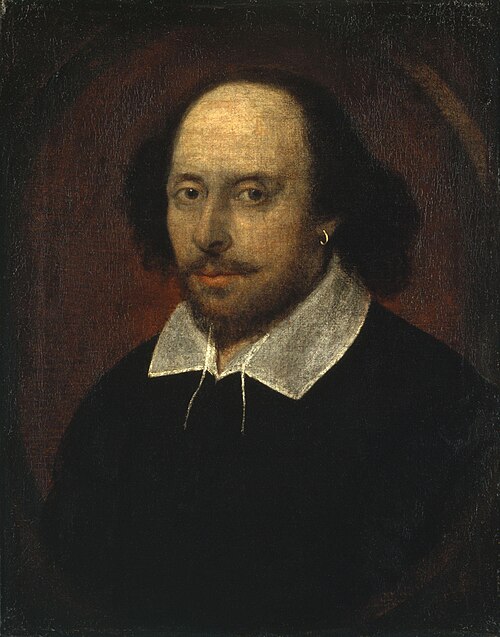
William Shakespeare
96William Shakespeare was an English playwright and poet widely regarded as the greatest writer in the English language and the world's preeminent dramatist.
Why Also a writer · Active in the same era