Activist · 1869 – 1948
Mahatma Gandhi
If you're interested in Mahatma Gandhi, these historical figures share a similar impact, discipline, philosophy, or era. Each recommendation explains why the connection exists.
Similar Impact & Significance

Siddhartha Gautama
97Siddhartha Gautama, known as the Buddha, was a spiritual teacher of ancient India whose insights into suffering and liberation founded Buddhism, now one of the world's major religions.
Why Gandhi's ethic of nonviolence (ahimsa) drew on ancient Indian traditions including Buddhism.

Nelson Mandela
92Nelson Mandela was a South African anti-apartheid revolutionary and statesman who, after 27 years in prison, became the country's first democratically elected president and a global symbol of reconciliation.
Why Mandela drew on Gandhi's example of mass resistance in the struggle against apartheid.

Ashoka the Great
90Ashoka was the third emperor of the Maurya Empire who, after a devastating war, embraced Buddhism and non-violence, becoming one of history's most remarkable rulers.
Why An ancient Indian ruler who, like Gandhi, embraced non-violence as a guiding principle.

Abraham Lincoln
92Abraham Lincoln was the 16th President of the United States, who led the nation through its Civil War, preserved the Union, and abolished slavery before his assassination in 1865.
Why A fellow champion of human dignity whose moral leadership reshaped a nation.

Confucius
97Confucius was a Chinese philosopher and teacher whose ideas on ethics, family and good government became the foundation of Confucianism and shaped East Asian civilization for over two thousand years.
Why Worked in ethics & political philosophy · Comparable historical impact

Albert Einstein
99Albert Einstein was a German-born theoretical physicist who developed the theory of relativity, one of the two pillars of modern physics, and won the 1921 Nobel Prize.
Why Active in the same era · Comparable historical impact

Aristotle
98Aristotle was a Greek philosopher and polymath whose writings on logic, ethics, biology, politics and metaphysics shaped Western thought for over two millennia.
Why Worked in ethics · Comparable historical impact

Cicero
88Cicero was a Roman statesman, orator and philosopher whose speeches and writings defined Latin prose, transmitted Greek philosophy to Rome, and championed the values of the Roman Republic.
Why Worked in political philosophy · Comparable historical impact

Claude Monet
90Claude Monet was a French painter and the leading founder of Impressionism, whose studies of light and atmosphere — from Impression, Sunrise to the Water Lilies — revolutionized modern painting.
Why Active in the same era · Comparable historical impact

Erwin Schrödinger
86Erwin Schrödinger was an Austrian physicist who formulated the wave equation governing quantum systems and devised the famous Schrödinger's cat thought experiment.
Why Active in the same era · Comparable historical impact

Frédéric Chopin
88Frédéric Chopin was a Polish-French Romantic composer and virtuoso pianist whose deeply expressive works for solo piano — nocturnes, études, polonaises and mazurkas — made him one of the most influential composers for the instrument.
Why Active in the same era · Comparable historical impact

Friedrich Nietzsche
92Friedrich Nietzsche was a German philosopher whose radical critiques of morality, religion, and truth—including the proclamation that "God is dead" and the ideal of the Übermensch—made him one of the most influential and provocative thinkers of the modern era.
Why Active in the same era · Comparable historical impact
Same Field or Discipline
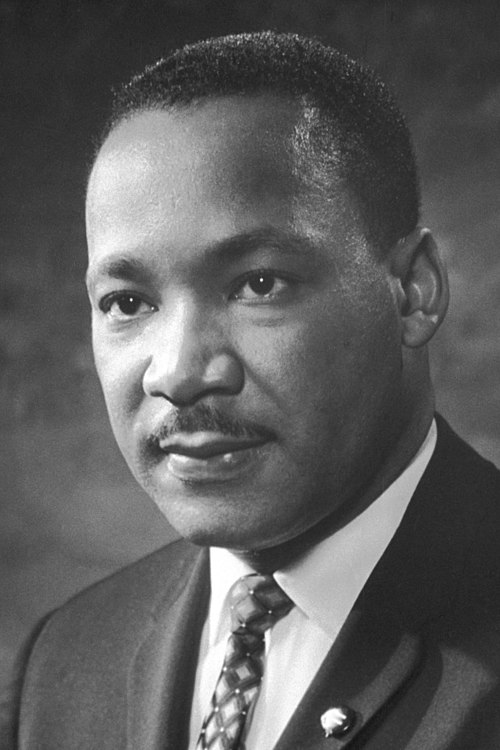
Martin Luther King Jr.
95Martin Luther King Jr. was an American Baptist minister and civil rights leader who championed nonviolent resistance to racial injustice and became the most prominent voice of the movement for equality in the United States.
Why Also a activist · Active in the same era

Frederick Douglass
84Frederick Douglass was an American abolitionist, orator and writer who escaped slavery to become the most powerful voice of the antislavery movement and one of the foremost advocates for equality and human rights in the 19th century.
Why Also a activist · Active in the same era

Harriet Tubman
83Harriet Tubman was an American abolitionist who escaped slavery and then risked her life repeatedly to lead dozens of enslaved people to freedom via the Underground Railroad, becoming one of the great heroes of the fight against slavery.
Why Also a activist · Active in the same era

Helen Keller
80Helen Keller was an American author, disability rights advocate and activist who, though deaf and blind from infancy, learned to communicate, graduated from college, and wrote books that inspired the world and advanced the cause of people with disabilities.
Why Also a activist · Active in the same era

Rosa Parks
82Rosa Parks was an American civil rights activist whose refusal to give up her bus seat to a white passenger in 1955 sparked the Montgomery Bus Boycott, a pivotal moment in the struggle against racial segregation.
Why Also a activist · Active in the same era

Maya Angelou
80Maya Angelou was an American writer, poet and civil rights activist whose autobiography I Know Why the Caged Bird Sings became a landmark of American literature, giving powerful voice to Black womanhood, trauma and resilience.
Why Also a activist · Active in the same era
Same Era or Civilization

Alan Turing
91Alan Turing was an English mathematician and computer scientist who founded theoretical computer science, helped break the German Enigma cipher in World War II, and pioneered the study of artificial intelligence.
Why Active in the same era · From the same civilization

Charles Dickens
86Charles Dickens was an English novelist of the Victorian age, the most popular writer of his time and one of the greatest in the English language, whose vivid characters and social conscience defined the 19th-century novel.
Why Active in the same era · From the same civilization

George Orwell
84George Orwell was an English writer and journalist whose novels Nineteen Eighty-Four and Animal Farm became the defining warnings against totalitarianism, giving the world terms such as "Big Brother", "doublethink" and "Orwellian".
Why Active in the same era · From the same civilization
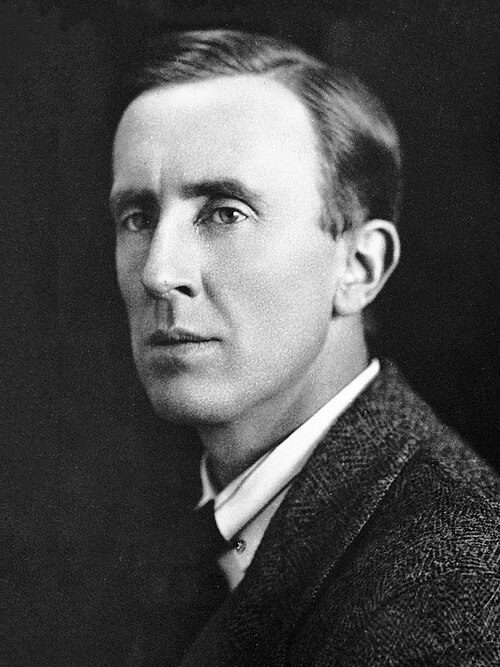
J. R. R. Tolkien
84J. R. R. Tolkien was an English writer and Oxford philologist whose novels The Hobbit and The Lord of the Rings created the modern genre of epic fantasy and built one of the most fully imagined fictional worlds ever conceived.
Why Active in the same era · From the same civilization

Stephen Hawking
87Stephen Hawking was a British theoretical physicist and cosmologist whose work on black holes and the origins of the universe, carried out despite a paralysing motor-neurone disease, made him the most famous scientist of his age.
Why Active in the same era · From the same civilization

Winston Churchill
90Winston Churchill was the British statesman who led the United Kingdom to victory in World War II — and a prolific historian and writer whose books and speeches won him the Nobel Prize in Literature, a rare honour for a man of action.
Why Active in the same era · From the same civilization