Philosopher · 551 BC – 479 BC
Confucius
Key Takeaways
- Confucius founded Confucianism, the ethical tradition that shaped East Asia for over two millennia.
- His teachings survive chiefly in the Analects, compiled by his disciples.
- He championed virtue, ritual propriety and respect for family and elders.
- His ideal of merit and education shaped China's imperial civil-service system.
Confucius is the most influential thinker in Chinese history. Living amid the disorder of the late Zhou dynasty, he became a wandering teacher convinced that society could be healed through personal virtue and proper conduct rather than force.
Teachings
At the core of Confucius’s thought stand ren — benevolence or humaneness — and li, the rituals and courtesies that bind people together. He taught that rulers should govern by moral example, and that the well-ordered family was the model for the well-ordered state. His ideas became the heart of Confucianism.
A teacher, not a writer
Like Socrates in Greece, Confucius wrote nothing himself; his words survive in The Analects, compiled by disciples. He held only minor offices and judged himself a political failure — never imagining that his teaching would outlast every dynasty.
Enduring influence
Confucian ideals of education, merit and moral government shaped the civil service of imperial China and the cultures of Korea, Japan and Vietnam. More than two thousand years later, he remains revered as China’s “First Teacher.”
Influence
Confucian ethics became the official ideology of imperial China and deeply shaped Korea, Japan and Vietnam, governing education, family life and administration into the modern era.
Legacy
Revered for millennia as China's 'First Teacher', Confucius remains one of the most influential thinkers in human history.
Major Works
- The Analects (compiled by disciples)
- Traditionally associated with editing the Five Classics
Controversies
- His emphasis on hierarchy and filial duty has been criticized as conservative and patriarchal.
Notable Quotes
“It does not matter how slowly you go as long as you do not stop.”
“Real knowledge is to know the extent of one's ignorance.”
Connections
Frequently Asked Questions
Who was Confucius?
Confucius (551–479 BC) was a Chinese philosopher and teacher whose ethical teachings founded Confucianism and shaped East Asian civilization for over two thousand years.
What did Confucius teach?
He taught an ethics of benevolence (ren), ritual propriety (li), filial piety and the cultivation of virtue as the basis of a harmonious society and good government.
What is the Analects?
The Analects is the collection of Confucius's sayings and conversations, compiled by his followers after his death and the central text of Confucianism.
Biography Books
- The Analects — Confucius (-450)beginner
The foundational collection of Confucius's teachings.
View on Amazon ↗
Citations & Sources
- Confucius — The Analects (Penguin Classics).
- Encyclopædia Britannica — 'Confucius'.
People Like Confucius

Laozi
93Laozi was a semi-legendary ancient Chinese philosopher traditionally regarded as the founder of Daoism and the author of the Tao Te Ching, the foundational text on living in harmony with the Dao.
Why Tradition holds the two great Chinese sages met and debated, representing rival visions of the good life.

Socrates
95Socrates was a classical Greek philosopher credited as a founder of Western philosophy, famous for the Socratic method of questioning and for his trial and execution in Athens.
Why Often called the East's counterpart to Socrates — a foundational moral teacher who left no writings of his own.
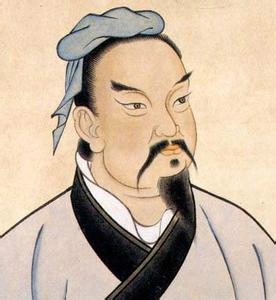
Sun Tzu
90Sun Tzu was an ancient Chinese general and strategist, traditionally the author of The Art of War, the most influential treatise on strategy ever written.
Why A near-contemporary of the Zhou era whose work shaped Chinese thought alongside Confucius.

Aristotle
98Aristotle was a Greek philosopher and polymath whose writings on logic, ethics, biology, politics and metaphysics shaped Western thought for over two millennia.
Why Also a philosopher · Worked in ethics

Immanuel Kant
94Immanuel Kant was a German philosopher of the Enlightenment, one of the most influential thinkers in history, who reconciled rationalism and empiricism and transformed ethics, metaphysics and epistemology.
Why Also a philosopher · Worked in ethics

Plato
96Plato was a Greek philosopher who founded the Academy in Athens, wrote the foundational dialogues of Western philosophy, and developed the influential theory of Forms.
Why Also a philosopher · Worked in ethics