Revolutionary · 1879 – 1940
Leon Trotsky
If you're interested in Leon Trotsky, these historical figures share a similar impact, discipline, philosophy, or era. Each recommendation explains why the connection exists.
Similar Impact & Significance

Vladimir Lenin
92Vladimir Lenin was the Marxist revolutionary who led the Bolshevik seizure of power in Russia in 1917, founded the Soviet Union, and created the first communist state — reshaping the course of the 20th century.
Why His revolutionary partner and leader, alongside whom he led the Bolshevik seizure of power.

Joseph Stalin
91Joseph Stalin was the Soviet dictator who industrialized the USSR, led it to victory in World War II, and built a vast empire in Eastern Europe — but also presided over a totalitarian state that killed millions through purges, gulags, and engineered famine.
Why His great rival who expelled him from the Soviet Union and eventually had him assassinated.

Karl Marx
95Karl Marx was a German philosopher, economist, and revolutionary whose theories of historical materialism and class struggle, set out in The Communist Manifesto and Das Kapital, became among the most influential and contested ideas in modern history.
Why The philosopher whose theory Trotsky expanded with his own doctrine of Permanent Revolution.

Hannibal Barca
91Hannibal Barca was a Carthaginian general regarded as one of the greatest military commanders in history, famed for crossing the Alps with war elephants to invade Italy during the Second Punic War.
Why Also a general · Comparable historical impact

Khalid ibn al-Walid
80Khalid ibn al-Walid was one of the greatest military commanders in history, the general whose undefeated campaigns won the early Islamic conquests of Arabia, Persia and the Roman Levant for the first caliphs.
Why Also a general · Comparable historical impact

Mao Zedong
90Mao Zedong was the founder of the People's Republic of China, who led the Chinese Communist Party to victory in the civil war, proclaimed the PRC in 1949, and then imposed radical revolutionary policies that caused tens of millions of deaths.
Why Active in the same era · Comparable historical impact

Mark Antony
80Mark Antony was a Roman general and statesman, a close ally of Julius Caesar who, after Caesar's assassination, ruled much of the Roman world and allied with Cleopatra, before his defeat by Octavian ended the Roman Republic for good.
Why Also a general · Comparable historical impact

Pompey
80Pompey the Great was a Roman general and statesman, one of the leading figures of the late Republic, whose conquests in the East made him Rome's greatest soldier before he was defeated by Julius Caesar in a civil war that ended the Republic.
Why Also a general · Comparable historical impact

Scipio Africanus
81Scipio Africanus was a Roman general who defeated Hannibal at the Battle of Zama to win the Second Punic War, one of the greatest commanders of antiquity and the savior of the Roman Republic in its darkest hour.
Why Also a general · Comparable historical impact
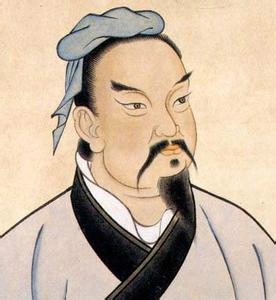
Sun Tzu
90Sun Tzu was an ancient Chinese general and strategist, traditionally the author of The Art of War, the most influential treatise on strategy ever written.
Why Also a general · Comparable historical impact

Thucydides
82Thucydides was an Athenian historian and general whose History of the Peloponnesian War set the standard for rigorous, evidence-based history and remains a foundational text of political and military analysis.
Why Also a general · Comparable historical impact

Fidel Castro
84Fidel Castro was the Cuban revolutionary leader who overthrew the Batista dictatorship in 1959 and then ruled Cuba as a communist state for nearly five decades, becoming the longest-serving non-royal head of government in the 20th century and a towering symbol of Cold War confrontation.
Why Active in the same era · Comparable historical impact
Same Field or Discipline
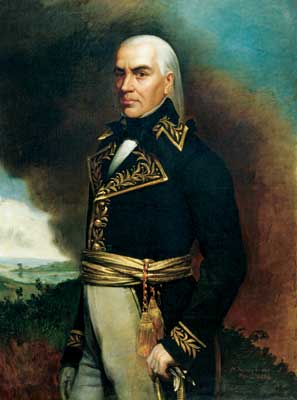
Francisco de Miranda
78Francisco de Miranda was the Venezuelan revolutionary who became the forerunner of Spanish American independence, fighting across three continents before returning home to lead Venezuela's first republic — a visionary who preceded Bolívar and inspired the liberation of Latin America.
Why Also a general & revolutionary · Active in the same era

Giuseppe Garibaldi
84Giuseppe Garibaldi was the Italian nationalist military leader who united southern Italy with the north through his bold expedition of the Thousand, becoming the military hero of Italian unification and one of the most celebrated revolutionary figures of the 19th century.
Why Also a general & revolutionary · Active in the same era

Toussaint Louverture
87Toussaint Louverture was the Haitian revolutionary leader who rose from slavery to lead the only successful slave revolt in history, defeating French, Spanish, and British armies to lay the foundations for Haiti's independence as the world's first Black republic.
Why Also a general & revolutionary · Active in the same era

Che Guevara
83Che Guevara was the Argentine Marxist revolutionary who helped Fidel Castro seize power in Cuba, theorized guerrilla warfare as the path to revolution in the developing world, and became an iconic symbol of rebellion after his execution in Bolivia in 1967.
Why Also a revolutionary · Active in the same era

Maximilien Robespierre
86Maximilien Robespierre was the French revolutionary leader who dominated the Committee of Public Safety during the Reign of Terror, using revolutionary justice to execute thousands including Louis XVI — before being overthrown and guillotined himself in Thermidor.
Why Also a revolutionary · Active in the same era
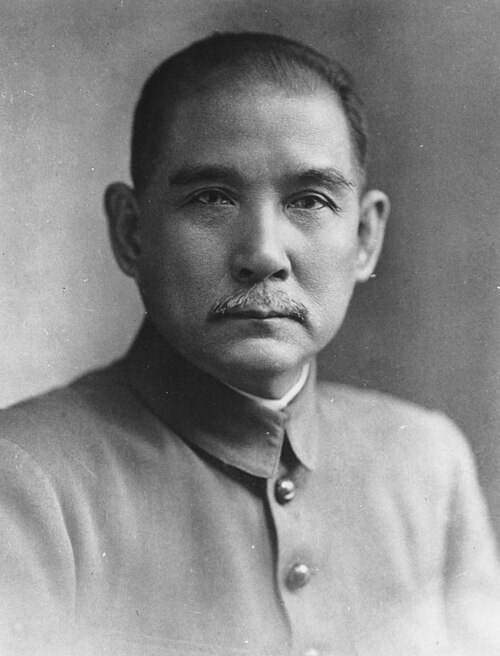
Sun Yat-sen
85Sun Yat-sen was the Chinese revolutionary and statesman who overthrew the Qing dynasty, founded the Republic of China, and became the founding father of both mainland China and Taiwan — revered by both Communists and Nationalists as the father of the Chinese nation.
Why Also a revolutionary · Active in the same era

Charles de Gaulle
89Charles de Gaulle was the French military and political leader who refused to accept France's defeat in 1940, led the Free French resistance from London, liberated Paris, and later founded the Fifth Republic as president, restoring French national pride and global standing.
Why Also a general · Active in the same era

Chiang Kai-shek
82Chiang Kai-shek was the Chinese Nationalist leader who unified China in the late 1920s, led the country through the Japanese invasion in World War II, but lost the Chinese Civil War to Mao Zedong and retreated to Taiwan, which he ruled until his death.
Why Also a general · Active in the same era
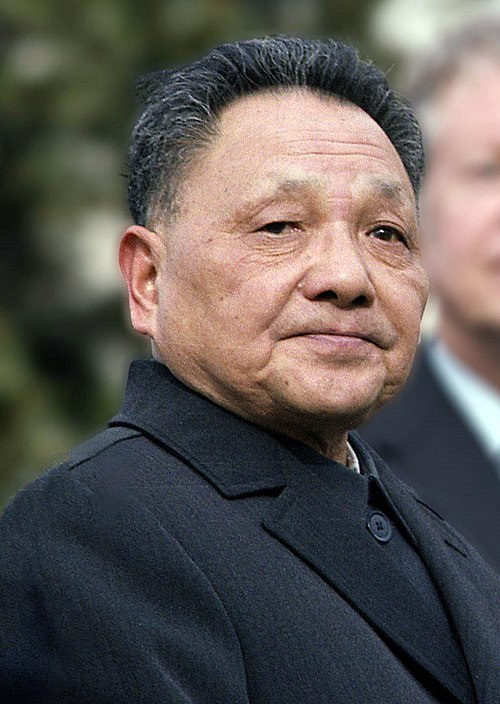
Deng Xiaoping
89Deng Xiaoping was the Chinese leader who reversed Mao Zedong's catastrophic policies after 1978, opening China to market reforms that transformed it from a poor agrarian country into the world's second-largest economy.
Why Also a revolutionary · Active in the same era

Duke of Wellington
87The Duke of Wellington was the British general who defeated Napoleon Bonaparte at the Battle of Waterloo in 1815, ending the Napoleonic Wars, and who subsequently served as Prime Minister of Britain — the only man to hold both the highest military and civilian offices in British history.
Why Also a general · Active in the same era

Mustafa Kemal Atatürk
91Mustafa Kemal Atatürk was the military commander who defeated the Allied partition of the Ottoman Empire after World War I, founded the Republic of Turkey in 1923, and then transformed it through sweeping secular modernization reforms that reshaped Turkish society.
Why Also a general · Active in the same era

Simón Bolívar
88Simón Bolívar was the South American general and statesman who liberated six nations from Spanish colonial rule, earning the title El Libertador and shaping the independence of Venezuela, Colombia, Ecuador, Peru, Panama, and Bolivia.
Why Also a general · Active in the same era