General · 1743 – 1803
Toussaint Louverture
Key Takeaways
- Toussaint led the only successful slave revolt in history.
- He defeated French, Spanish, and British armies in the Haitian Revolution.
- He was captured by Napoleon's treachery and died in a French prison.
- His revolution led to Haiti becoming the world's first Black republic in 1804.
Toussaint Louverture achieved something the world thought impossible: he led an army of former slaves to defeat the armies of three European empires. His revolution created the first Black republic in history — and demonstrated that the ideals of the Age of Revolution applied to everyone.
The revolution
In 1791 the enslaved people of French Saint-Domingue (modern Haiti) rose in revolt — the largest slave rebellion in American history. Toussaint, himself born into slavery, emerged as its greatest military leader. He fought with extraordinary skill and flexibility, at various times allying with Spain against France, then France against Britain, always pursuing the single goal of abolition and self-governance. He defeated a British expedition of 60,000 troops — Britain’s worst military defeat before the 20th century.
Captured and killed
Napoleon sent his brother-in-law General Leclerc with 30,000 troops to restore slavery. Leclerc couldn’t defeat Toussaint militarily, so he invited him to negotiate and had him arrested in violation of safe conduct — calling it “the crime of General Leclerc.” Toussaint was shipped to a cold French mountain fortress where he died of pneumonia in 1803. His last words were reportedly: “In overthrowing me, you have done no more than cut down the trunk of the tree of Black liberty. It will spring back from the roots, for they are numerous and deep.” Haiti declared independence the following year — and Simon Bolívar, inspired by Haiti, launched his own liberation campaign from its shores.
Led the Haitian Revolution's military campaigns, defeating three European powers, abolished slavery on Saint-Domingue, and created the political and military foundation for Haiti's independence in 1804.
Military Feats
- Led slave armies that defeated Spanish, French, and British imperial forces in succession.
- Created a disciplined revolutionary army from former slaves.
- Conquered the entire island of Hispaniola.
Political Achievements
- Abolished slavery on Saint-Domingue (1793).
- Governed the island and negotiated with European powers as an equal.
- Drafted a constitution for Saint-Domingue (1801).
Historical influence score: 87/100
Influence
Toussaint's Haitian Revolution was the most radical event of the Age of Revolution — the first and only successful slave revolt in history, which created the first Black republic and forced Napoleon to sell Louisiana to the United States.
Legacy
A foundational figure for Black liberation movements worldwide, his revolution inspired Frederick Douglass, Marcus Garvey, and the entire tradition of Black resistance — yet Haiti's foundational poverty means his victory came at an enormous ongoing price.
Little-Known Facts
- His capture by Napoleon's general Leclerc, who invited him to negotiate and then arrested him in violation of a safe-conduct pledge, is one of history's great acts of political treachery.
- Haiti's independence (1804) forced Napoleon to sell the Louisiana Territory to the United States — the largest land deal in American history, doubling the size of the young republic.
Myths & Misconceptions
Did Toussaint found Haiti?
He led the revolution but did not live to see independence — he died in a French prison in 1803. It was his successor Jean-Jacques Dessalines who declared Haitian independence on 1 January 1804.
Connections
Frequently Asked Questions
Who was Toussaint Louverture?
Toussaint Louverture (1743–1803) was the Haitian revolutionary who led the only successful slave revolt in history, defeating three European powers before being captured by Napoleon's treachery and dying in a French prison.
Citations & Sources
People Like Toussaint

Napoleon Bonaparte
94Napoleon Bonaparte was a French military and political leader who rose during the French Revolution, crowned himself Emperor, and dominated European affairs for over a decade.
Why His great enemy who ordered his capture by treachery and whose army was ultimately defeated in Haiti, ending French dreams of an American empire.

Simón Bolívar
88Simón Bolívar was the South American general and statesman who liberated six nations from Spanish colonial rule, earning the title El Libertador and shaping the independence of Venezuela, Colombia, Ecuador, Peru, Panama, and Bolivia.
Why A fellow liberator of the Americas who took inspiration from the Haitian Revolution for his own campaigns.
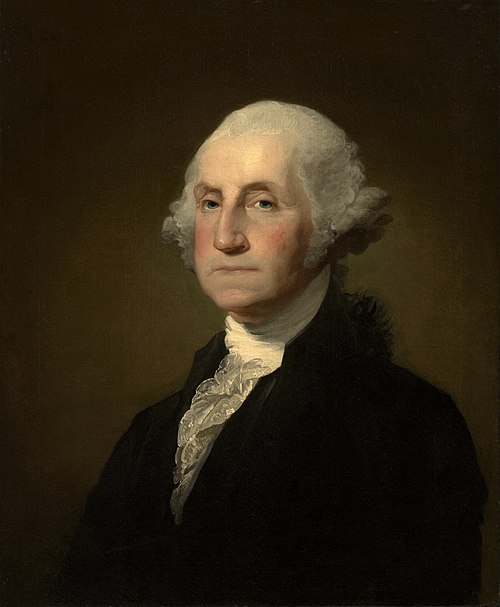
George Washington
91George Washington was the commander of the Continental Army in the American Revolution and the first President of the United States, whose leadership and restraint shaped the new republic.
Why A contemporary revolutionary leader whose American Revolution echoed and inspired the Haitian one.

Giuseppe Garibaldi
84Giuseppe Garibaldi was the Italian nationalist military leader who united southern Italy with the north through his bold expedition of the Thousand, becoming the military hero of Italian unification and one of the most celebrated revolutionary figures of the 19th century.
Why Also a general & revolutionary · Active in the same era
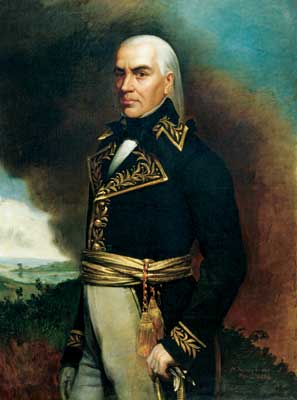
Francisco de Miranda
78Francisco de Miranda was the Venezuelan revolutionary who became the forerunner of Spanish American independence, fighting across three continents before returning home to lead Venezuela's first republic — a visionary who preceded Bolívar and inspired the liberation of Latin America.
Why Also a general & revolutionary · Active in the same era

Leon Trotsky
85Leon Trotsky was the Russian revolutionary who helped lead the October Revolution alongside Lenin, organized and commanded the Red Army through the Russian Civil War, and was later expelled by Stalin, becoming the most famous critic of Stalinist communism before his assassination in Mexico.
Why Also a revolutionary & general · Active in the same era