Explorer · 1728 – 1779
James Cook
If you're interested in James Cook, these historical figures share a similar impact, discipline, philosophy, or era. Each recommendation explains why the connection exists.
Similar Impact & Significance

Ferdinand Magellan
86Ferdinand Magellan was a Portuguese explorer who, in the service of Spain, led the first expedition to circumnavigate the globe, proving the world could be sailed around even though he died midway through the voyage.
Why An earlier navigator whose Pacific crossing opened the ocean that Cook would later chart in detail.

Christopher Columbus
85Christopher Columbus was an Italian explorer who, sailing for Spain in 1492, opened sustained European contact with the Americas — a voyage of immense and deeply controversial consequence.
Why A pioneering explorer of an earlier age whose ocean voyages Cook's expeditions extended into the Pacific.

Charles Darwin
96Charles Darwin was an English naturalist whose theory of evolution by natural selection became the unifying foundation of modern biology and transformed humanity's understanding of life.
Why A later naturalist whose own scientific voyage followed the tradition of exploration Cook helped establish.
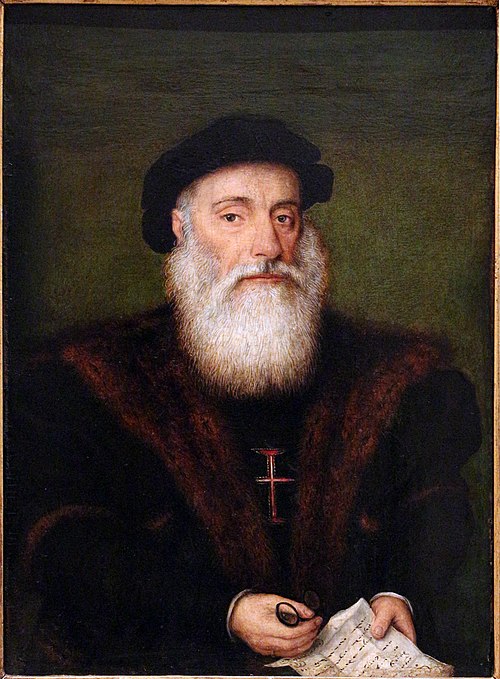
Vasco da Gama
82Vasco da Gama was a Portuguese explorer and navigator who opened the first sea route from Europe to India around the southern tip of Africa, transforming global trade.
Why A predecessor whose long sea route around Africa foreshadowed the scale of Cook's Pacific voyages.

Zheng He
83Zheng He was a Chinese admiral and explorer of the Ming dynasty who commanded vast treasure fleets on seven voyages across the Indian Ocean, reaching as far as Arabia and East Africa.
Why Also a explorer & navigator · Comparable historical impact

Alexander von Humboldt
81Alexander von Humboldt was a Prussian naturalist and explorer whose pioneering expeditions and best-selling books — including the vast Cosmos — founded modern geography and ecology and made him one of the most famous scientists and authors of his age.
Why Also a explorer · Comparable historical impact

Hernán Cortés
80Hernán Cortés was a Spanish conquistador who led the expedition that overthrew the Aztec Empire, bringing much of Mexico under Spanish rule and inaugurating centuries of colonial domination.
Why Also a explorer · Comparable historical impact
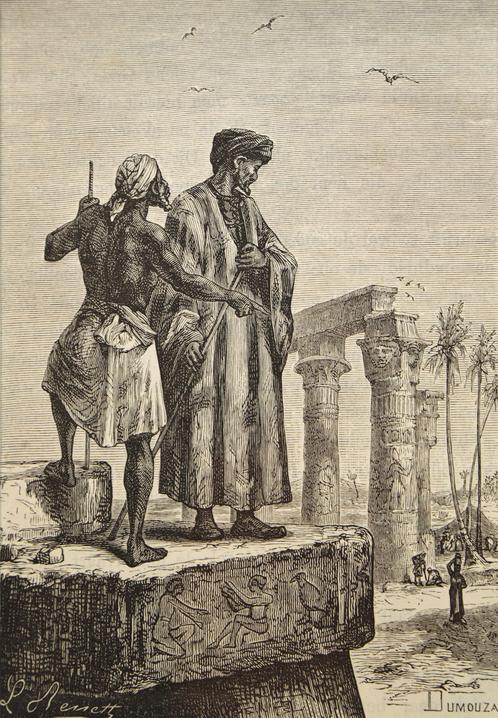
Ibn Battuta
78Ibn Battuta was a Moroccan scholar and traveller of the 14th century who journeyed some 75,000 miles across Africa, the Middle East, India, Central Asia, Southeast Asia and China — one of the greatest travellers of the pre-modern world.
Why Also a explorer · Comparable historical impact

Marco Polo
84Marco Polo was a Venetian merchant and explorer whose travels across Asia to the court of Kublai Khan, recorded in The Travels of Marco Polo, gave medieval Europe its most influential account of the East.
Why Also a explorer · Comparable historical impact

Ada Lovelace
84Ada Lovelace was an English mathematician widely regarded as the first computer programmer, who saw that Charles Babbage's Analytical Engine could go beyond calculation to manipulate symbols of any kind.
Why From the same civilization · Comparable historical impact

Adam Smith
90Adam Smith was a Scottish Enlightenment philosopher and economist, the father of modern economics, whose work The Wealth of Nations laid the foundations of free-market thought.
Why Active in the same era · Comparable historical impact

Agatha Christie
81Agatha Christie was an English writer, the best-selling novelist of all time, whose ingenious detective stories featuring Hercule Poirot and Miss Marple made her the undisputed "Queen of Crime".
Why From the same civilization · Comparable historical impact

Alan Turing
91Alan Turing was an English mathematician and computer scientist who founded theoretical computer science, helped break the German Enigma cipher in World War II, and pioneered the study of artificial intelligence.
Why From the same civilization · Comparable historical impact

Aldous Huxley
80Aldous Huxley was an English writer and philosopher whose dystopian novel Brave New World became one of the most influential warnings of the 20th century, imagining a future enslaved not by terror but by pleasure and conditioning.
Why From the same civilization · Comparable historical impact

Arthur Conan Doyle
81Arthur Conan Doyle was a British writer and physician who created Sherlock Holmes, the most famous detective in fiction, whose stories of brilliant deduction defined the detective genre and remain among the best-loved in the world.
Why From the same civilization · Comparable historical impact

Benjamin Franklin
90Benjamin Franklin was an American polymath — a founding father, scientist, inventor, writer and diplomat — whose work on electricity and statesmanship made him one of the most admired figures of the 18th century.
Why Active in the same era · Comparable historical impact
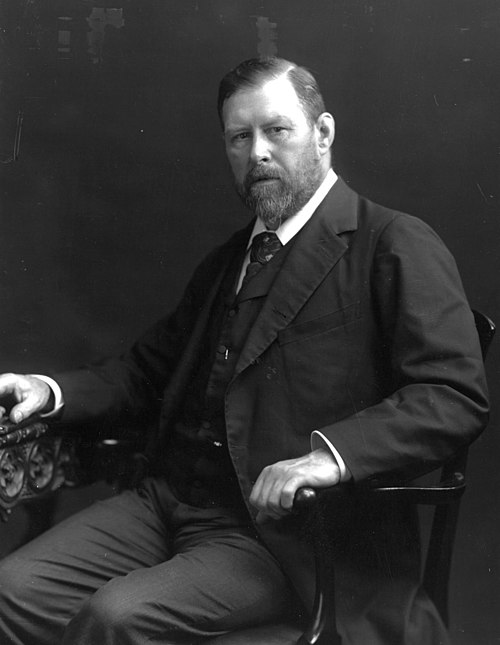
Bram Stoker
78Bram Stoker was an Irish writer and theatre manager whose 1897 Gothic novel Dracula created the modern vampire and became one of the most influential works of horror fiction ever written.
Why From the same civilization · Comparable historical impact

Carl Linnaeus
81Carl Linnaeus was a Swedish naturalist whose book Systema Naturae established the modern system for naming and classifying living things, earning him the title "father of taxonomy" and making him one of the most influential scientific authors in history.
Why Active in the same era · Comparable historical impact

Catherine II of Russia
87Catherine the Great was Empress of Russia for more than three decades, an enlightened despot who expanded the empire, modernized its administration, and made her court a brilliant centre of art and learning.
Why Active in the same era · Comparable historical impact

Charles Dickens
86Charles Dickens was an English novelist of the Victorian age, the most popular writer of his time and one of the greatest in the English language, whose vivid characters and social conscience defined the 19th-century novel.
Why From the same civilization · Comparable historical impact

Florence Nightingale
86Florence Nightingale was an English social reformer and statistician, the founder of modern nursing, whose work in the Crimean War and pioneering use of data transformed hospital care and public health.
Why From the same civilization · Comparable historical impact

Georg Wilhelm Friedrich Hegel
88Georg Wilhelm Friedrich Hegel was a German philosopher and the leading figure of German idealism, whose dialectical method and grand vision of history as the self-development of Spirit profoundly shaped modern philosophy.
Why Active in the same era · Comparable historical impact
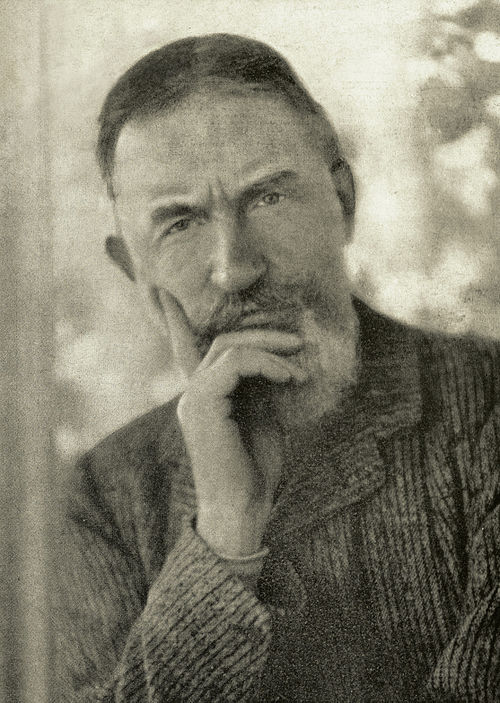
George Bernard Shaw
80George Bernard Shaw was an Irish playwright, critic and polemicist, the leading dramatist of his age after Shakespeare, whose witty, idea-driven plays such as Pygmalion won him the Nobel Prize in Literature and, uniquely, an Academy Award.
Why From the same civilization · Comparable historical impact
