Abolitionist · 1818 – 1895
Frederick Douglass
If you're interested in Frederick Douglass, these historical figures share a similar impact, discipline, philosophy, or era. Each recommendation explains why the connection exists.
Similar Impact & Significance

Harriet Tubman
83Harriet Tubman was an American abolitionist who escaped slavery and then risked her life repeatedly to lead dozens of enslaved people to freedom via the Underground Railroad, becoming one of the great heroes of the fight against slavery.
Why A fellow formerly enslaved abolitionist working for the same cause of freedom.

Abraham Lincoln
92Abraham Lincoln was the 16th President of the United States, who led the nation through its Civil War, preserved the Union, and abolished slavery before his assassination in 1865.
Why The president Douglass advised and pressed on emancipation and equal rights.
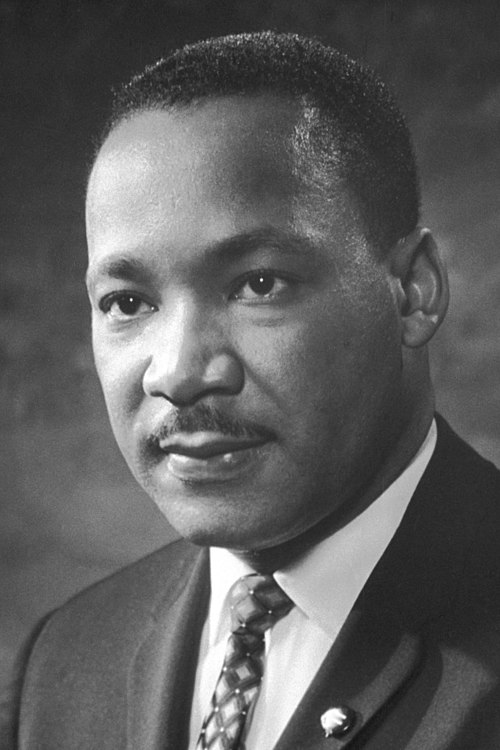
Martin Luther King Jr.
95Martin Luther King Jr. was an American Baptist minister and civil rights leader who championed nonviolent resistance to racial injustice and became the most prominent voice of the movement for equality in the United States.
Why A later leader who carried forward Douglass's struggle for racial equality.

Cicero
88Cicero was a Roman statesman, orator and philosopher whose speeches and writings defined Latin prose, transmitted Greek philosophy to Rome, and championed the values of the Roman Republic.
Why Also a orator & writer · Comparable historical impact
Same Field or Discipline

Maya Angelou
80Maya Angelou was an American writer, poet and civil rights activist whose autobiography I Know Why the Caged Bird Sings became a landmark of American literature, giving powerful voice to Black womanhood, trauma and resilience.
Why Also a writer & activist · Active in the same era

Rosa Parks
82Rosa Parks was an American civil rights activist whose refusal to give up her bus seat to a white passenger in 1955 sparked the Montgomery Bus Boycott, a pivotal moment in the struggle against racial segregation.
Why Also a activist · Active in the same era

Carl Sagan
82Carl Sagan was an American astronomer and planetary scientist who became the world's most famous communicator of science, reaching millions through the television series Cosmos and best-selling books that made him a celebrated author as well as a researcher.
Why Also a writer · Active in the same era

Edgar Allan Poe
81Edgar Allan Poe was an American writer and poet, a master of the macabre, who invented the detective story, helped shape the modern short story and science fiction, and gave the world haunting tales and poems such as "The Raven".
Why Also a writer · Active in the same era

Emily Dickinson
80Emily Dickinson was an American poet who lived in near-seclusion and published almost nothing in her lifetime, yet whose nearly 1,800 original, compressed poems made her, after her death, one of the most important poets in the English language.
Why Also a writer · Active in the same era

Ernest Hemingway
82Ernest Hemingway was an American novelist and short-story writer whose spare, understated prose style revolutionized 20th-century fiction, winning the Nobel Prize in Literature for works such as The Old Man and the Sea.
Why Also a writer · Active in the same era

F. Scott Fitzgerald
80F. Scott Fitzgerald was an American novelist and short-story writer, the great chronicler of the Jazz Age, whose novel The Great Gatsby is often called the quintessential American novel.
Why Also a writer · Active in the same era

Helen Keller
80Helen Keller was an American author, disability rights advocate and activist who, though deaf and blind from infancy, learned to communicate, graduated from college, and wrote books that inspired the world and advanced the cause of people with disabilities.
Why Also a activist · Active in the same era

Henry David Thoreau
80Henry David Thoreau was an American writer, naturalist and philosopher whose book Walden and essay "Civil Disobedience" became foundational texts of environmental thought and nonviolent resistance, influencing reformers around the world.
Why Also a writer · Active in the same era

Herman Melville
80Herman Melville was an American novelist and poet whose Moby-Dick, neglected in his lifetime, is now regarded as one of the greatest novels ever written and a towering achievement of American literature.
Why Also a writer · Active in the same era
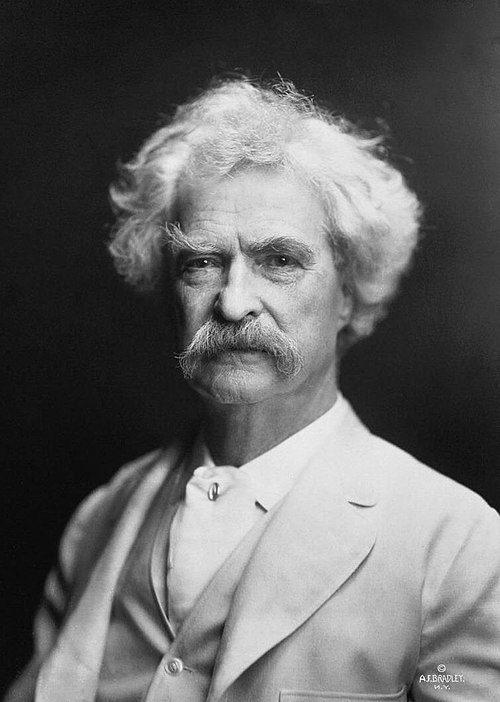
Mark Twain
84Mark Twain was an American writer and humorist, called the "father of American literature", whose novels The Adventures of Tom Sawyer and Adventures of Huckleberry Finn captured the voice of America and remain classics of world literature.
Why Also a writer · Active in the same era

Nathaniel Hawthorne
78Nathaniel Hawthorne was an American novelist and short-story writer whose dark, morally probing fiction — above all The Scarlet Letter — explored sin, guilt and hypocrisy in Puritan New England and helped found the American novel.
Why Also a writer · Active in the same era

Theodore Roosevelt
85Theodore Roosevelt was the 26th President of the United States, a soldier, conservationist and reformer — and a remarkably prolific author who wrote around forty books on history, nature, politics and exploration alongside his public career.
Why Also a writer · Active in the same era

Thomas Jefferson
88Thomas Jefferson was an American statesman, the principal author of the Declaration of Independence and third President of the United States, who was also a prolific writer, architect and scholar whose Notes on the State of Virginia was a landmark of early American letters.
Why Also a writer · Active in the same era

Toni Morrison
81Toni Morrison was an American novelist whose richly poetic explorations of Black American life — above all Beloved — won her the Pulitzer Prize and made her the first African American woman to receive the Nobel Prize in Literature.
Why Also a writer · Active in the same era

Walt Whitman
81Walt Whitman was an American poet whose collection Leaves of Grass broke from traditional verse to celebrate democracy, the body and the self in sweeping free verse, making him a founding father of modern American poetry.
Why Also a writer · Active in the same era

William Faulkner
80William Faulkner was an American novelist whose dense, experimental novels set in the fictional Yoknapatawpha County of the Deep South — including The Sound and the Fury — won him the Nobel Prize in Literature and made him one of the most influential writers of the 20th century.
Why Also a writer · Active in the same era

Nelson Mandela
92Nelson Mandela was a South African anti-apartheid revolutionary and statesman who, after 27 years in prison, became the country's first democratically elected president and a global symbol of reconciliation.
Why Also a activist · Active in the same era

Agatha Christie
81Agatha Christie was an English writer, the best-selling novelist of all time, whose ingenious detective stories featuring Hercule Poirot and Miss Marple made her the undisputed "Queen of Crime".
Why Also a writer · Active in the same era

Aldous Huxley
80Aldous Huxley was an English writer and philosopher whose dystopian novel Brave New World became one of the most influential warnings of the 20th century, imagining a future enslaved not by terror but by pleasure and conditioning.
Why Also a writer · Active in the same era