Painter · 1840 – 1926
Claude Monet
If you're interested in Claude Monet, these historical figures share a similar impact, discipline, philosophy, or era. Each recommendation explains why the connection exists.
Similar Impact & Significance
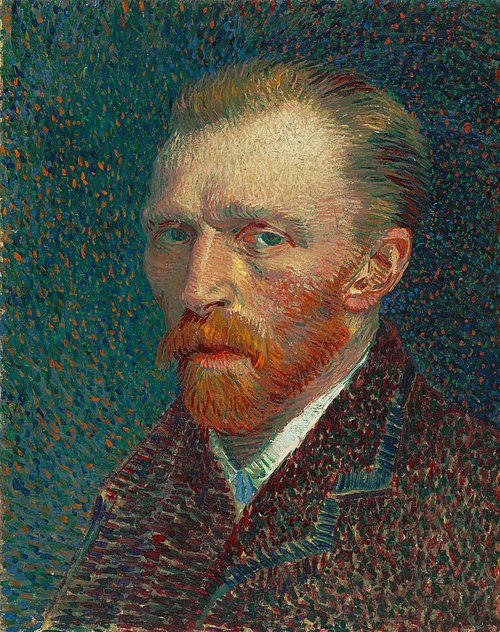
Vincent van Gogh
93Vincent van Gogh was a Dutch Post-Impressionist painter whose intense color, expressive brushwork, and emotional depth made him one of the most influential artists in Western history, though he found little recognition in his own lifetime.
Why A Post-Impressionist who built on the color and light experiments Monet pioneered.
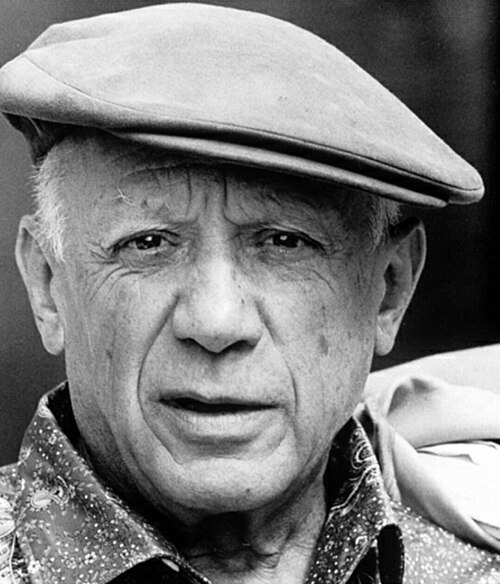
Pablo Picasso
94Pablo Picasso was a Spanish painter and sculptor who co-founded Cubism and ranks among the most influential and prolific artists of the twentieth century, creating works such as Guernica and Les Demoiselles d'Avignon.
Why A later modernist whose break from tradition followed the path Impressionism opened.
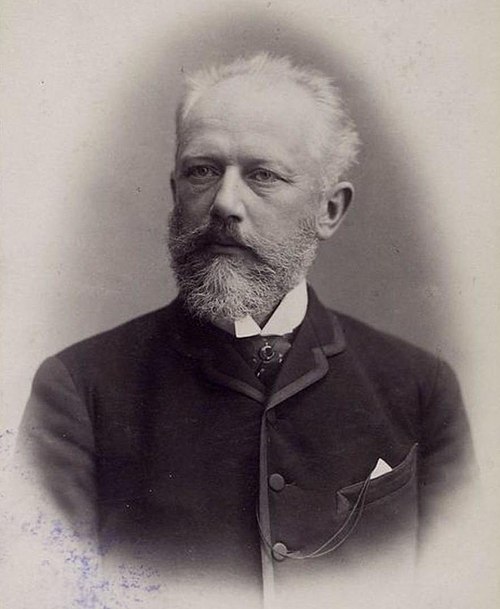
Pyotr Ilyich Tchaikovsky
89Pyotr Ilyich Tchaikovsky was a Russian Romantic composer whose richly emotional music — including the ballets Swan Lake and The Nutcracker and the 1812 Overture — made him one of the most popular and widely performed composers in the world.
Why A contemporary Romantic artist whose work, like Monet's, evoked mood and atmosphere.

Leonardo da Vinci
97Leonardo da Vinci was an Italian Renaissance polymath — painter, inventor, anatomist and engineer — whose curiosity and genius made him the archetype of the 'Renaissance man'.
Why An earlier master of light and observation against whose tradition Impressionism reacted.
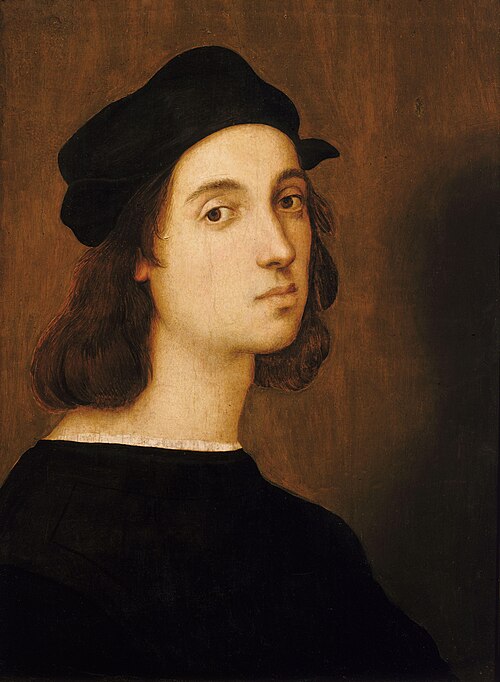
Raffaello Sanzio da Urbino
90Raphael was an Italian painter and architect of the High Renaissance whose works, prized for their harmony and grace, include The School of Athens and a famous series of serene Madonnas.
Why Also a painter & artist · Comparable historical impact

Rembrandt Harmenszoon van Rijn
91Rembrandt was a Dutch painter and etcher of the Golden Age, regarded as one of the greatest artists in history, celebrated for The Night Watch, his searching self-portraits, and his mastery of light and shadow.
Why Also a painter & artist · Comparable historical impact

Michelangelo
95Michelangelo was an Italian Renaissance sculptor, painter and architect, one of the greatest artists in history, creator of the David, the Pietà and the Sistine Chapel ceiling.
Why Also a artist & painter · Comparable historical impact

Alan Turing
91Alan Turing was an English mathematician and computer scientist who founded theoretical computer science, helped break the German Enigma cipher in World War II, and pioneered the study of artificial intelligence.
Why Active in the same era · Comparable historical impact

Albert Einstein
99Albert Einstein was a German-born theoretical physicist who developed the theory of relativity, one of the two pillars of modern physics, and won the 1921 Nobel Prize.
Why Active in the same era · Comparable historical impact

Erwin Schrödinger
86Erwin Schrödinger was an Austrian physicist who formulated the wave equation governing quantum systems and devised the famous Schrödinger's cat thought experiment.
Why Active in the same era · Comparable historical impact

Frédéric Chopin
88Frédéric Chopin was a Polish-French Romantic composer and virtuoso pianist whose deeply expressive works for solo piano — nocturnes, études, polonaises and mazurkas — made him one of the most influential composers for the instrument.
Why Active in the same era · Comparable historical impact

Friedrich Nietzsche
92Friedrich Nietzsche was a German philosopher whose radical critiques of morality, religion, and truth—including the proclamation that "God is dead" and the ideal of the Übermensch—made him one of the most influential and provocative thinkers of the modern era.
Why Active in the same era · Comparable historical impact

Mahatma Gandhi
93Mahatma Gandhi was the leader of India's independence movement, who pioneered the philosophy and practice of nonviolent civil disobedience and inspired movements for civil rights across the world.
Why Active in the same era · Comparable historical impact
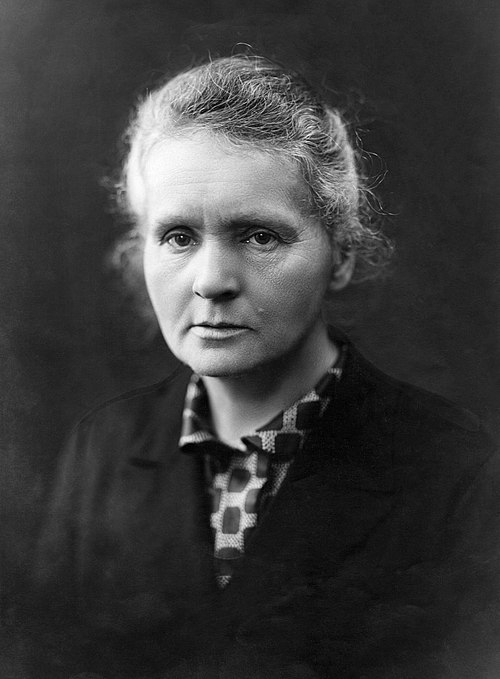
Marie Curie
92Marie Curie was a Polish-French physicist and chemist who pioneered research on radioactivity and became the first person to win Nobel Prizes in two different sciences.
Why Active in the same era · Comparable historical impact
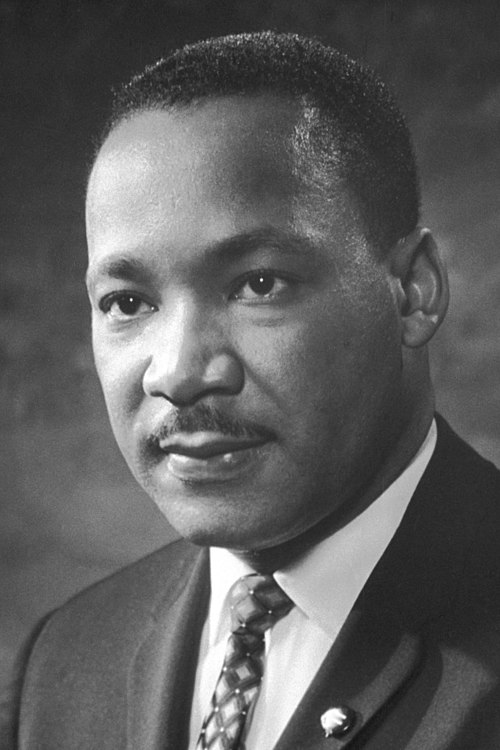
Martin Luther King Jr.
95Martin Luther King Jr. was an American Baptist minister and civil rights leader who championed nonviolent resistance to racial injustice and became the most prominent voice of the movement for equality in the United States.
Why Active in the same era · Comparable historical impact

Max Planck
89Max Planck was a German physicist who originated quantum theory by introducing the quantum of action, a discovery that launched modern physics and earned him the 1918 Nobel Prize.
Why Active in the same era · Comparable historical impact

Nelson Mandela
92Nelson Mandela was a South African anti-apartheid revolutionary and statesman who, after 27 years in prison, became the country's first democratically elected president and a global symbol of reconciliation.
Why Active in the same era · Comparable historical impact

Niels Bohr
90Niels Bohr was a Danish physicist who created the first quantum model of the atom and became a leading architect of quantum mechanics through the Copenhagen interpretation.
Why Active in the same era · Comparable historical impact

Nikola Tesla
90Nikola Tesla was a Serbian-American inventor and electrical engineer whose pioneering work on alternating current and electromagnetism helped electrify the modern world.
Why Active in the same era · Comparable historical impact

Rosalind Franklin
85Rosalind Franklin was an English chemist and X-ray crystallographer whose images of DNA were crucial to discovering its double-helix structure, a contribution long under-recognized.
Why Active in the same era · Comparable historical impact

Werner Heisenberg
87Werner Heisenberg was a German physicist who founded matrix mechanics and formulated the uncertainty principle, two of the cornerstones of quantum mechanics.
Why Active in the same era · Comparable historical impact

Abraham Lincoln
92Abraham Lincoln was the 16th President of the United States, who led the nation through its Civil War, preserved the Union, and abolished slavery before his assassination in 1865.
Why Active in the same era · Comparable historical impact

Agatha Christie
81Agatha Christie was an English writer, the best-selling novelist of all time, whose ingenious detective stories featuring Hercule Poirot and Miss Marple made her the undisputed "Queen of Crime".
Why Active in the same era · Comparable historical impact

Aldous Huxley
80Aldous Huxley was an English writer and philosopher whose dystopian novel Brave New World became one of the most influential warnings of the 20th century, imagining a future enslaved not by terror but by pleasure and conditioning.
Why Active in the same era · Comparable historical impact