Painter · 1483 – 1520
Raffaello Sanzio da Urbino
If you're interested in Raffaello Sanzio da Urbino, these historical figures share a similar impact, discipline, philosophy, or era. Each recommendation explains why the connection exists.
Similar Impact & Significance

Leonardo da Vinci
97Leonardo da Vinci was an Italian Renaissance polymath — painter, inventor, anatomist and engineer — whose curiosity and genius made him the archetype of the 'Renaissance man'.
Why An older master of the High Renaissance whose sfumato and composition Raphael studied and absorbed.

Michelangelo
95Michelangelo was an Italian Renaissance sculptor, painter and architect, one of the greatest artists in history, creator of the David, the Pietà and the Sistine Chapel ceiling.
Why His great rival in Rome, whose monumental figures influenced Raphael's later style.

Plato
96Plato was a Greek philosopher who founded the Academy in Athens, wrote the foundational dialogues of Western philosophy, and developed the influential theory of Forms.
Why Depicted at the very center of Raphael's School of Athens, beside Aristotle.

Aristotle
98Aristotle was a Greek philosopher and polymath whose writings on logic, ethics, biology, politics and metaphysics shaped Western thought for over two millennia.
Why Shown alongside Plato at the heart of The School of Athens as the embodiment of philosophy.

Claude Monet
90Claude Monet was a French painter and the leading founder of Impressionism, whose studies of light and atmosphere — from Impression, Sunrise to the Water Lilies — revolutionized modern painting.
Why Also a painter & artist · Comparable historical impact
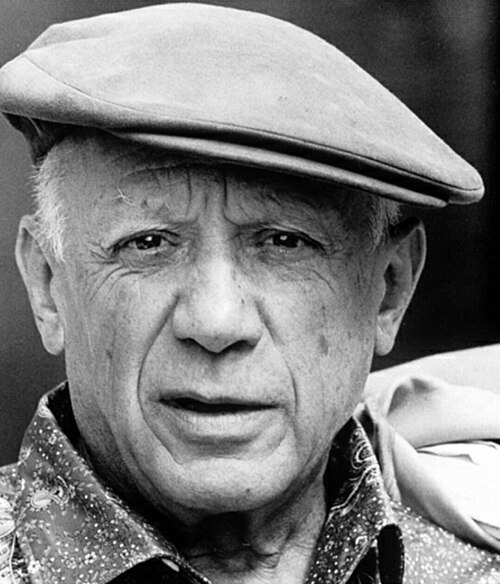
Pablo Picasso
94Pablo Picasso was a Spanish painter and sculptor who co-founded Cubism and ranks among the most influential and prolific artists of the twentieth century, creating works such as Guernica and Les Demoiselles d'Avignon.
Why Also a painter & artist · Comparable historical impact

Rembrandt Harmenszoon van Rijn
91Rembrandt was a Dutch painter and etcher of the Golden Age, regarded as one of the greatest artists in history, celebrated for The Night Watch, his searching self-portraits, and his mastery of light and shadow.
Why Also a painter & artist · Comparable historical impact
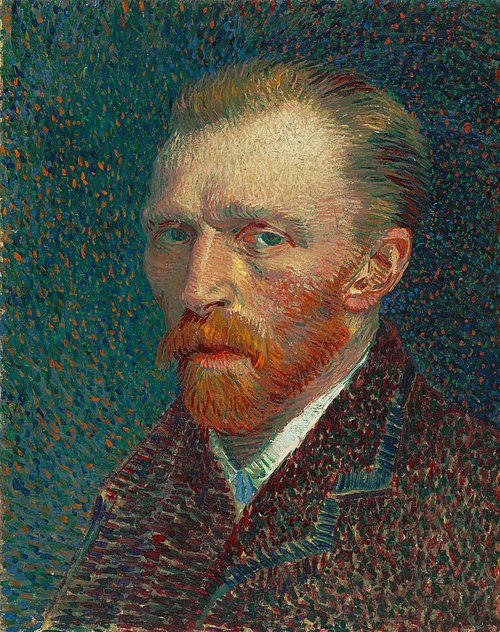
Vincent van Gogh
93Vincent van Gogh was a Dutch Post-Impressionist painter whose intense color, expressive brushwork, and emotional depth made him one of the most influential artists in Western history, though he found little recognition in his own lifetime.
Why Also a painter & artist · Comparable historical impact

Thomas Jefferson
88Thomas Jefferson was an American statesman, the principal author of the Declaration of Independence and third President of the United States, who was also a prolific writer, architect and scholar whose Notes on the State of Virginia was a landmark of early American letters.
Why Also a architect · Comparable historical impact

Abu'l-Fath Jalal-ud-din Muhammad Akbar
88Akbar was the third Mughal emperor, who expanded the empire across much of the Indian subcontinent and is remembered for his administrative reforms, religious tolerance and patronage of the arts during a long and powerful reign.
Why Active in the same era · Comparable historical impact

Elizabeth I
89Elizabeth I was Queen of England from 1558 to 1603, whose long and stable reign — the Elizabethan era — saw a golden age of culture, the defeat of the Spanish Armada, and England's rise as a sea power.
Why Active in the same era · Comparable historical impact

Erasmus
80Erasmus was a Dutch humanist, scholar and writer, the leading intellectual of the Northern Renaissance, whose satire In Praise of Folly and pioneering edition of the Greek New Testament shaped both literature and the coming Reformation.
Why Active in the same era · Comparable historical impact

Johannes Gutenberg
93Johannes Gutenberg was a German inventor and printer who introduced movable-type printing to Europe around 1440, an innovation that transformed the spread of knowledge and helped launch the modern world.
Why Active in the same era · Comparable historical impact
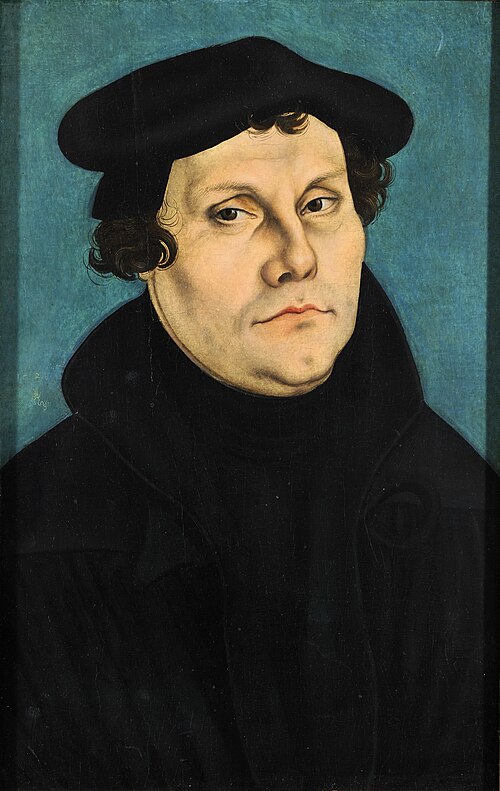
Martin Luther
91Martin Luther was a German theologian and reformer whose challenge to the Catholic Church sparked the Protestant Reformation and reshaped the religious, political and cultural landscape of Europe.
Why Active in the same era · Comparable historical impact

Miguel de Cervantes
91Miguel de Cervantes was a Spanish writer whose novel Don Quixote is widely regarded as the first modern novel and one of the greatest works in world literature.
Why Active in the same era · Comparable historical impact

Nicolaus Copernicus
93Nicolaus Copernicus was a Renaissance astronomer who formulated the heliocentric model placing the Sun, not the Earth, at the center of the universe — a revolution in human thought.
Why Active in the same era · Comparable historical impact
Suleiman I
90Suleiman the Magnificent was the longest-reigning sultan of the Ottoman Empire, who led it to the height of its power through military conquest, legal reform and a brilliant flowering of art and architecture.
Why Active in the same era · Comparable historical impact
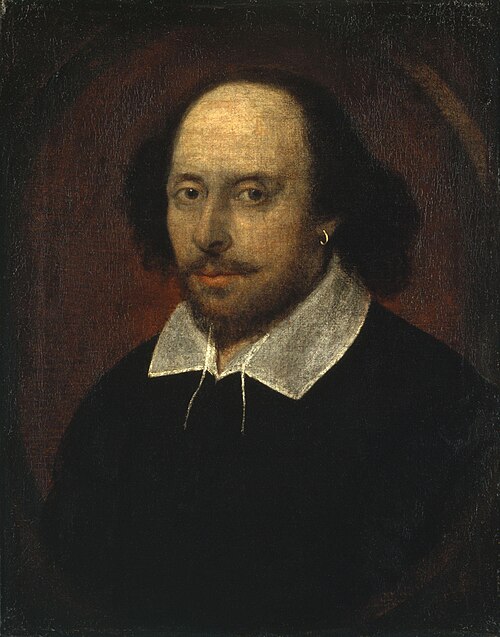
William Shakespeare
96William Shakespeare was an English playwright and poet widely regarded as the greatest writer in the English language and the world's preeminent dramatist.
Why Active in the same era · Comparable historical impact

Dante Alighieri
93Dante Alighieri was an Italian poet of the late Middle Ages whose masterpiece, the Divine Comedy, is considered one of the greatest works of world literature and helped establish the Italian language.
Why From the same civilization · Comparable historical impact

Galileo Galilei
95Galileo Galilei was an Italian astronomer, physicist and engineer, the "father of modern science", whose telescopic discoveries and championing of heliocentrism transformed our understanding of the cosmos.
Why Active in the same era · Comparable historical impact

Michel de Montaigne
80Michel de Montaigne was a French Renaissance thinker and nobleman who invented the essay as a literary form, using candid self-examination to explore the human condition with unmatched honesty and wit.
Why Active in the same era · Comparable historical impact

Abraham Lincoln
92Abraham Lincoln was the 16th President of the United States, who led the nation through its Civil War, preserved the Union, and abolished slavery before his assassination in 1865.
Why Comparable historical impact

Ada Lovelace
84Ada Lovelace was an English mathematician widely regarded as the first computer programmer, who saw that Charles Babbage's Analytical Engine could go beyond calculation to manipulate symbols of any kind.
Why Comparable historical impact
