Historian · 460 BC – 400 BC
Thucydides
If you're interested in Thucydides, these historical figures share a similar impact, discipline, philosophy, or era. Each recommendation explains why the connection exists.
Similar Impact & Significance
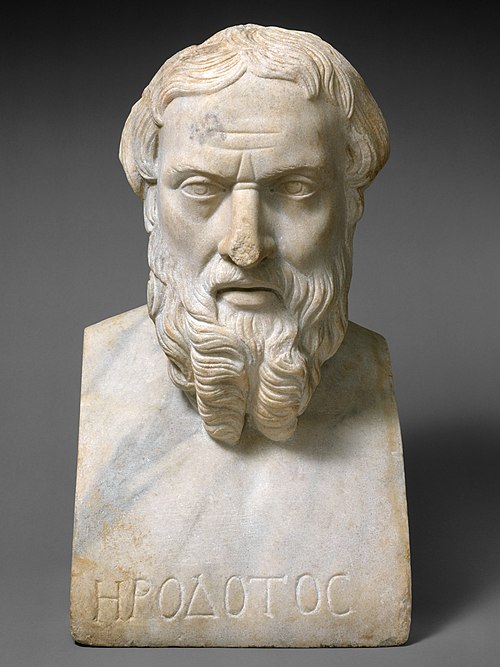
Herodotus
83Herodotus was a Greek writer of the 5th century BC, called the "Father of History" for his Histories, the first known work to systematically investigate and narrate past events as a connected inquiry.
Why The older 'Father of History' whose work Thucydides refined into rigorous method.

Socrates
95Socrates was a classical Greek philosopher credited as a founder of Western philosophy, famous for the Socratic method of questioning and for his trial and execution in Athens.
Why A contemporary Athenian whose city and era Thucydides chronicled.

Plutarch
80Plutarch was a Greek philosopher and biographer of the Roman era whose Parallel Lives paired famous Greeks and Romans and became one of the most read and influential works of biography in history.
Why A later Greek writer who also recorded the deeds of statesmen and generals.

Winston Churchill
90Winston Churchill was the British statesman who led the United Kingdom to victory in World War II — and a prolific historian and writer whose books and speeches won him the Nobel Prize in Literature, a rare honour for a man of action.
Why Also a writer & historian · Comparable historical impact
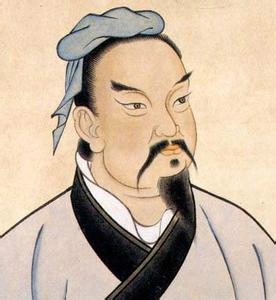
Sun Tzu
90Sun Tzu was an ancient Chinese general and strategist, traditionally the author of The Art of War, the most influential treatise on strategy ever written.
Why Also a general & writer · Comparable historical impact

Cicero
88Cicero was a Roman statesman, orator and philosopher whose speeches and writings defined Latin prose, transmitted Greek philosophy to Rome, and championed the values of the Roman Republic.
Why Also a writer · Comparable historical impact

Georg Wilhelm Friedrich Hegel
88Georg Wilhelm Friedrich Hegel was a German philosopher and the leading figure of German idealism, whose dialectical method and grand vision of history as the self-development of Spirit profoundly shaped modern philosophy.
Why Also a writer · Comparable historical impact

George Orwell
84George Orwell was an English writer and journalist whose novels Nineteen Eighty-Four and Animal Farm became the defining warnings against totalitarianism, giving the world terms such as "Big Brother", "doublethink" and "Orwellian".
Why Also a writer · Comparable historical impact

Ibn Khaldun
80Ibn Khaldun was a North African scholar of the 14th century widely regarded as a founder of historiography, sociology and economics, whose Muqaddimah pioneered the analytical study of how societies rise and fall.
Why Also a historian · Comparable historical impact

Niccolò Machiavelli
88Niccolò Machiavelli was a Renaissance Italian diplomat, political philosopher and writer whose treatise The Prince founded modern political science and gave his name to ruthless statecraft.
Why Also a writer · Comparable historical impact

Theodore Roosevelt
85Theodore Roosevelt was the 26th President of the United States, a soldier, conservationist and reformer — and a remarkably prolific author who wrote around forty books on history, nature, politics and exploration alongside his public career.
Why Also a writer · Comparable historical impact

Thomas Jefferson
88Thomas Jefferson was an American statesman, the principal author of the Declaration of Independence and third President of the United States, who was also a prolific writer, architect and scholar whose Notes on the State of Virginia was a landmark of early American letters.
Why Also a writer · Comparable historical impact
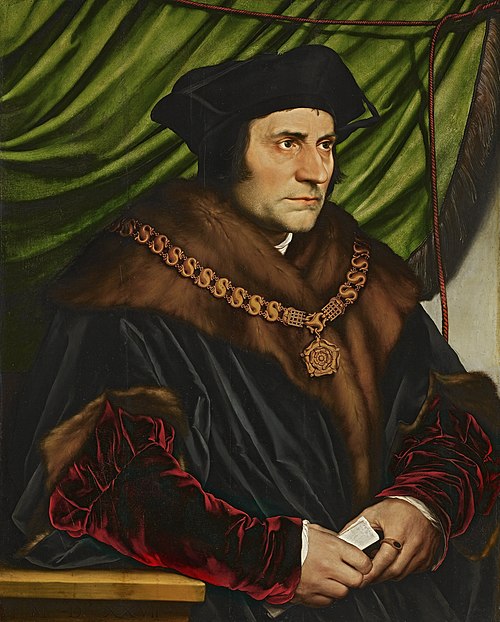
Thomas More
79Thomas More was an English statesman, lawyer and Renaissance humanist who served as Lord Chancellor and coined the word "utopia" in his book of that name — and who was executed for refusing to accept King Henry VIII's break with Rome.
Why Also a writer · Comparable historical impact
Same Field or Discipline

Euripides
79Euripides was one of the three great tragedians of classical Athens, whose psychologically searching, often unsettling plays such as Medea and The Bacchae made him the most modern-feeling dramatist of the ancient world.
Why Also a writer · Active in the same era
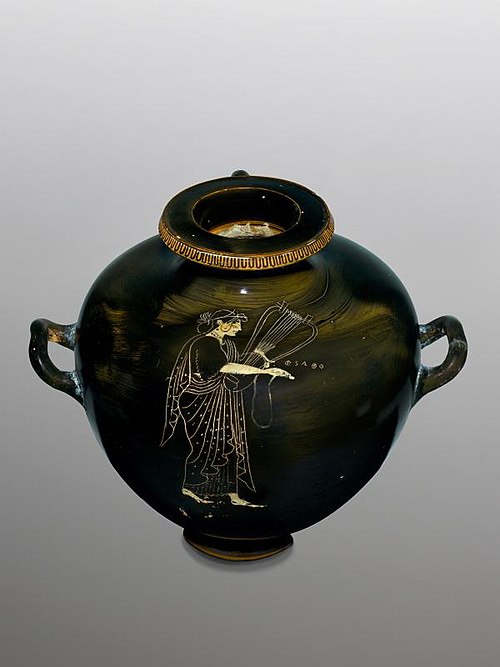
Sappho
78Sappho was an ancient Greek lyric poet from the island of Lesbos, celebrated in antiquity as one of the greatest of all poets and revered for her intimate, intensely personal verse on love and longing.
Why Also a writer · Active in the same era

Sophocles
81Sophocles was one of the three great tragedians of classical Athens, author of Oedipus Rex and Antigone, whose dramas shaped Western theatre and gave us some of its most enduring stories.
Why Also a writer · Active in the same era

Homer
95Homer was the legendary ancient Greek poet to whom the great epics the Iliad and the Odyssey are attributed, foundational works of Western literature.
Why Also a writer · Active in the same era
Same Era or Civilization

Euclid
91Euclid was an ancient Greek mathematician, the "father of geometry", whose treatise the Elements is the most influential mathematics textbook ever written.
Why Active in the same era · From the same civilization

Hippocrates
88Hippocrates was an ancient Greek physician regarded as the father of Western medicine, who established medicine as a rational discipline distinct from superstition and inspired the Hippocratic Oath.
Why Active in the same era · From the same civilization

Pythagoras
90Pythagoras was an ancient Greek mathematician and philosopher who founded the Pythagorean school and is remembered for the Pythagorean theorem and the idea that number underlies the cosmos.
Why Active in the same era · From the same civilization

Zeno of Citium
86Zeno of Citium was an ancient Greek philosopher who founded Stoicism, teaching that virtue and reason are the path to a good life, in lectures given at the Painted Porch (Stoa) in Athens.
Why Active in the same era · From the same civilization

Leonidas I
80Leonidas I was a king of Sparta who led a small Greek force in a legendary last stand against the vast Persian army at the Battle of Thermopylae in 480 BC, becoming an enduring symbol of courage and sacrifice.
Why Active in the same era · From the same civilization

Pericles
84Pericles was an Athenian statesman who led the city during its golden age, strengthening its democracy, building the Parthenon and championing the arts, in an era so brilliant it is often called the Age of Pericles.
Why Active in the same era · From the same civilization

Themistocles
79Themistocles was an Athenian statesman and general whose foresight built the navy that saved Greece, and whose brilliant strategy at the Battle of Salamis destroyed the Persian fleet and turned back Xerxes's invasion.
Why Active in the same era · From the same civilization