Biographer · 46 – 120
Plutarch
Key Takeaways
- Plutarch wrote the Parallel Lives, pairing famous Greeks with famous Romans.
- He focused on character and morality rather than mere chronicle.
- His essays, the Moralia, range over ethics, religion and daily life.
- His Lives gave Shakespeare the raw material for several of his Roman plays.
Plutarch believed that the truest measure of a person lay not in their victories but in their character — and from that conviction he created one of the most influential works of biography ever written.
Parallel Lives
His masterpiece, the Parallel Lives, paired a famous Greek with a famous Roman — Alexander the Great with Julius Caesar, and dozens more — and compared their virtues and flaws. Writing in Greek under the Roman Empire, he was less interested in cataloguing events than in revealing the soul behind the deeds.
A treasury for later ages
Plutarch’s stories became the common stock of classical learning. Shakespeare lifted the plots of Julius Caesar and Antony and Cleopatra straight from his pages, and revolutionaries and statesmen read him for models of greatness. As both biographer and moral guide, he shaped how the West remembered antiquity — and how it wrote about lives ever after.
Influence
Plutarch shaped the art of biography for all who followed, teaching that the measure of a life lies in character and choice, and supplying later writers with the stories of antiquity.
Legacy
His Lives became a treasury of classical example, read by statesmen, revolutionaries and playwrights for nearly two thousand years.
Major Works
- Parallel Lives
- Moralia
Connections
Frequently Asked Questions
Who was Plutarch?
Plutarch (c. 46–120 AD) was a Greek biographer and philosopher, author of the Parallel Lives, which paired famous Greeks and Romans and shaped the art of biography.
What are Plutarch's Parallel Lives?
The Parallel Lives are paired biographies of eminent Greeks and Romans — such as Alexander and Caesar — comparing their characters and careers to draw moral lessons.
Citations & Sources
People Like Plutarch

Julius Caesar
95Julius Caesar was a Roman general and statesman whose conquest of Gaul and victory in civil war made him dictator of Rome, ending the Republic and paving the way for the Empire.
Why One of the Roman statesmen whose life Plutarch chronicled in the Parallel Lives.

Alexander the Great
96Alexander the Great was the king of Macedon who built one of the largest empires in history by his early thirties, spreading Greek culture across three continents.
Why Plutarch paired Alexander's life with that of Julius Caesar.
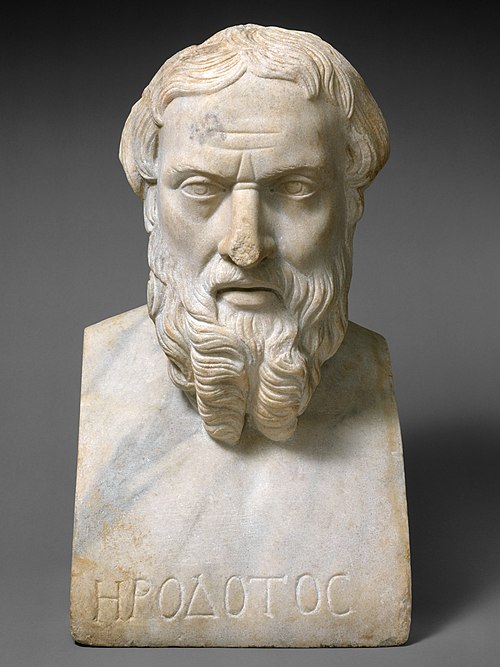
Herodotus
83Herodotus was a Greek writer of the 5th century BC, called the "Father of History" for his Histories, the first known work to systematically investigate and narrate past events as a connected inquiry.
Why An earlier Greek writer in the tradition of narrating the deeds of the past.

Ibn Khaldun
80Ibn Khaldun was a North African scholar of the 14th century widely regarded as a founder of historiography, sociology and economics, whose Muqaddimah pioneered the analytical study of how societies rise and fall.
Why Also a historian & philosopher · Comparable historical impact

David Hume
89David Hume was a Scottish philosopher, historian, and economist of the Enlightenment whose rigorous empiricism and skepticism—especially his analysis of causation and the problem of induction—made him one of the most important philosophers in the English language.
Why Also a philosopher & historian · Comparable historical impact

Thucydides
82Thucydides was an Athenian historian and general whose History of the Peloponnesian War set the standard for rigorous, evidence-based history and remains a foundational text of political and military analysis.
Why Also a historian · From the same civilization