Military Leader · 100 BC – 44 BC
Julius Caesar
Key Takeaways
- Caesar's conquest of Gaul extended Roman power to the Atlantic and the Rhine.
- Crossing the Rubicon in 49 BC began a civil war and became a phrase for a point of no return.
- He reformed the calendar into the Julian calendar, the basis of the modern Western calendar.
- His assassination in 44 BC led to the collapse of the Republic and the rise of the Empire under Augustus.
Gaius Julius Caesar transformed Rome from a republic governed by its Senate into a state dominated by a single man. Soldier, orator, writer and politician, he is among the most consequential figures of antiquity.
The conquest of Gaul
Between 58 and 50 BC, Caesar subdued the Celtic tribes of Gaul, extending Roman territory to the English Channel and the Rhine — and documenting it himself in his Commentaries.
Rubicon to the Ides of March
Ordered to disband his army, Caesar instead crossed the Rubicon in 49 BC, igniting civil war. Victorious, he was named dictator for life — until a conspiracy of senators struck him down on the Ides of March, 44 BC, plunging Rome toward the Empire of Augustus.
Influence
Caesar's career destroyed the Roman Republic and created the template for one-man rule; his very name became the title 'Caesar', 'Kaiser' and 'Tsar'.
Legacy
He is the emblematic figure of Roman power and political ambition, his assassination immortalized by Shakespeare and the phrase "Et tu, Brute?".
Major Works
- Commentarii de Bello Gallico (Commentaries on the Gallic War)
Controversies
- His accumulation of dictatorial power alarmed the Senate and provoked his assassination.
- The Gallic Wars caused immense loss of life among Celtic peoples.
Notable Quotes
“Veni, vidi, vici. (I came, I saw, I conquered.)”
“The die is cast.”
Connections
Frequently Asked Questions
Who was Julius Caesar?
Julius Caesar (100–44 BC) was a Roman general and statesman who conquered Gaul, won a civil war, and ruled as dictator before being assassinated, ending the Roman Republic.
How did Julius Caesar die?
He was assassinated by a group of Roman senators on the Ides of March (15 March) 44 BC.
Biography Books
- Caesar: Life of a Colossus — Adrian Goldsworthy (2006)intermediate
Adrian Goldsworthy's authoritative modern biography.
View on Amazon ↗
Citations & Sources
- Goldsworthy, A. — Caesar: Life of a Colossus (Yale, 2006).
- Encyclopædia Britannica — 'Julius Caesar'.
People Like Julius

Napoleon Bonaparte
94Napoleon Bonaparte was a French military and political leader who rose during the French Revolution, crowned himself Emperor, and dominated European affairs for over a decade.
Why Often compared as the supreme example of the soldier-statesman who seized power from a republic.

Cicero
88Cicero was a Roman statesman, orator and philosopher whose speeches and writings defined Latin prose, transmitted Greek philosophy to Rome, and championed the values of the Roman Republic.
Why Also a statesman · Active in the same era

Augustus
94Augustus was the first Roman emperor, the heir of Julius Caesar who ended a century of civil war, established the Roman Empire, and inaugurated the Pax Romana.
Why Also a statesman · Active in the same era

Abraham Lincoln
92Abraham Lincoln was the 16th President of the United States, who led the nation through its Civil War, preserved the Union, and abolished slavery before his assassination in 1865.
Why Also a statesman & politician · Comparable historical impact
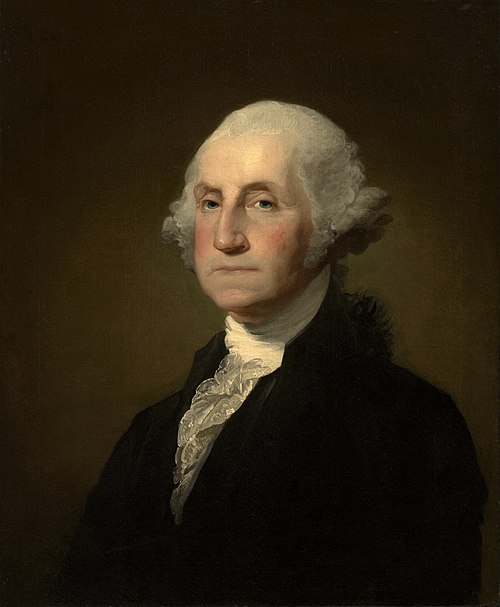
George Washington
91George Washington was the commander of the Continental Army in the American Revolution and the first President of the United States, whose leadership and restraint shaped the new republic.
Why Also a statesman & military leader · Comparable historical impact
Suleiman I
90Suleiman the Magnificent was the longest-reigning sultan of the Ottoman Empire, who led it to the height of its power through military conquest, legal reform and a brilliant flowering of art and architecture.
Why Also a military leader & statesman · Comparable historical impact