Painter · 1606 – 1669
Rembrandt Harmenszoon van Rijn
If you're interested in Rembrandt Harmenszoon van Rijn, these historical figures share a similar impact, discipline, philosophy, or era. Each recommendation explains why the connection exists.
Similar Impact & Significance

Leonardo da Vinci
97Leonardo da Vinci was an Italian Renaissance polymath — painter, inventor, anatomist and engineer — whose curiosity and genius made him the archetype of the 'Renaissance man'.
Why An earlier master whose study of light and human expression anticipated Rembrandt's own.
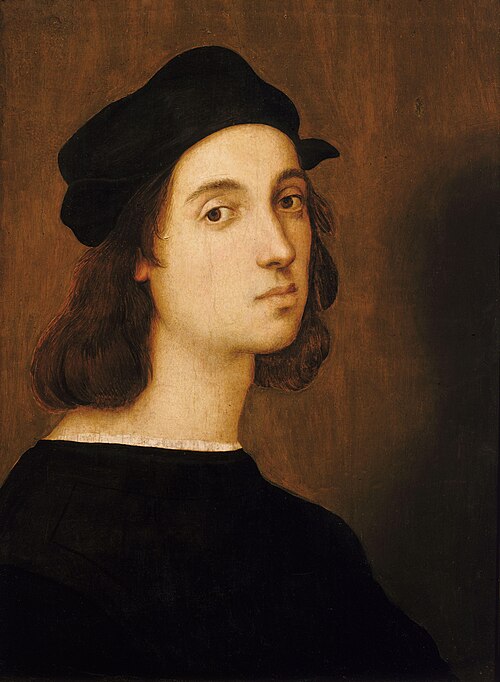
Raffaello Sanzio da Urbino
90Raphael was an Italian painter and architect of the High Renaissance whose works, prized for their harmony and grace, include The School of Athens and a famous series of serene Madonnas.
Why A High Renaissance master whose harmonious art Rembrandt admired and collected in print form.
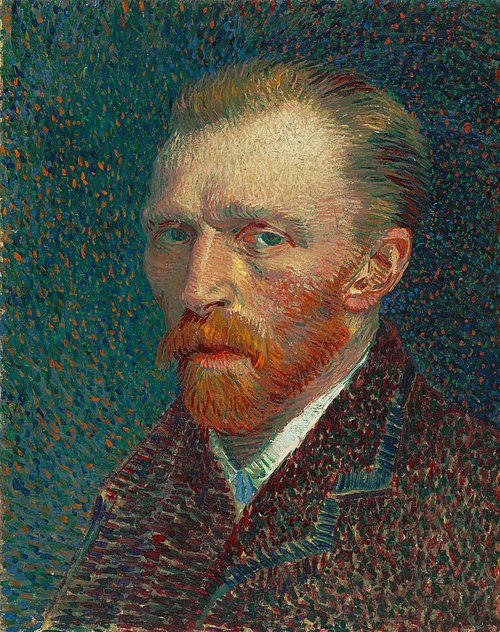
Vincent van Gogh
93Vincent van Gogh was a Dutch Post-Impressionist painter whose intense color, expressive brushwork, and emotional depth made him one of the most influential artists in Western history, though he found little recognition in his own lifetime.
Why A later Dutch painter who revered Rembrandt as a supreme master of his nation's art.

Michelangelo
95Michelangelo was an Italian Renaissance sculptor, painter and architect, one of the greatest artists in history, creator of the David, the Pietà and the Sistine Chapel ceiling.
Why A towering earlier artist whose dramatic intensity Rembrandt's work parallels in another medium.

Claude Monet
90Claude Monet was a French painter and the leading founder of Impressionism, whose studies of light and atmosphere — from Impression, Sunrise to the Water Lilies — revolutionized modern painting.
Why Also a painter & artist · Comparable historical impact
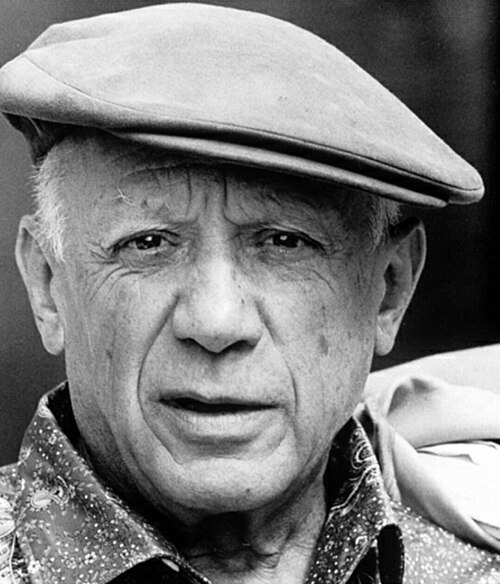
Pablo Picasso
94Pablo Picasso was a Spanish painter and sculptor who co-founded Cubism and ranks among the most influential and prolific artists of the twentieth century, creating works such as Guernica and Les Demoiselles d'Avignon.
Why Also a painter & artist · Comparable historical impact
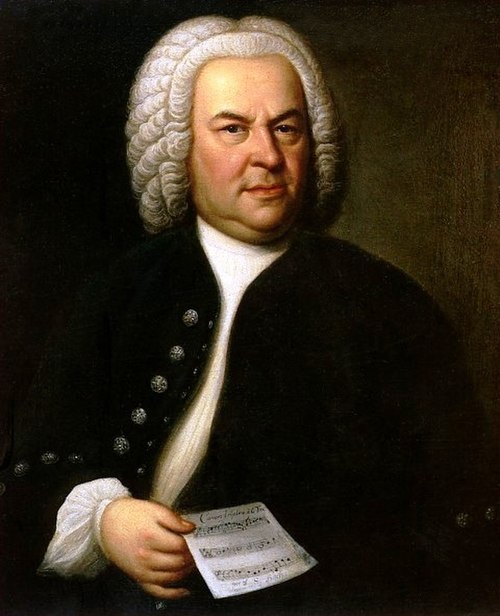
Johann Sebastian Bach
95Johann Sebastian Bach was a German composer and musician of the Baroque era whose mastery of counterpoint and harmony — in works like the Brandenburg Concertos and the Mass in B minor — made him one of the greatest composers in Western history.
Why Active in the same era · Comparable historical impact

Baruch Spinoza
87Baruch Spinoza was a Dutch philosopher of the early modern era whose rationalist masterpiece, the Ethics, advanced a radical monism identifying God with Nature and made him a foundational figure of modern thought.
Why From the same civilization · Comparable historical impact

John Milton
83John Milton was an English poet and political writer of the 17th century whose epic Paradise Lost is considered the greatest long poem in the English language and one of the supreme achievements of world literature.
Why Active in the same era · Comparable historical impact

Abraham Lincoln
92Abraham Lincoln was the 16th President of the United States, who led the nation through its Civil War, preserved the Union, and abolished slavery before his assassination in 1865.
Why Comparable historical impact

Abu'l-Fath Jalal-ud-din Muhammad Akbar
88Akbar was the third Mughal emperor, who expanded the empire across much of the Indian subcontinent and is remembered for his administrative reforms, religious tolerance and patronage of the arts during a long and powerful reign.
Why Comparable historical impact

Ada Lovelace
84Ada Lovelace was an English mathematician widely regarded as the first computer programmer, who saw that Charles Babbage's Analytical Engine could go beyond calculation to manipulate symbols of any kind.
Why Comparable historical impact

Adam Smith
90Adam Smith was a Scottish Enlightenment philosopher and economist, the father of modern economics, whose work The Wealth of Nations laid the foundations of free-market thought.
Why Comparable historical impact

Agatha Christie
81Agatha Christie was an English writer, the best-selling novelist of all time, whose ingenious detective stories featuring Hercule Poirot and Miss Marple made her the undisputed "Queen of Crime".
Why Comparable historical impact

Al-Khwarizmi
89Al-Khwarizmi was a Persian mathematician and scholar of the Islamic Golden Age, the "father of algebra", whose name gave us the word "algorithm".
Why Comparable historical impact

Alan Turing
91Alan Turing was an English mathematician and computer scientist who founded theoretical computer science, helped break the German Enigma cipher in World War II, and pioneered the study of artificial intelligence.
Why Comparable historical impact

Albert Einstein
99Albert Einstein was a German-born theoretical physicist who developed the theory of relativity, one of the two pillars of modern physics, and won the 1921 Nobel Prize.
Why Comparable historical impact

Alexander Pushkin
81Alexander Pushkin was a Russian poet, playwright and novelist, regarded as the founder of modern Russian literature, whose verse novel Eugene Onegin and other works shaped the language and the writers who followed him.
Why Comparable historical impact

Alexander the Great
96Alexander the Great was the king of Macedon who built one of the largest empires in history by his early thirties, spreading Greek culture across three continents.
Why Comparable historical impact

Alexander von Humboldt
81Alexander von Humboldt was a Prussian naturalist and explorer whose pioneering expeditions and best-selling books — including the vast Cosmos — founded modern geography and ecology and made him one of the most famous scientists and authors of his age.
Why Comparable historical impact

Alexandre Dumas
81Alexandre Dumas was a French writer whose swashbuckling historical novels — The Three Musketeers and The Count of Monte Cristo — became some of the most popular and widely adapted stories in the world.
Why Comparable historical impact

Anne Frank
81Anne Frank was a German-Dutch Jewish girl whose diary, written while hiding from the Nazis in occupied Amsterdam, became one of the most widely read accounts of the Holocaust and a lasting testament to humanity amid persecution.
Why Comparable historical impact

Anton Chekhov
81Anton Chekhov was a Russian playwright and short-story writer — and a practising physician — widely regarded as among the greatest masters of both the short story and modern drama, whose plays like The Cherry Orchard transformed the theatre.
Why Comparable historical impact

Archimedes
94Archimedes was an ancient Greek mathematician, physicist and inventor, widely regarded as the greatest mathematician of antiquity and a founder of mathematical physics and engineering.
Why Comparable historical impact