Revolutionary · 1758 – 1794
Maximilien Robespierre
If you're interested in Maximilien Robespierre, these historical figures share a similar impact, discipline, philosophy, or era. Each recommendation explains why the connection exists.
Similar Impact & Significance

Napoleon Bonaparte
94Napoleon Bonaparte was a French military and political leader who rose during the French Revolution, crowned himself Emperor, and dominated European affairs for over a decade.
Why The young general whose rise to power followed directly from the power vacuum left by the Terror and Robespierre's fall.

Voltaire
90Voltaire was a French Enlightenment writer, philosopher and wit, a tireless champion of reason, free speech and religious tolerance and one of the most influential figures of his age.
Why The Enlightenment philosopher whose ideas of reason and virtue Robespierre absorbed and then twisted into justifications for the Terror.

Jean-Jacques Rousseau
90Jean-Jacques Rousseau was a Genevan-French philosopher, writer, and composer whose ideas on the social contract, the general will, and natural human goodness shaped modern political thought, education, and the Romantic movement.
Why The philosopher whose concept of the General Will Robespierre used to justify eliminating those who opposed the Revolution.

Julius Caesar
95Julius Caesar was a Roman general and statesman whose conquest of Gaul and victory in civil war made him dictator of Rome, ending the Republic and paving the way for the Empire.
Why Also a politician · Comparable historical impact

Mark Antony
80Mark Antony was a Roman general and statesman, a close ally of Julius Caesar who, after Caesar's assassination, ruled much of the Roman world and allied with Cleopatra, before his defeat by Octavian ended the Roman Republic for good.
Why Also a politician · Comparable historical impact

Pericles
84Pericles was an Athenian statesman who led the city during its golden age, strengthening its democracy, building the Parthenon and championing the arts, in an era so brilliant it is often called the Age of Pericles.
Why Also a politician · Comparable historical impact
Same Field or Discipline

Giuseppe Garibaldi
84Giuseppe Garibaldi was the Italian nationalist military leader who united southern Italy with the north through his bold expedition of the Thousand, becoming the military hero of Italian unification and one of the most celebrated revolutionary figures of the 19th century.
Why Also a revolutionary & politician · Active in the same era

Abraham Lincoln
92Abraham Lincoln was the 16th President of the United States, who led the nation through its Civil War, preserved the Union, and abolished slavery before his assassination in 1865.
Why Also a politician & lawyer · Active in the same era

Toussaint Louverture
87Toussaint Louverture was the Haitian revolutionary leader who rose from slavery to lead the only successful slave revolt in history, defeating French, Spanish, and British armies to lay the foundations for Haiti's independence as the world's first Black republic.
Why Also a revolutionary · Active in the same era

Benito Mussolini
85Benito Mussolini was the Italian fascist dictator who founded fascism as a political movement, ruled Italy from 1922 to 1943, allied with Adolf Hitler in the Axis, and was killed by partisans in 1945 — the inventor of a totalitarian ideology that inspired and shaped the 20th century's darkest political movements.
Why Also a politician · Active in the same era

Che Guevara
83Che Guevara was the Argentine Marxist revolutionary who helped Fidel Castro seize power in Cuba, theorized guerrilla warfare as the path to revolution in the developing world, and became an iconic symbol of rebellion after his execution in Bolivia in 1967.
Why Also a revolutionary · Active in the same era
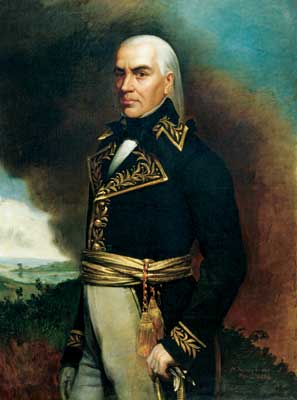
Francisco de Miranda
78Francisco de Miranda was the Venezuelan revolutionary who became the forerunner of Spanish American independence, fighting across three continents before returning home to lead Venezuela's first republic — a visionary who preceded Bolívar and inspired the liberation of Latin America.
Why Also a revolutionary · Active in the same era

Leon Trotsky
85Leon Trotsky was the Russian revolutionary who helped lead the October Revolution alongside Lenin, organized and commanded the Red Army through the Russian Civil War, and was later expelled by Stalin, becoming the most famous critic of Stalinist communism before his assassination in Mexico.
Why Also a revolutionary · Active in the same era
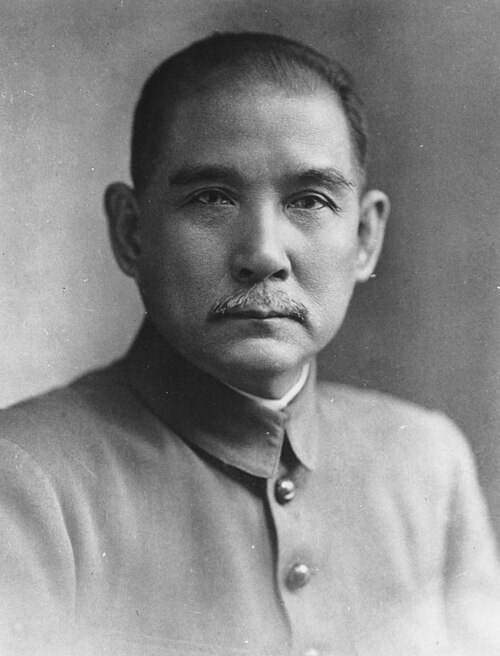
Sun Yat-sen
85Sun Yat-sen was the Chinese revolutionary and statesman who overthrew the Qing dynasty, founded the Republic of China, and became the founding father of both mainland China and Taiwan — revered by both Communists and Nationalists as the father of the Chinese nation.
Why Also a revolutionary · Active in the same era

Vladimir Lenin
92Vladimir Lenin was the Marxist revolutionary who led the Bolshevik seizure of power in Russia in 1917, founded the Soviet Union, and created the first communist state — reshaping the course of the 20th century.
Why Also a revolutionary · Active in the same era

Adolf Hitler
90Adolf Hitler was the dictator of Nazi Germany from 1933 to 1945, whose ideology of racial supremacy and aggressive expansionism plunged the world into World War II and caused the Holocaust — the genocide of six million Jews and millions of others.
Why Also a politician · Active in the same era

Alexander Hamilton
87Alexander Hamilton was the American Founding Father who designed the United States financial system, co-wrote the Federalist Papers, founded the first national bank, served as the first Secretary of the Treasury, and was killed in a duel by Vice President Aaron Burr in 1804.
Why Also a lawyer · Active in the same era
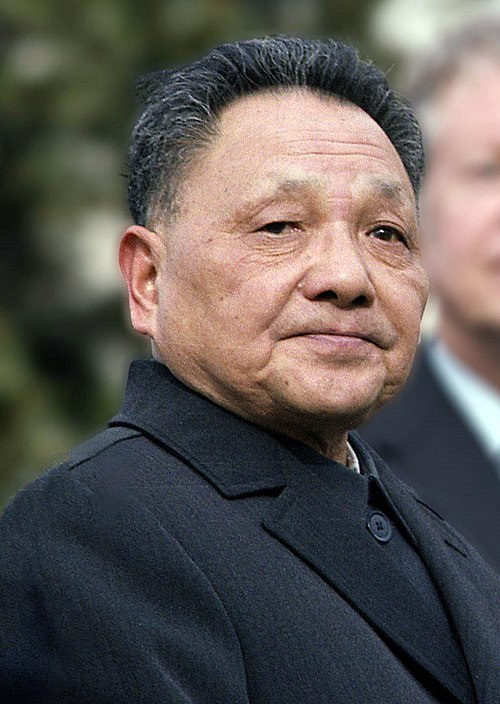
Deng Xiaoping
89Deng Xiaoping was the Chinese leader who reversed Mao Zedong's catastrophic policies after 1978, opening China to market reforms that transformed it from a poor agrarian country into the world's second-largest economy.
Why Also a revolutionary · Active in the same era

Jawaharlal Nehru
88Jawaharlal Nehru was India's first Prime Minister, who guided the country's independence from Britain, built its democratic institutions, launched industrialization and scientific development, and co-founded the Non-Aligned Movement of nations uncommitted to either Cold War superpower.
Why Also a lawyer · Active in the same era

Mahatma Gandhi
93Mahatma Gandhi was the leader of India's independence movement, who pioneered the philosophy and practice of nonviolent civil disobedience and inspired movements for civil rights across the world.
Why Also a lawyer · Active in the same era

Nelson Mandela
92Nelson Mandela was a South African anti-apartheid revolutionary and statesman who, after 27 years in prison, became the country's first democratically elected president and a global symbol of reconciliation.
Why Also a lawyer · Active in the same era

Woodrow Wilson
84Woodrow Wilson was the 28th President of the United States who led the country through World War I, proposed the League of Nations — the first international organization for collective security — and articulated the principle of national self-determination that reshaped the post-war world.
Why Also a politician · Active in the same era
Same Era or Civilization

Charles de Gaulle
89Charles de Gaulle was the French military and political leader who refused to accept France's defeat in 1940, led the Free French resistance from London, liberated Paris, and later founded the Fifth Republic as president, restoring French national pride and global standing.
Why Active in the same era · From the same civilization

Napoleon III
79Napoleon III was the nephew of Napoleon Bonaparte who became the first elected president of France and then its last emperor, modernizing Paris and French industry before his empire collapsed with defeat in the Franco-Prussian War of 1870.
Why Active in the same era · From the same civilization