Historian · 484 BC – 425 BC
Herodotus
If you're interested in Herodotus, these historical figures share a similar impact, discipline, philosophy, or era. Each recommendation explains why the connection exists.
Similar Impact & Significance

Thucydides
82Thucydides was an Athenian historian and general whose History of the Peloponnesian War set the standard for rigorous, evidence-based history and remains a foundational text of political and military analysis.
Why The younger historian who followed and sharpened the discipline Herodotus founded.

Cyrus the Great
90Cyrus the Great was the founder of the Achaemenid Persian Empire, the largest empire the ancient world had yet seen, remembered for his military genius and his tolerance toward conquered peoples.
Why A central figure in the Histories' account of the rise of the Persian Empire.

Plutarch
80Plutarch was a Greek philosopher and biographer of the Roman era whose Parallel Lives paired famous Greeks and Romans and became one of the most read and influential works of biography in history.
Why A later Greek writer who, like Herodotus, narrated the lives and deeds of the past.

Winston Churchill
90Winston Churchill was the British statesman who led the United Kingdom to victory in World War II — and a prolific historian and writer whose books and speeches won him the Nobel Prize in Literature, a rare honour for a man of action.
Why Also a writer & historian · Comparable historical impact

Georg Wilhelm Friedrich Hegel
88Georg Wilhelm Friedrich Hegel was a German philosopher and the leading figure of German idealism, whose dialectical method and grand vision of history as the self-development of Spirit profoundly shaped modern philosophy.
Why Also a writer · Comparable historical impact

Ibn Khaldun
80Ibn Khaldun was a North African scholar of the 14th century widely regarded as a founder of historiography, sociology and economics, whose Muqaddimah pioneered the analytical study of how societies rise and fall.
Why Also a historian · Comparable historical impact

Agatha Christie
81Agatha Christie was an English writer, the best-selling novelist of all time, whose ingenious detective stories featuring Hercule Poirot and Miss Marple made her the undisputed "Queen of Crime".
Why Also a writer · Comparable historical impact

Aldous Huxley
80Aldous Huxley was an English writer and philosopher whose dystopian novel Brave New World became one of the most influential warnings of the 20th century, imagining a future enslaved not by terror but by pleasure and conditioning.
Why Also a writer · Comparable historical impact

Alexander von Humboldt
81Alexander von Humboldt was a Prussian naturalist and explorer whose pioneering expeditions and best-selling books — including the vast Cosmos — founded modern geography and ecology and made him one of the most famous scientists and authors of his age.
Why Also a writer · Comparable historical impact

Alexandre Dumas
81Alexandre Dumas was a French writer whose swashbuckling historical novels — The Three Musketeers and The Count of Monte Cristo — became some of the most popular and widely adapted stories in the world.
Why Also a writer · Comparable historical impact

Anne Frank
81Anne Frank was a German-Dutch Jewish girl whose diary, written while hiding from the Nazis in occupied Amsterdam, became one of the most widely read accounts of the Holocaust and a lasting testament to humanity amid persecution.
Why Also a writer · Comparable historical impact

Anton Chekhov
81Anton Chekhov was a Russian playwright and short-story writer — and a practising physician — widely regarded as among the greatest masters of both the short story and modern drama, whose plays like The Cherry Orchard transformed the theatre.
Why Also a writer · Comparable historical impact

Arthur Conan Doyle
81Arthur Conan Doyle was a British writer and physician who created Sherlock Holmes, the most famous detective in fiction, whose stories of brilliant deduction defined the detective genre and remain among the best-loved in the world.
Why Also a writer · Comparable historical impact
Same Field or Discipline

Euripides
79Euripides was one of the three great tragedians of classical Athens, whose psychologically searching, often unsettling plays such as Medea and The Bacchae made him the most modern-feeling dramatist of the ancient world.
Why Also a writer · Active in the same era
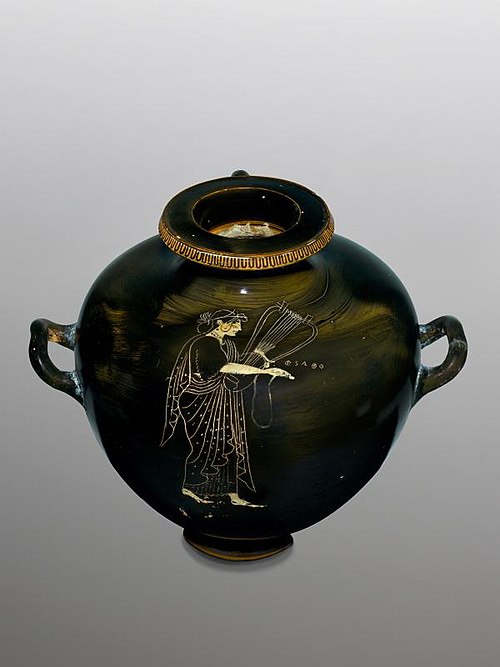
Sappho
78Sappho was an ancient Greek lyric poet from the island of Lesbos, celebrated in antiquity as one of the greatest of all poets and revered for her intimate, intensely personal verse on love and longing.
Why Also a writer · Active in the same era

Sophocles
81Sophocles was one of the three great tragedians of classical Athens, author of Oedipus Rex and Antigone, whose dramas shaped Western theatre and gave us some of its most enduring stories.
Why Also a writer · Active in the same era

Homer
95Homer was the legendary ancient Greek poet to whom the great epics the Iliad and the Odyssey are attributed, foundational works of Western literature.
Why Also a writer · Active in the same era
Same Era or Civilization

Euclid
91Euclid was an ancient Greek mathematician, the "father of geometry", whose treatise the Elements is the most influential mathematics textbook ever written.
Why Active in the same era · From the same civilization

Hippocrates
88Hippocrates was an ancient Greek physician regarded as the father of Western medicine, who established medicine as a rational discipline distinct from superstition and inspired the Hippocratic Oath.
Why Active in the same era · From the same civilization

Pythagoras
90Pythagoras was an ancient Greek mathematician and philosopher who founded the Pythagorean school and is remembered for the Pythagorean theorem and the idea that number underlies the cosmos.
Why Active in the same era · From the same civilization

Zeno of Citium
86Zeno of Citium was an ancient Greek philosopher who founded Stoicism, teaching that virtue and reason are the path to a good life, in lectures given at the Painted Porch (Stoa) in Athens.
Why Active in the same era · From the same civilization

Leonidas I
80Leonidas I was a king of Sparta who led a small Greek force in a legendary last stand against the vast Persian army at the Battle of Thermopylae in 480 BC, becoming an enduring symbol of courage and sacrifice.
Why Active in the same era · From the same civilization

Pericles
84Pericles was an Athenian statesman who led the city during its golden age, strengthening its democracy, building the Parthenon and championing the arts, in an era so brilliant it is often called the Age of Pericles.
Why Active in the same era · From the same civilization

Themistocles
79Themistocles was an Athenian statesman and general whose foresight built the navy that saved Greece, and whose brilliant strategy at the Battle of Salamis destroyed the Persian fleet and turned back Xerxes's invasion.
Why Active in the same era · From the same civilization