Mathematician · 1912 – 1954
Alan Turing
If you're interested in Alan Turing, these historical figures share a similar impact, discipline, philosophy, or era. Each recommendation explains why the connection exists.
Similar Impact & Significance

Ada Lovelace
84Ada Lovelace was an English mathematician widely regarded as the first computer programmer, who saw that Charles Babbage's Analytical Engine could go beyond calculation to manipulate symbols of any kind.
Why Lovelace anticipated programmable computing a century before Turing gave it a rigorous theoretical foundation.

Charles Darwin
96Charles Darwin was an English naturalist whose theory of evolution by natural selection became the unifying foundation of modern biology and transformed humanity's understanding of life.
Why Turing's later work on morphogenesis explored the mathematical patterns behind Darwinian biological form.

Albert Einstein
99Albert Einstein was a German-born theoretical physicist who developed the theory of relativity, one of the two pillars of modern physics, and won the 1921 Nobel Prize.
Why Like Einstein, Turing reshaped a whole field of science with a few foundational ideas.

René Descartes
92René Descartes was a French philosopher, mathematician and scientist, the "father of modern philosophy", famous for "I think, therefore I am" and for founding analytic geometry.
Why Turing's question of whether machines can think extended Descartes's inquiries into mind and mechanism.
Same Field or Discipline

James Clerk Maxwell
92James Clerk Maxwell was a Scottish physicist whose equations unified electricity, magnetism and light into a single electromagnetic theory, one of the greatest achievements in the history of physics.
Why Also a mathematician · Worked in mathematics

Al-Khwarizmi
89Al-Khwarizmi was a Persian mathematician and scholar of the Islamic Golden Age, the "father of algebra", whose name gave us the word "algorithm".
Why Also a mathematician · Worked in mathematics

Archimedes
94Archimedes was an ancient Greek mathematician, physicist and inventor, widely regarded as the greatest mathematician of antiquity and a founder of mathematical physics and engineering.
Why Also a mathematician · Worked in mathematics
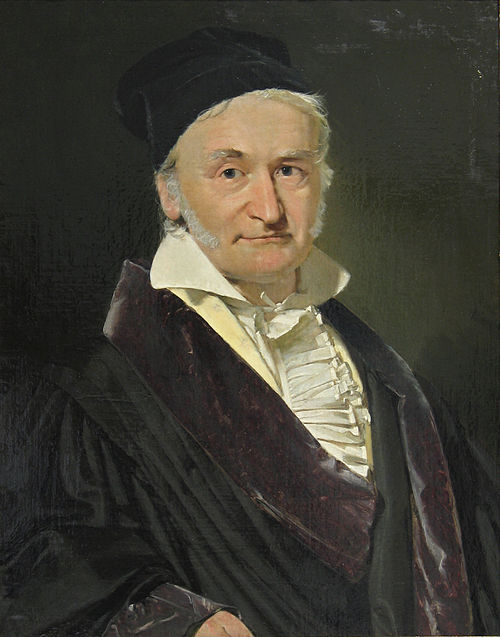
Carl Friedrich Gauss
95Carl Friedrich Gauss was a German mathematician and physicist whose profound contributions to number theory, statistics, geometry, astronomy and magnetism earned him the title "Prince of Mathematicians."
Why Also a mathematician · Worked in mathematics

Euclid
91Euclid was an ancient Greek mathematician, the "father of geometry", whose treatise the Elements is the most influential mathematics textbook ever written.
Why Also a mathematician · Worked in mathematics
Hypatia
84Hypatia was a mathematician, astronomer and Neoplatonist philosopher of late-antique Alexandria, the most prominent woman scholar of the ancient world, whose brutal murder came to symbolize the end of classical learning.
Why Also a mathematician · Worked in mathematics

Isaac Newton
99Isaac Newton was an English physicist and mathematician whose laws of motion and universal gravitation laid the foundation of classical mechanics and the Scientific Revolution.
Why Also a mathematician · Worked in mathematics

Leonhard Euler
93Leonhard Euler was a Swiss mathematician and physicist, the most prolific mathematician in history, whose work shaped modern analysis, number theory, graph theory and mathematical notation.
Why Also a mathematician · Worked in mathematics

Pythagoras
90Pythagoras was an ancient Greek mathematician and philosopher who founded the Pythagorean school and is remembered for the Pythagorean theorem and the idea that number underlies the cosmos.
Why Also a mathematician · Worked in mathematics

Galileo Galilei
95Galileo Galilei was an Italian astronomer, physicist and engineer, the "father of modern science", whose telescopic discoveries and championing of heliocentrism transformed our understanding of the cosmos.
Why Also a mathematician · Worked in mathematics

Nicolaus Copernicus
93Nicolaus Copernicus was a Renaissance astronomer who formulated the heliocentric model placing the Sun, not the Earth, at the center of the universe — a revolution in human thought.
Why Also a mathematician · Worked in mathematics

Lewis Carroll
80Lewis Carroll was the pen name of Charles Dodgson, an English writer and mathematician whose Alice's Adventures in Wonderland and Through the Looking-Glass revolutionized children's literature with their playful logic, nonsense and imagination.
Why Also a mathematician · Active in the same era

Omar Khayyam
79Omar Khayyam was a Persian polymath of the Islamic Golden Age — a leading mathematician and astronomer — who is remembered in the West above all for the Rubaiyat, a collection of quatrains on life, fate and pleasure.
Why Also a mathematician · Worked in mathematics
Same Era or Civilization

Mahatma Gandhi
93Mahatma Gandhi was the leader of India's independence movement, who pioneered the philosophy and practice of nonviolent civil disobedience and inspired movements for civil rights across the world.
Why Active in the same era · From the same civilization

Agatha Christie
81Agatha Christie was an English writer, the best-selling novelist of all time, whose ingenious detective stories featuring Hercule Poirot and Miss Marple made her the undisputed "Queen of Crime".
Why Active in the same era · From the same civilization

Arthur Conan Doyle
81Arthur Conan Doyle was a British writer and physician who created Sherlock Holmes, the most famous detective in fiction, whose stories of brilliant deduction defined the detective genre and remain among the best-loved in the world.
Why Active in the same era · From the same civilization

Charles Dickens
86Charles Dickens was an English novelist of the Victorian age, the most popular writer of his time and one of the greatest in the English language, whose vivid characters and social conscience defined the 19th-century novel.
Why Active in the same era · From the same civilization

George Orwell
84George Orwell was an English writer and journalist whose novels Nineteen Eighty-Four and Animal Farm became the defining warnings against totalitarianism, giving the world terms such as "Big Brother", "doublethink" and "Orwellian".
Why Active in the same era · From the same civilization
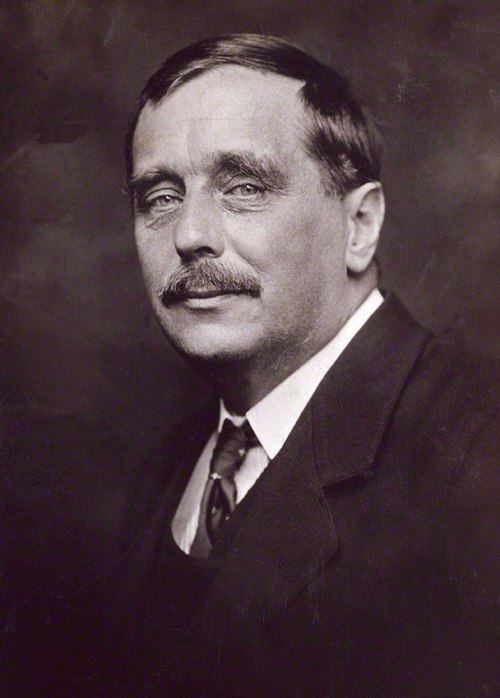
H. G. Wells
81H. G. Wells was an English writer, a founding father of science fiction, whose visionary novels — The Time Machine, The War of the Worlds and The Invisible Man — imagined time travel, alien invasion and other ideas that have shaped the genre ever since.
Why Active in the same era · From the same civilization
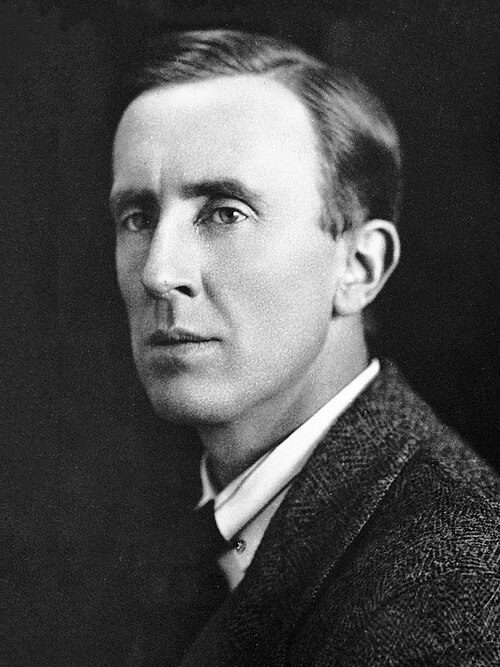
J. R. R. Tolkien
84J. R. R. Tolkien was an English writer and Oxford philologist whose novels The Hobbit and The Lord of the Rings created the modern genre of epic fantasy and built one of the most fully imagined fictional worlds ever conceived.
Why Active in the same era · From the same civilization