Philosopher · 334 BC – 262 BC
Zeno of Citium
If you're interested in Zeno of Citium, these historical figures share a similar impact, discipline, philosophy, or era. Each recommendation explains why the connection exists.
Similar Impact & Significance

Socrates
95Socrates was a classical Greek philosopher credited as a founder of Western philosophy, famous for the Socratic method of questioning and for his trial and execution in Athens.
Why Zeno was inspired by accounts of Socrates' virtue and self-mastery to pursue philosophy.

Marcus Aurelius
90Marcus Aurelius was a Roman emperor and Stoic philosopher, the last of the "Five Good Emperors", whose private journal, the Meditations, is the most cherished work of Stoic thought.
Why The Stoicism Zeno founded reached its most famous expression in Marcus Aurelius's Meditations.

Baruch Spinoza
87Baruch Spinoza was a Dutch philosopher of the early modern era whose rationalist masterpiece, the Ethics, advanced a radical monism identifying God with Nature and made him a foundational figure of modern thought.
Why Also a philosopher · Comparable historical impact

Adam Smith
90Adam Smith was a Scottish Enlightenment philosopher and economist, the father of modern economics, whose work The Wealth of Nations laid the foundations of free-market thought.
Why Also a philosopher · Comparable historical impact

Aldous Huxley
80Aldous Huxley was an English writer and philosopher whose dystopian novel Brave New World became one of the most influential warnings of the 20th century, imagining a future enslaved not by terror but by pleasure and conditioning.
Why Also a philosopher · Comparable historical impact

Augustine of Hippo
92Augustine of Hippo was a Roman North African theologian and philosopher whose works, including Confessions and City of God, shaped Western Christianity and laid intellectual foundations for medieval and modern thought.
Why Also a philosopher · Comparable historical impact

Averroes
87Averroes was a philosopher and polymath of Al-Andalus whose commentaries on Aristotle profoundly shaped medieval European philosophy and the relationship between reason and faith.
Why Also a philosopher · Comparable historical impact
Same Field or Discipline

Aristotle
98Aristotle was a Greek philosopher and polymath whose writings on logic, ethics, biology, politics and metaphysics shaped Western thought for over two millennia.
Why Also a philosopher · Worked in logic & ethics

Plato
96Plato was a Greek philosopher who founded the Academy in Athens, wrote the foundational dialogues of Western philosophy, and developed the influential theory of Forms.
Why Also a philosopher · Worked in ethics

Pythagoras
90Pythagoras was an ancient Greek mathematician and philosopher who founded the Pythagorean school and is remembered for the Pythagorean theorem and the idea that number underlies the cosmos.
Why Also a philosopher · Active in the same era

Immanuel Kant
94Immanuel Kant was a German philosopher of the Enlightenment, one of the most influential thinkers in history, who reconciled rationalism and empiricism and transformed ethics, metaphysics and epistemology.
Why Also a philosopher · Worked in ethics

Avicenna
90Avicenna was a Persian polymath of the Islamic Golden Age, one of the greatest physicians and philosophers of the medieval world, whose Canon of Medicine was a standard text for six centuries.
Why Also a philosopher · Worked in logic

Thomas Aquinas
91Thomas Aquinas was a medieval Italian theologian and philosopher whose synthesis of Christian theology and Aristotelian philosophy became central to Catholic thought and the high point of scholasticism.
Why Also a philosopher · Worked in ethics

Laozi
93Laozi was a semi-legendary ancient Chinese philosopher traditionally regarded as the founder of Daoism and the author of the Tao Te Ching, the foundational text on living in harmony with the Dao.
Why Also a philosopher · Worked in ethics

Plutarch
80Plutarch was a Greek philosopher and biographer of the Roman era whose Parallel Lives paired famous Greeks and Romans and became one of the most read and influential works of biography in history.
Why Also a philosopher · From the same civilization

Confucius
97Confucius was a Chinese philosopher and teacher whose ideas on ethics, family and good government became the foundation of Confucianism and shaped East Asian civilization for over two thousand years.
Why Also a philosopher · Worked in ethics

Siddhartha Gautama
97Siddhartha Gautama, known as the Buddha, was a spiritual teacher of ancient India whose insights into suffering and liberation founded Buddhism, now one of the world's major religions.
Why Also a philosopher · Worked in ethics
Same Era or Civilization

Alexander the Great
96Alexander the Great was the king of Macedon who built one of the largest empires in history by his early thirties, spreading Greek culture across three continents.
Why Active in the same era · From the same civilization

Archimedes
94Archimedes was an ancient Greek mathematician, physicist and inventor, widely regarded as the greatest mathematician of antiquity and a founder of mathematical physics and engineering.
Why Active in the same era · From the same civilization

Euclid
91Euclid was an ancient Greek mathematician, the "father of geometry", whose treatise the Elements is the most influential mathematics textbook ever written.
Why Active in the same era · From the same civilization
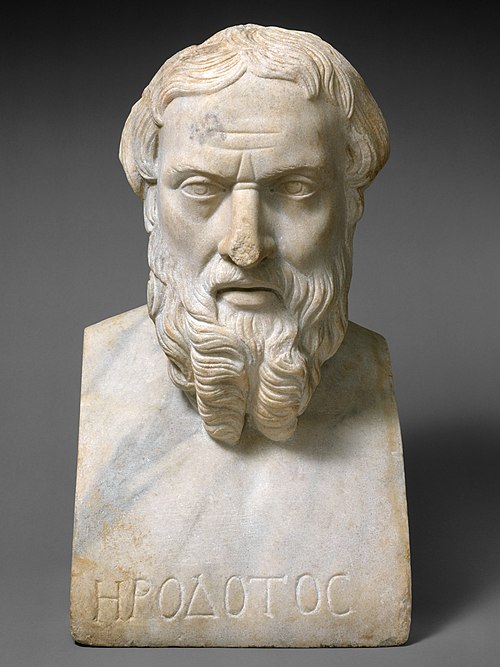
Herodotus
83Herodotus was a Greek writer of the 5th century BC, called the "Father of History" for his Histories, the first known work to systematically investigate and narrate past events as a connected inquiry.
Why Active in the same era · From the same civilization

Hippocrates
88Hippocrates was an ancient Greek physician regarded as the father of Western medicine, who established medicine as a rational discipline distinct from superstition and inspired the Hippocratic Oath.
Why Active in the same era · From the same civilization

Homer
95Homer was the legendary ancient Greek poet to whom the great epics the Iliad and the Odyssey are attributed, foundational works of Western literature.
Why Active in the same era · From the same civilization

Thucydides
82Thucydides was an Athenian historian and general whose History of the Peloponnesian War set the standard for rigorous, evidence-based history and remains a foundational text of political and military analysis.
Why Active in the same era · From the same civilization