Composer · 1756 – 1791
Wolfgang Amadeus Mozart
If you're interested in Wolfgang Amadeus Mozart, these historical figures share a similar impact, discipline, philosophy, or era. Each recommendation explains why the connection exists.
Similar Impact & Significance
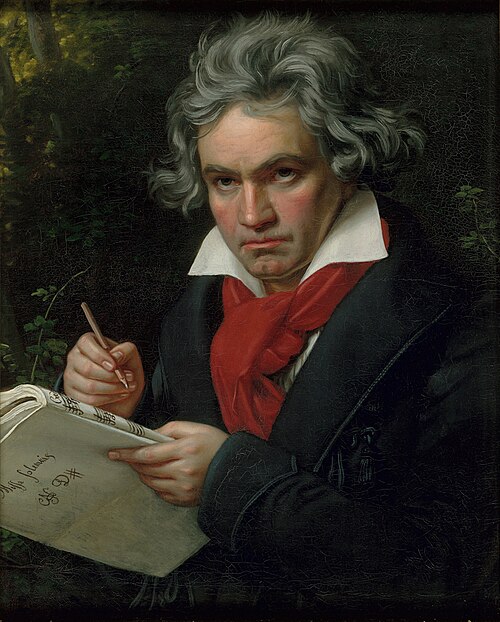
Ludwig van Beethoven
94Ludwig van Beethoven was a German composer and pianist, one of the greatest musicians in history, who bridged the Classical and Romantic eras and composed masterpieces even after going deaf.
Why The younger composer who briefly met Mozart and carried the Classical tradition into the Romantic era.
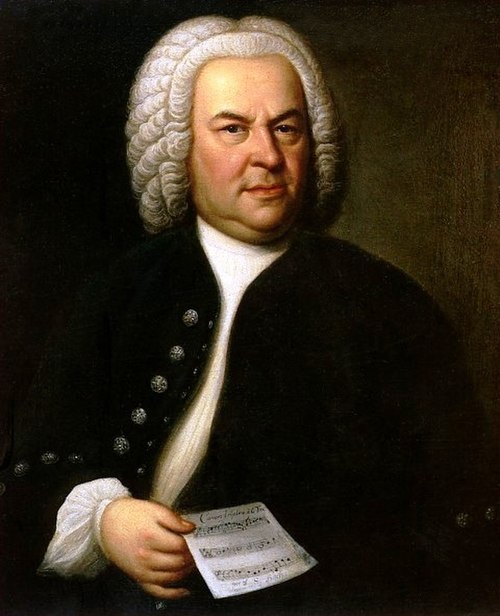
Johann Sebastian Bach
95Johann Sebastian Bach was a German composer and musician of the Baroque era whose mastery of counterpoint and harmony — in works like the Brandenburg Concertos and the Mass in B minor — made him one of the greatest composers in Western history.
Why The Baroque master whose contrapuntal genius Mozart studied and revered.

Frédéric Chopin
88Frédéric Chopin was a Polish-French Romantic composer and virtuoso pianist whose deeply expressive works for solo piano — nocturnes, études, polonaises and mazurkas — made him one of the most influential composers for the instrument.
Why A later composer who admired Mozart and absorbed his clarity and melodic grace.

Voltaire
90Voltaire was a French Enlightenment writer, philosopher and wit, a tireless champion of reason, free speech and religious tolerance and one of the most influential figures of his age.
Why A leading Enlightenment figure whose age of reason and refinement shaped the world Mozart composed in.
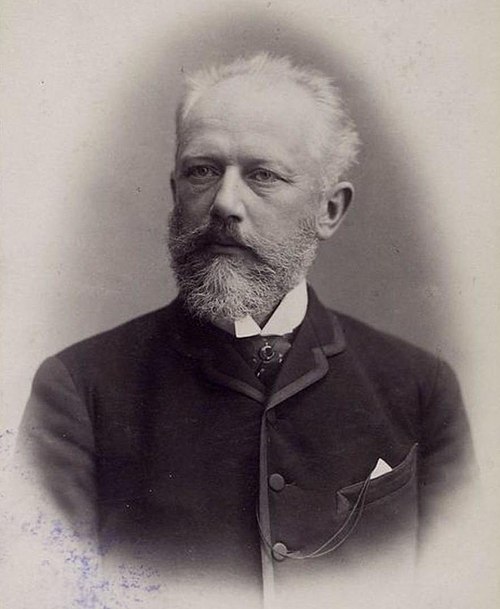
Pyotr Ilyich Tchaikovsky
89Pyotr Ilyich Tchaikovsky was a Russian Romantic composer whose richly emotional music — including the ballets Swan Lake and The Nutcracker and the 1812 Overture — made him one of the most popular and widely performed composers in the world.
Why Also a composer & musician · Comparable historical impact

Catherine II of Russia
87Catherine the Great was Empress of Russia for more than three decades, an enlightened despot who expanded the empire, modernized its administration, and made her court a brilliant centre of art and learning.
Why Active in the same era · Comparable historical impact

David Hume
89David Hume was a Scottish philosopher, historian, and economist of the Enlightenment whose rigorous empiricism and skepticism—especially his analysis of causation and the problem of induction—made him one of the most important philosophers in the English language.
Why Active in the same era · Comparable historical impact

John Locke
93John Locke was an English philosopher and physician, widely regarded as the father of liberalism, whose theories of empiricism, natural rights, and government by consent shaped the Enlightenment and the founding of modern democracies.
Why Active in the same era · Comparable historical impact

Adam Smith
90Adam Smith was a Scottish Enlightenment philosopher and economist, the father of modern economics, whose work The Wealth of Nations laid the foundations of free-market thought.
Why Active in the same era · Comparable historical impact

Benjamin Franklin
90Benjamin Franklin was an American polymath — a founding father, scientist, inventor, writer and diplomat — whose work on electricity and statesmanship made him one of the most admired figures of the 18th century.
Why Active in the same era · Comparable historical impact

Georg Wilhelm Friedrich Hegel
88Georg Wilhelm Friedrich Hegel was a German philosopher and the leading figure of German idealism, whose dialectical method and grand vision of history as the self-development of Spirit profoundly shaped modern philosophy.
Why Active in the same era · Comparable historical impact
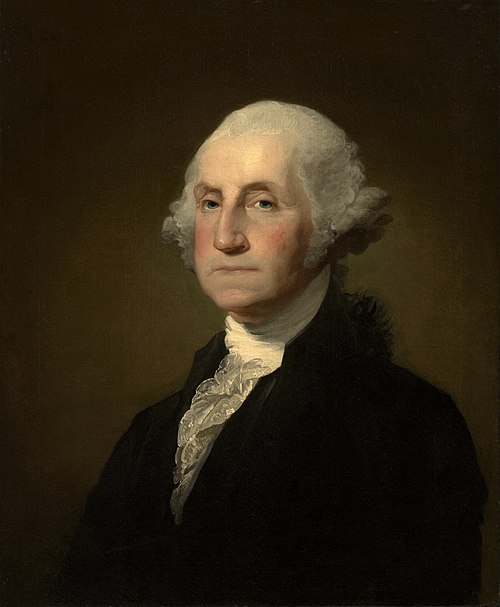
George Washington
91George Washington was the commander of the Continental Army in the American Revolution and the first President of the United States, whose leadership and restraint shaped the new republic.
Why Active in the same era · Comparable historical impact

Immanuel Kant
94Immanuel Kant was a German philosopher of the Enlightenment, one of the most influential thinkers in history, who reconciled rationalism and empiricism and transformed ethics, metaphysics and epistemology.
Why Active in the same era · Comparable historical impact
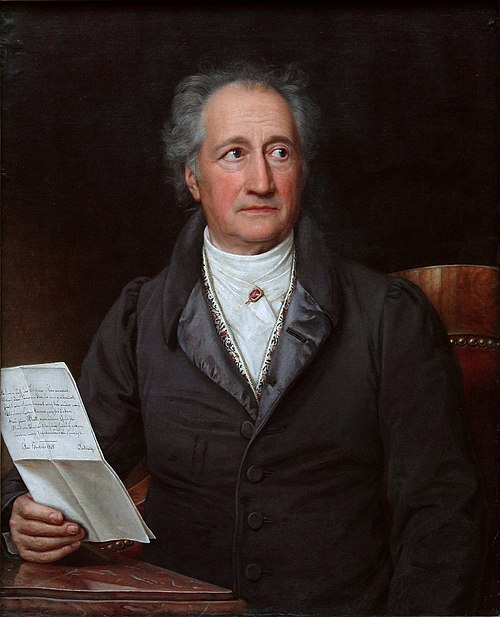
Johann Wolfgang von Goethe
92Johann Wolfgang von Goethe was a German writer, poet, and statesman, widely regarded as the greatest figure in German literature and one of the towering minds of European culture.
Why Active in the same era · Comparable historical impact

Leonhard Euler
93Leonhard Euler was a Swiss mathematician and physicist, the most prolific mathematician in history, whose work shaped modern analysis, number theory, graph theory and mathematical notation.
Why Active in the same era · Comparable historical impact

René Descartes
92René Descartes was a French philosopher, mathematician and scientist, the "father of modern philosophy", famous for "I think, therefore I am" and for founding analytic geometry.
Why Active in the same era · Comparable historical impact

Thomas Jefferson
88Thomas Jefferson was an American statesman, the principal author of the Declaration of Independence and third President of the United States, who was also a prolific writer, architect and scholar whose Notes on the State of Virginia was a landmark of early American letters.
Why Active in the same era · Comparable historical impact

Abraham Lincoln
92Abraham Lincoln was the 16th President of the United States, who led the nation through its Civil War, preserved the Union, and abolished slavery before his assassination in 1865.
Why Comparable historical impact

Abu'l-Fath Jalal-ud-din Muhammad Akbar
88Akbar was the third Mughal emperor, who expanded the empire across much of the Indian subcontinent and is remembered for his administrative reforms, religious tolerance and patronage of the arts during a long and powerful reign.
Why Comparable historical impact

Al-Khwarizmi
89Al-Khwarizmi was a Persian mathematician and scholar of the Islamic Golden Age, the "father of algebra", whose name gave us the word "algorithm".
Why Comparable historical impact

Alan Turing
91Alan Turing was an English mathematician and computer scientist who founded theoretical computer science, helped break the German Enigma cipher in World War II, and pioneered the study of artificial intelligence.
Why Comparable historical impact
Same Field or Discipline

Jean-Jacques Rousseau
90Jean-Jacques Rousseau was a Genevan-French philosopher, writer, and composer whose ideas on the social contract, the general will, and natural human goodness shaped modern political thought, education, and the Romantic movement.
Why Also a composer · Active in the same era

Hildegard of Bingen
84Hildegard of Bingen was a German Benedictine abbess and one of the most remarkable polymaths of the Middle Ages — a visionary, composer, writer, healer and natural philosopher.
Why Also a composer

Rabindranath Tagore
81Rabindranath Tagore was a Bengali poet, writer, composer and polymath who reshaped Indian literature and music and, in 1913, became the first non-European to win the Nobel Prize in Literature.
Why Also a composer