Explorer · 1460 – 1524
Vasco da Gama
If you're interested in Vasco da Gama, these historical figures share a similar impact, discipline, philosophy, or era. Each recommendation explains why the connection exists.
Similar Impact & Significance

Christopher Columbus
85Christopher Columbus was an Italian explorer who, sailing for Spain in 1492, opened sustained European contact with the Americas — a voyage of immense and deeply controversial consequence.
Why A contemporary explorer who sought a westward route to the Indies while da Gama found the eastward sea route around Africa.

Ferdinand Magellan
86Ferdinand Magellan was a Portuguese explorer who, in the service of Spain, led the first expedition to circumnavigate the globe, proving the world could be sailed around even though he died midway through the voyage.
Why A fellow Portuguese navigator whose circumnavigation extended the age of oceanic exploration da Gama helped launch.

Zheng He
83Zheng He was a Chinese admiral and explorer of the Ming dynasty who commanded vast treasure fleets on seven voyages across the Indian Ocean, reaching as far as Arabia and East Africa.
Why An earlier admiral whose Indian Ocean voyages crossed many of the same waters da Gama later reached from Europe.
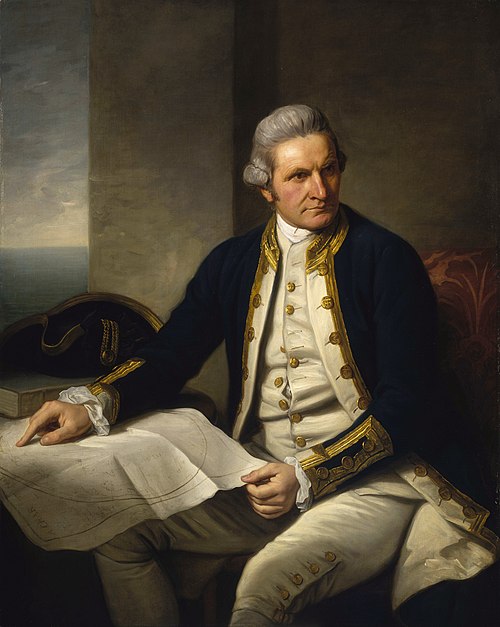
James Cook
84James Cook was a British explorer, navigator and cartographer whose three Pacific voyages charted New Zealand, the eastern coast of Australia and many Pacific islands with unprecedented accuracy.
Why A later navigator who carried the tradition of long-distance sea exploration into the Pacific.

Alexander von Humboldt
81Alexander von Humboldt was a Prussian naturalist and explorer whose pioneering expeditions and best-selling books — including the vast Cosmos — founded modern geography and ecology and made him one of the most famous scientists and authors of his age.
Why Also a explorer · Comparable historical impact
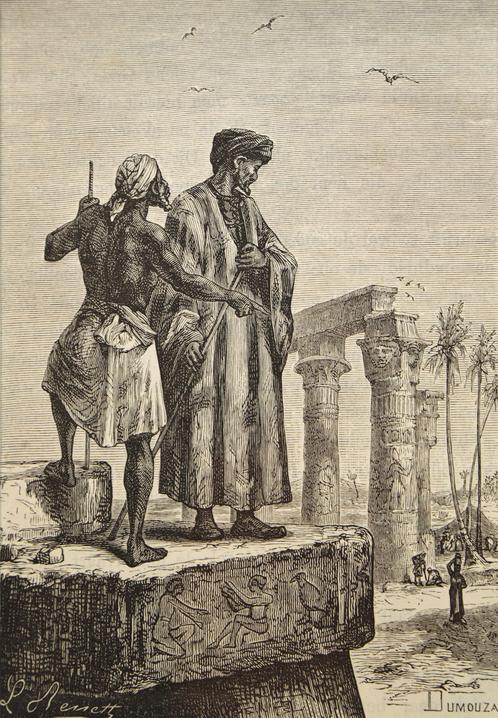
Ibn Battuta
78Ibn Battuta was a Moroccan scholar and traveller of the 14th century who journeyed some 75,000 miles across Africa, the Middle East, India, Central Asia, Southeast Asia and China — one of the greatest travellers of the pre-modern world.
Why Also a explorer · Comparable historical impact

Marco Polo
84Marco Polo was a Venetian merchant and explorer whose travels across Asia to the court of Kublai Khan, recorded in The Travels of Marco Polo, gave medieval Europe its most influential account of the East.
Why Also a explorer · Comparable historical impact

Elizabeth I
89Elizabeth I was Queen of England from 1558 to 1603, whose long and stable reign — the Elizabethan era — saw a golden age of culture, the defeat of the Spanish Armada, and England's rise as a sea power.
Why Active in the same era · Comparable historical impact

Rabindranath Tagore
81Rabindranath Tagore was a Bengali poet, writer, composer and polymath who reshaped Indian literature and music and, in 1913, became the first non-European to win the Nobel Prize in Literature.
Why Comparable historical impact

Abraham Lincoln
92Abraham Lincoln was the 16th President of the United States, who led the nation through its Civil War, preserved the Union, and abolished slavery before his assassination in 1865.
Why Comparable historical impact

Abu'l-Fath Jalal-ud-din Muhammad Akbar
88Akbar was the third Mughal emperor, who expanded the empire across much of the Indian subcontinent and is remembered for his administrative reforms, religious tolerance and patronage of the arts during a long and powerful reign.
Why Comparable historical impact

Ada Lovelace
84Ada Lovelace was an English mathematician widely regarded as the first computer programmer, who saw that Charles Babbage's Analytical Engine could go beyond calculation to manipulate symbols of any kind.
Why Comparable historical impact

Adam Smith
90Adam Smith was a Scottish Enlightenment philosopher and economist, the father of modern economics, whose work The Wealth of Nations laid the foundations of free-market thought.
Why Comparable historical impact

Agatha Christie
81Agatha Christie was an English writer, the best-selling novelist of all time, whose ingenious detective stories featuring Hercule Poirot and Miss Marple made her the undisputed "Queen of Crime".
Why Comparable historical impact

Akhenaten
78Akhenaten was an Egyptian pharaoh of the Eighteenth Dynasty who launched a religious revolution, replacing Egypt's many gods with the worship of a single deity, the sun-disc Aten — one of the earliest experiments with monotheism.
Why Comparable historical impact

Al-Khwarizmi
89Al-Khwarizmi was a Persian mathematician and scholar of the Islamic Golden Age, the "father of algebra", whose name gave us the word "algorithm".
Why Comparable historical impact

Alan Turing
91Alan Turing was an English mathematician and computer scientist who founded theoretical computer science, helped break the German Enigma cipher in World War II, and pioneered the study of artificial intelligence.
Why Comparable historical impact

Aldous Huxley
80Aldous Huxley was an English writer and philosopher whose dystopian novel Brave New World became one of the most influential warnings of the 20th century, imagining a future enslaved not by terror but by pleasure and conditioning.
Why Comparable historical impact

Alexander Pushkin
81Alexander Pushkin was a Russian poet, playwright and novelist, regarded as the founder of modern Russian literature, whose verse novel Eugene Onegin and other works shaped the language and the writers who followed him.
Why Comparable historical impact

Alexandre Dumas
81Alexandre Dumas was a French writer whose swashbuckling historical novels — The Three Musketeers and The Count of Monte Cristo — became some of the most popular and widely adapted stories in the world.
Why Comparable historical impact

Anne Frank
81Anne Frank was a German-Dutch Jewish girl whose diary, written while hiding from the Nazis in occupied Amsterdam, became one of the most widely read accounts of the Holocaust and a lasting testament to humanity amid persecution.
Why Comparable historical impact

Anton Chekhov
81Anton Chekhov was a Russian playwright and short-story writer — and a practising physician — widely regarded as among the greatest masters of both the short story and modern drama, whose plays like The Cherry Orchard transformed the theatre.
Why Comparable historical impact

Arthur Conan Doyle
81Arthur Conan Doyle was a British writer and physician who created Sherlock Holmes, the most famous detective in fiction, whose stories of brilliant deduction defined the detective genre and remain among the best-loved in the world.
Why Comparable historical impact
