Philosopher · 1596 – 1650
René Descartes
If you're interested in René Descartes, these historical figures share a similar impact, discipline, philosophy, or era. Each recommendation explains why the connection exists.
Similar Impact & Significance

Immanuel Kant
94Immanuel Kant was a German philosopher of the Enlightenment, one of the most influential thinkers in history, who reconciled rationalism and empiricism and transformed ethics, metaphysics and epistemology.
Why Kant built upon and responded to Descartes's rationalism in his own philosophy.

Euclid
91Euclid was an ancient Greek mathematician, the "father of geometry", whose treatise the Elements is the most influential mathematics textbook ever written.
Why Descartes's analytic geometry transformed the geometric tradition Euclid founded.

Isaac Newton
99Isaac Newton was an English physicist and mathematician whose laws of motion and universal gravitation laid the foundation of classical mechanics and the Scientific Revolution.
Why A near-contemporary whose mathematical physics built on the new analytic methods.

Aristotle
98Aristotle was a Greek philosopher and polymath whose writings on logic, ethics, biology, politics and metaphysics shaped Western thought for over two millennia.
Why Also a philosopher & scientist · Comparable historical impact
Same Field or Discipline
Hypatia
84Hypatia was a mathematician, astronomer and Neoplatonist philosopher of late-antique Alexandria, the most prominent woman scholar of the ancient world, whose brutal murder came to symbolize the end of classical learning.
Why Also a mathematician & philosopher · Worked in mathematics & philosophy

Galileo Galilei
95Galileo Galilei was an Italian astronomer, physicist and engineer, the "father of modern science", whose telescopic discoveries and championing of heliocentrism transformed our understanding of the cosmos.
Why Also a scientist & mathematician · Worked in mathematics

Nicolaus Copernicus
93Nicolaus Copernicus was a Renaissance astronomer who formulated the heliocentric model placing the Sun, not the Earth, at the center of the universe — a revolution in human thought.
Why Also a mathematician & scientist · Worked in mathematics

Voltaire
90Voltaire was a French Enlightenment writer, philosopher and wit, a tireless champion of reason, free speech and religious tolerance and one of the most influential figures of his age.
Why Also a philosopher · Worked in philosophy

Pythagoras
90Pythagoras was an ancient Greek mathematician and philosopher who founded the Pythagorean school and is remembered for the Pythagorean theorem and the idea that number underlies the cosmos.
Why Also a mathematician & philosopher · Worked in mathematics

Ada Lovelace
84Ada Lovelace was an English mathematician widely regarded as the first computer programmer, who saw that Charles Babbage's Analytical Engine could go beyond calculation to manipulate symbols of any kind.
Why Also a mathematician & scientist · Worked in mathematics

Al-Khwarizmi
89Al-Khwarizmi was a Persian mathematician and scholar of the Islamic Golden Age, the "father of algebra", whose name gave us the word "algorithm".
Why Also a mathematician & scientist · Worked in mathematics

Avicenna
90Avicenna was a Persian polymath of the Islamic Golden Age, one of the greatest physicians and philosophers of the medieval world, whose Canon of Medicine was a standard text for six centuries.
Why Also a philosopher & scientist · Worked in philosophy

James Clerk Maxwell
92James Clerk Maxwell was a Scottish physicist whose equations unified electricity, magnetism and light into a single electromagnetic theory, one of the greatest achievements in the history of physics.
Why Also a mathematician & scientist · Worked in mathematics

Baruch Spinoza
87Baruch Spinoza was a Dutch philosopher of the early modern era whose rationalist masterpiece, the Ethics, advanced a radical monism identifying God with Nature and made him a foundational figure of modern thought.
Why Also a philosopher · Shared school of thought

Francis Bacon
82Francis Bacon was an English philosopher, statesman and writer who served as Lord Chancellor and, in works such as the Novum Organum and his Essays, founded the modern scientific method of reasoning from evidence and experiment.
Why Also a philosopher & scientist · Active in the same era

Leonhard Euler
93Leonhard Euler was a Swiss mathematician and physicist, the most prolific mathematician in history, whose work shaped modern analysis, number theory, graph theory and mathematical notation.
Why Also a mathematician · Worked in mathematics

Mary Wollstonecraft
85Mary Wollstonecraft was an English Enlightenment writer and philosopher, a pioneer of feminist thought whose A Vindication of the Rights of Woman argued for the education and equality of women.
Why Also a philosopher · Worked in philosophy

Jean-Jacques Rousseau
90Jean-Jacques Rousseau was a Genevan-French philosopher, writer, and composer whose ideas on the social contract, the general will, and natural human goodness shaped modern political thought, education, and the Romantic movement.
Why Also a philosopher · Active in the same era

Alan Turing
91Alan Turing was an English mathematician and computer scientist who founded theoretical computer science, helped break the German Enigma cipher in World War II, and pioneered the study of artificial intelligence.
Why Also a mathematician · Worked in mathematics

Archimedes
94Archimedes was an ancient Greek mathematician, physicist and inventor, widely regarded as the greatest mathematician of antiquity and a founder of mathematical physics and engineering.
Why Also a mathematician · Worked in mathematics

Averroes
87Averroes was a philosopher and polymath of Al-Andalus whose commentaries on Aristotle profoundly shaped medieval European philosophy and the relationship between reason and faith.
Why Also a philosopher · Worked in philosophy
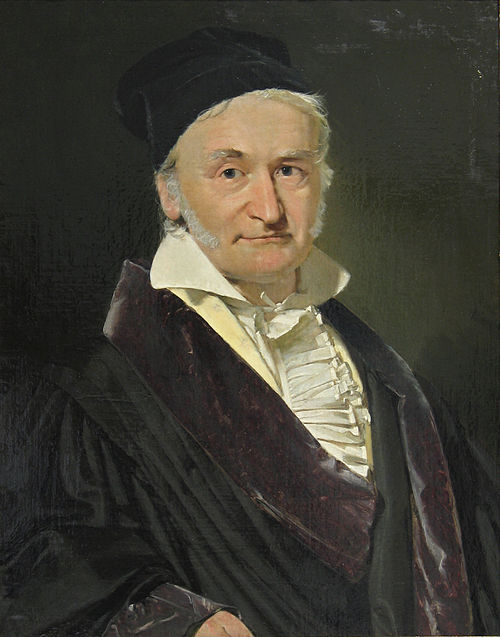
Carl Friedrich Gauss
95Carl Friedrich Gauss was a German mathematician and physicist whose profound contributions to number theory, statistics, geometry, astronomy and magnetism earned him the title "Prince of Mathematicians."
Why Also a mathematician · Worked in mathematics

Thomas Aquinas
91Thomas Aquinas was a medieval Italian theologian and philosopher whose synthesis of Christian theology and Aristotelian philosophy became central to Catholic thought and the high point of scholasticism.
Why Also a philosopher · Worked in philosophy

Adam Smith
90Adam Smith was a Scottish Enlightenment philosopher and economist, the father of modern economics, whose work The Wealth of Nations laid the foundations of free-market thought.
Why Also a philosopher · Active in the same era