Prophet · 1391 BC – 1271 BC
Moses
If you're interested in Moses, these historical figures share a similar impact, discipline, philosophy, or era. Each recommendation explains why the connection exists.
Similar Impact & Significance

Ramesses II
84Ramesses II was the most powerful pharaoh of Egypt's New Kingdom, whose 66-year reign brought military campaigns, colossal building projects and a prosperity that earned him the title Ramesses the Great.
Why The pharaoh traditionally identified with the Exodus — Moses's antagonist and the ruler from whom he led the Hebrews.

Muhammad
98Muhammad was the founder of Islam and regarded by Muslims as the last prophet of God, whose revelations form the Quran and whose life and teachings shaped the religion now followed by 1.8 billion people across the world.
Why A later prophet in the Abrahamic tradition who regarded Moses as one of the greatest prophets and whose Quran includes extensive accounts of Moses's life.

Siddhartha Gautama
97Siddhartha Gautama, known as the Buddha, was a spiritual teacher of ancient India whose insights into suffering and liberation founded Buddhism, now one of the world's major religions.
Why A fellow founder of a great spiritual tradition, whose teachings, like Moses's, shaped the lives of hundreds of millions across millennia.

Hammurabi
86Hammurabi was the sixth king of Babylon who united Mesopotamia under his rule and issued the Code of Hammurabi, one of the earliest and most complete written law codes in history.
Why Also a lawgiver · Comparable historical impact

Mahatma Gandhi
93Mahatma Gandhi was the leader of India's independence movement, who pioneered the philosophy and practice of nonviolent civil disobedience and inspired movements for civil rights across the world.
Why Also a leader · Comparable historical impact

Francis of Assisi
87Francis of Assisi was the Italian friar who founded the Franciscan order, embraced radical poverty, preached to birds and animals, and created a spirituality of joy, simplicity, and care for all creation that became one of the most beloved expressions of Christianity.
Why Comparable historical impact

John Calvin
86John Calvin was the French theologian and reformer who developed Calvinism, founded the Reformed tradition of Protestantism, and governed Geneva as a theocracy whose model of disciplined Christian community shaped Puritanism, Presbyterianism, and ultimately the foundations of modern democracy.
Why Comparable historical impact

Saint Paul
93Saint Paul was the Jewish-Roman apostle whose missionary journeys spread Christianity across the Roman Empire, whose theological letters form a third of the New Testament, and who shaped Christian doctrine more than any other figure after Jesus of Nazareth.
Why Comparable historical impact

Abraham Lincoln
92Abraham Lincoln was the 16th President of the United States, who led the nation through its Civil War, preserved the Union, and abolished slavery before his assassination in 1865.
Why Comparable historical impact

Abu'l-Fath Jalal-ud-din Muhammad Akbar
88Akbar was the third Mughal emperor, who expanded the empire across much of the Indian subcontinent and is remembered for his administrative reforms, religious tolerance and patronage of the arts during a long and powerful reign.
Why Comparable historical impact

Adam Smith
90Adam Smith was a Scottish Enlightenment philosopher and economist, the father of modern economics, whose work The Wealth of Nations laid the foundations of free-market thought.
Why Comparable historical impact

Adolf Hitler
90Adolf Hitler was the dictator of Nazi Germany from 1933 to 1945, whose ideology of racial supremacy and aggressive expansionism plunged the world into World War II and caused the Holocaust — the genocide of six million Jews and millions of others.
Why Comparable historical impact

Al-Khwarizmi
89Al-Khwarizmi was a Persian mathematician and scholar of the Islamic Golden Age, the "father of algebra", whose name gave us the word "algorithm".
Why Comparable historical impact

Alan Turing
91Alan Turing was an English mathematician and computer scientist who founded theoretical computer science, helped break the German Enigma cipher in World War II, and pioneered the study of artificial intelligence.
Why Comparable historical impact

Albert Einstein
99Albert Einstein was a German-born theoretical physicist who developed the theory of relativity, one of the two pillars of modern physics, and won the 1921 Nobel Prize.
Why Comparable historical impact
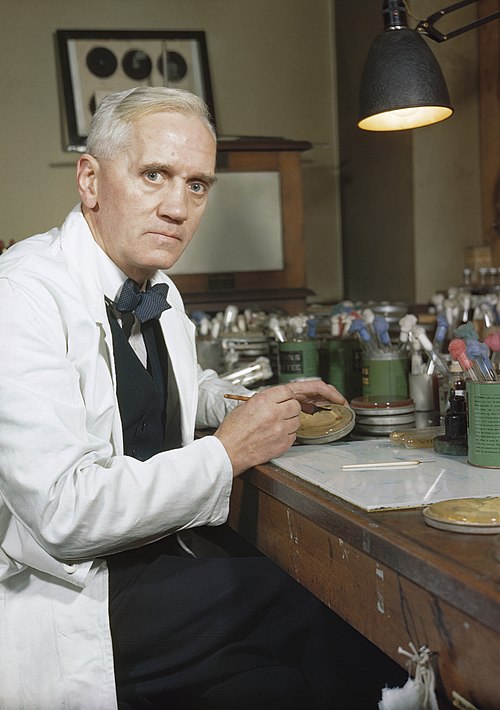
Alexander Fleming
92Alexander Fleming was the Scottish bacteriologist who discovered penicillin in 1928 — the world's first antibiotic — by noticing that mold was killing bacteria in a contaminated culture plate, an observation that ultimately saved an estimated 200 million lives.
Why Comparable historical impact

Alexander Hamilton
87Alexander Hamilton was the American Founding Father who designed the United States financial system, co-wrote the Federalist Papers, founded the first national bank, served as the first Secretary of the Treasury, and was killed in a duel by Vice President Aaron Burr in 1804.
Why Comparable historical impact

Alexander the Great
96Alexander the Great was the king of Macedon who built one of the largest empires in history by his early thirties, spreading Greek culture across three continents.
Why Comparable historical impact
Same Field or Discipline

Same Era or Civilization

Cleopatra VII
90Cleopatra VII was the last active ruler of the Ptolemaic Kingdom of Egypt, a shrewd and learned monarch whose alliances with Julius Caesar and Mark Antony placed her at the center of Roman politics.
Why Active in the same era · From the same civilization

Akhenaten
78Akhenaten was an Egyptian pharaoh of the Eighteenth Dynasty who launched a religious revolution, replacing Egypt's many gods with the worship of a single deity, the sun-disc Aten — one of the earliest experiments with monotheism.
Why Active in the same era · From the same civilization

Hatshepsut
83Hatshepsut was one of the few women to rule ancient Egypt as pharaoh in her own right, a peaceful and prosperous reign marked by ambitious building projects and far-reaching trade.
Why Active in the same era · From the same civilization

Nefertiti
79Nefertiti was an Egyptian queen, principal wife of the pharaoh Akhenaten, who wielded unusual power during his religious revolution and whose painted limestone bust is one of the most admired images of the ancient world.
Why Active in the same era · From the same civilization
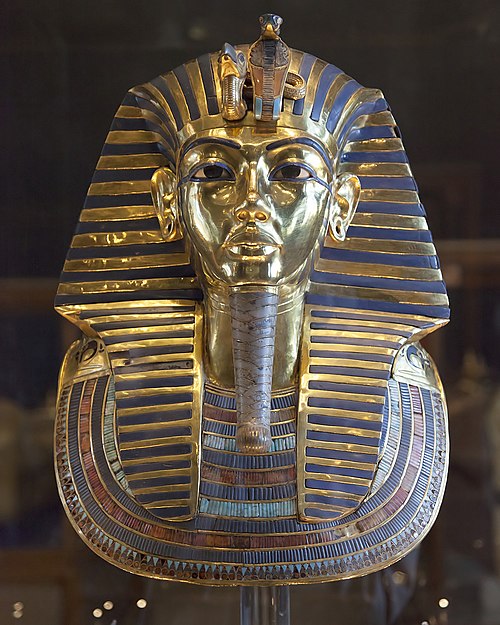
Tutankhamun
80Tutankhamun was an Egyptian pharaoh of the Eighteenth Dynasty whose near-intact tomb, discovered in 1922, became the most famous archaeological find in history and made him the best-known of all ancient Egyptians.
Why Active in the same era · From the same civilization