Theologian · 1509 – 1564
John Calvin
Key Takeaways
- Calvin developed Calvinism, the theological tradition emphasizing God's sovereignty and predestination.
- He governed Geneva as a Protestant theocracy that became a model for Reformed communities.
- His Institutes of the Christian Religion remains one of the most influential theological works ever written.
- His Reformed tradition shaped Puritanism, Presbyterianism, and Calvinist churches worldwide.
John Calvin built a city of God. Exiled from France for his Protestant beliefs, he transformed Geneva into a model of Reformed Christianity — disciplined, educated, and governed by scriptural law — and from that city his influence spread across Europe and into the New World.
The Institutes and Geneva
Calvin’s masterwork, the Institutes of the Christian Religion (first published 1536, vastly expanded by 1559), was the most systematic and influential statement of Protestant theology after Luther’s initial revolt. Where Luther ignited the Reformation, Calvin organized it. In Geneva he created a functioning theocracy: the city’s government, schools, and churches were all subordinated to Reformed Christian principles. The city became a refuge for Protestant exiles from across Europe, who then carried Calvinist ideas home.
The Reformed world
Calvin’s legacy spread through the Huguenots of France, the Reformed churches of the Netherlands, the Presbyterians of Scotland, and the Puritans of England and New England. His emphasis on God’s sovereignty, human depravity, and salvation by grace alone shaped Protestant theology across the world. The Presbyterian church polity he developed — governance by elected elders rather than bishops — had political implications: some historians trace the roots of democratic self-governance through the Calvinist tradition of covenant community and representative church government.
Developed Calvinist theology (especially predestination), governed Geneva as a model Protestant city, wrote the Institutes of the Christian Religion, and established the Reformed church tradition that spread across Europe and the New World.
Political Achievements
- Transformed Geneva into a model Protestant city under strict moral and religious governance.
- Established a system of church governance that influenced Presbyterian and Reformed churches worldwide.
Historical influence score: 86/100
Influence
Calvinism shaped the religious cultures of Scotland, the Netherlands, France, England, and colonial North America — its emphasis on vocation, discipline, and covenant contributed to the Puritan ethic and eventually to modern capitalism and democracy.
Legacy
One of the most influential theologians in history, his Reformed tradition has hundreds of millions of adherents worldwide and his ideas shaped the political cultures that gave birth to modern democracy.
Major Works
- Institutes of the Christian Religion (1536, expanded 1559)
- Biblical commentaries on almost every book of the Bible
- The Genevan Catechism
Little-Known Facts
- He had his own political opponent Miguel Servetus burned at the stake in Geneva — a decision that damaged his reputation even among contemporaries.
- Despite his stern reputation, he was reportedly a kind and generous friend to those close to him.
Myths & Misconceptions
Did Calvin invent Puritanism?
Puritanism emerged from Calvinist theology and the Reformed tradition, but Calvin did not directly found it — it developed in England and America among those who wanted to 'purify' the Church of England along Reformed lines.
Connections
Frequently Asked Questions
Who was John Calvin?
John Calvin (1509–1564) was the French theologian who developed Calvinism, governed Geneva as a model Protestant city, and shaped the Reformed/Presbyterian tradition that influenced millions across Europe and the Americas.
What is predestination?
Calvin's doctrine of predestination holds that God has eternally chosen (predestined) who will be saved, independently of human merit — one of the most influential and debated ideas in Protestant theology.
Citations & Sources
People Like John
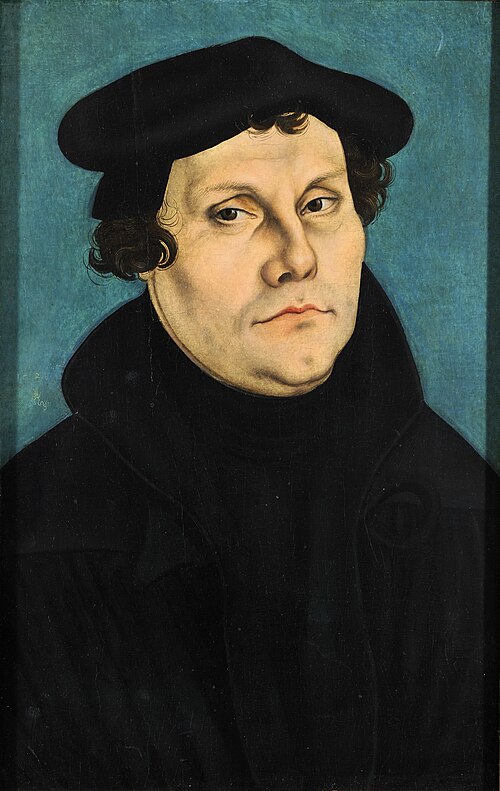
Martin Luther
91Martin Luther was a German theologian and reformer whose challenge to the Catholic Church sparked the Protestant Reformation and reshaped the religious, political and cultural landscape of Europe.
Why The fellow Reformer whose break with Rome inspired Calvin, though Calvin developed a distinct theological tradition.

Erasmus
80Erasmus was a Dutch humanist, scholar and writer, the leading intellectual of the Northern Renaissance, whose satire In Praise of Folly and pioneering edition of the Greek New Testament shaped both literature and the coming Reformation.
Why The Catholic humanist whose biblical scholarship influenced Calvin's biblical approach, though Erasmus remained Catholic.

Thomas Hobbes
88Thomas Hobbes was an English philosopher whose masterwork Leviathan founded modern political philosophy, arguing that to escape the violent state of nature people must submit to a powerful sovereign through a social contract.
Why A political thinker whose ideas about sovereignty were shaped in part by the Calvinist political experiments Calvin had begun.

Jan Hus
82Jan Hus was the Czech theologian and reformer who challenged the corruption and authority of the Catholic Church a century before Martin Luther, was burned at the stake for heresy in 1415, and whose martyrdom sparked the Hussite Wars and inspired the Protestant Reformation.
Why Also a theologian & reformer · Comparable historical impact

Francis of Assisi
87Francis of Assisi was the Italian friar who founded the Franciscan order, embraced radical poverty, preached to birds and animals, and created a spirituality of joy, simplicity, and care for all creation that became one of the most beloved expressions of Christianity.
Why Also a theologian & preacher · From the same civilization

Hildegard of Bingen
84Hildegard of Bingen was a German Benedictine abbess and one of the most remarkable polymaths of the Middle Ages — a visionary, composer, writer, healer and natural philosopher.
Why Also a theologian · From the same civilization