Theologian · 1369 – 1415
Jan Hus
Key Takeaways
- Hus challenged church corruption and papal authority over a century before Martin Luther.
- He was promised safe conduct to the Council of Constance, then condemned and burned as a heretic.
- His martyrdom sparked the Hussite Wars — the first successful religious wars against papal authority.
- Martin Luther explicitly identified Hus as his forerunner when he launched the Reformation.
Jan Hus was burned at the stake for saying what everyone in Europe already knew: that the Church was corrupt. His execution proved that the institution would kill rather than reform — and a century later, Martin Luther picked up exactly where Hus had left off.
The reformer
Hus was rector of Charles University in Prague, preaching in Czech rather than Latin to crowds of thousands. Drawing on the English reformer John Wycliffe, he argued that the Bible, not the pope, was the supreme authority in faith; that the Church had no right to sell indulgences; that corrupt clergy had forfeited their authority. He had the backing of the Bohemian nobility and the popular affection of Czech national identity — the church was German-speaking and associated with imperial power, while Hus preached in the people’s language.
The burning
In 1414, the Council of Constance summoned Hus with a promise of safe conduct from Holy Roman Emperor Sigismund. He came, expecting to debate. Instead he was imprisoned, tried for heresy, and when he refused to recant beliefs he insisted the council had never actually refuted, was burned on 6 July 1415. The safe-conduct was brushed aside. The council’s justification — that faith need not be kept with heretics — caused outrage across Bohemia. What followed was the Hussite Wars (1419–1436), in which Bohemian armies defeated five successive crusades sent against them — the first successful armed resistance to papal authority in European history. When Martin Luther nailed his theses in 1517, he was explicitly continuing Hus’s work.
Preached church reform and challenged papal authority in early 15th-century Bohemia, was condemned by the Council of Constance and burned at the stake in 1415, triggered the Hussite Wars, and became the primary inspiration for Martin Luther and the Protestant Reformation a century later.
Historical influence score: 82/100
Influence
Hus was the first major reformer to challenge the Catholic Church's authority and survive long enough to inspire a mass movement — his martyrdom proved that institutional reform was impossible, forcing later reformers toward outright break.
Legacy
The patron saint of the Czech nation, celebrated as the first Protestant martyr — his burning at Constance is now a Czech national holiday, and his death defined the shape of the Reformation that followed a century later.
Controversies
- He was promised safe conduct to Constance but was condemned and executed anyway — an act many saw as treacherous.
- His followers, the Hussites, waged a brutal 15-year series of wars that devastated Central Europe.
Little-Known Facts
- He reportedly said from the stake: 'You are now going to burn a goose [his name means 'goose' in Czech], but in a century you will have a swan whom you can neither roast nor boil' — a prophecy widely applied to Martin Luther.
- The Council of Constance justified burning him despite his safe-conduct guarantee by ruling that 'faith need not be kept with heretics' — a principle that deeply shocked contemporaries.
Myths & Misconceptions
Was Hus a Protestant?
Technically no — Protestantism didn't exist yet. He was a Catholic reformer who wanted the church cleaned up from within. But his ideas about scripture's authority over the pope and the importance of preaching in vernacular languages directly anticipated Luther's key arguments.
Connections
Frequently Asked Questions
Who was Jan Hus?
Jan Hus (c. 1369–1415) was the Czech theologian burned at the Council of Constance for challenging church corruption and papal authority, whose martyrdom sparked the Hussite Wars and directly inspired Martin Luther's Protestant Reformation a century later.
Citations & Sources
People Like Jan
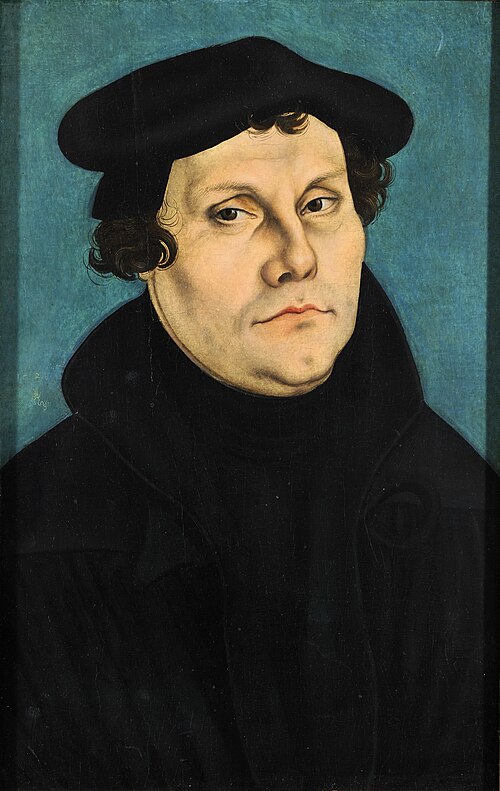
Martin Luther
91Martin Luther was a German theologian and reformer whose challenge to the Catholic Church sparked the Protestant Reformation and reshaped the religious, political and cultural landscape of Europe.
Why His direct spiritual successor who launched the Reformation a century later, explicitly calling himself a Hussite and citing Hus's martyrdom as his inspiration.

Erasmus
80Erasmus was a Dutch humanist, scholar and writer, the leading intellectual of the Northern Renaissance, whose satire In Praise of Folly and pioneering edition of the Greek New Testament shaped both literature and the coming Reformation.
Why A later reformer who shared Hus's desire to cleanse the church from within — though Erasmus, unlike Hus and Luther, refused to break from Rome.

Thomas Aquinas
91Thomas Aquinas was a medieval Italian theologian and philosopher whose synthesis of Christian theology and Aristotelian philosophy became central to Catholic thought and the high point of scholasticism.
Why The great scholastic theologian whose tradition Hus was trained in and eventually challenged, representing the institutional church Hus sought to reform.

John Calvin
86John Calvin was the French theologian and reformer who developed Calvinism, founded the Reformed tradition of Protestantism, and governed Geneva as a theocracy whose model of disciplined Christian community shaped Puritanism, Presbyterianism, and ultimately the foundations of modern democracy.
Why Also a theologian & reformer · Comparable historical impact

Francis of Assisi
87Francis of Assisi was the Italian friar who founded the Franciscan order, embraced radical poverty, preached to birds and animals, and created a spirituality of joy, simplicity, and care for all creation that became one of the most beloved expressions of Christianity.
Why Also a theologian & preacher · Active in the same era

Thomas Becket
82Thomas Becket was the Archbishop of Canterbury who was murdered in his own cathedral on the orders (implied or direct) of King Henry II, becoming an instant martyr and saint whose shrine at Canterbury became medieval Europe's most visited pilgrimage site.
Why Active in the same era · From the same civilization