Prophet · 570 – 632
Muhammad
Key Takeaways
- Muhammad founded Islam, now the world's second-largest religion with 1.8 billion followers.
- He received the revelations that form the Quran over 23 years.
- He unified the Arabian Peninsula under Islamic rule.
- His life (the Sunnah) forms a model of conduct for Muslims alongside the Quran.
Muhammad founded the world’s second-largest religion and transformed the history of three continents. Born in Mecca around 570 CE, he received his first revelation at age forty and over the next 23 years delivered the Quran — a text that 1.8 billion Muslims today regard as the word of God.
The founding of Islam
Muhammad was a merchant and caravan leader in Mecca when, in 610 CE, he reported receiving revelations commanding him to preach monotheism. He attracted a small following but faced fierce opposition from Mecca’s polytheist establishment, forcing his migration — the Hijra — to Medina in 622 CE. This journey marks year one of the Islamic calendar. In Medina he founded the first Islamic community, forged alliances among the city’s tribes through the Constitution of Medina, and built an authority that combined the spiritual and the political.
Unification and legacy
Through a series of battles and negotiations — including the symbolic peaceful conquest of Mecca in 630 CE — Muhammad unified the Arabian Peninsula for the first time in history. After his death in 632, his companions Umar ibn al-Khattab and others led the stunning expansion of Islam across the Middle East, Persia, and North Africa within a generation. The faith he founded produced medieval civilization’s great centers of learning, from Baghdad to Córdoba, and today shapes the belief and practice of over a quarter of humanity.
Founded Islam and unified the Arabian tribes under one faith, established the first Islamic state in Medina, compiled the foundations of the Quran, and created a community whose expansion after his death built a world civilization.
Military Feats
- United the warring tribes of Arabia through faith and diplomacy.
- Won key battles including Badr and Uhud, and negotiated the peaceful conquest of Mecca (630 CE).
Political Achievements
- Founded the first Islamic state in Medina (622 CE) — the first year of the Islamic calendar.
- Established the Constitution of Medina, one of the earliest written constitutions.
- Unified the Arabian Peninsula for the first time.
Historical influence score: 98/100
Influence
Muhammad's founding of Islam transformed Arabia and launched a world civilization that preserved and expanded ancient knowledge, created great art and architecture, and shaped the lives of nearly a quarter of humanity.
Legacy
Revered by Muslims as the final prophet and seal of the Abrahamic tradition, his teachings form the moral, legal, and spiritual framework for Islamic civilization.
Little-Known Facts
- He was illiterate — the Quran's revelations were memorized and recited by his followers before being compiled into a written text.
- The Islamic calendar begins with the Hijra — his migration from Mecca to Medina in 622 CE — not his birth.
Myths & Misconceptions
Did Muhammad write the Quran?
Muslims believe the Quran is the word of God revealed to Muhammad through the angel Gabriel — Muhammad is considered the messenger, not the author. Since he was illiterate, the revelations were preserved by his companions' memories and later compiled into written form.
Connections
Frequently Asked Questions
Who was Muhammad?
Muhammad (c. 570–632 CE) was the Arabian prophet who founded Islam, received the revelations of the Quran, unified Arabia under a new faith, and created a community that would become one of the world's great civilizations.
What is the Quran?
The Quran is Islam's holy scripture, believed by Muslims to be the literal word of God revealed to Muhammad over 23 years through the angel Gabriel and compiled after his death.
Citations & Sources
People Like Muhammad

Umar ibn al-Khattab
84Umar ibn al-Khattab was the second Rashidun caliph, one of the most powerful and influential leaders in Islamic history, under whom the early Muslim state expanded into a vast empire and developed its foundational institutions of government.
Why One of his closest companions who became the second caliph and presided over Islam's rapid expansion after Muhammad's death.

Khalid ibn al-Walid
80Khalid ibn al-Walid was one of the greatest military commanders in history, the general whose undefeated campaigns won the early Islamic conquests of Arabia, Persia and the Roman Levant for the first caliphs.
Why His greatest military commander, the undefeated general who spread Islam across Arabia and beyond.

Siddhartha Gautama
97Siddhartha Gautama, known as the Buddha, was a spiritual teacher of ancient India whose insights into suffering and liberation founded Buddhism, now one of the world's major religions.
Why A fellow founder of one of the world's great religious traditions, born roughly a thousand years earlier.

Charles Martel
81Charles Martel was the Frankish military leader who halted the Muslim advance into Western Europe at the Battle of Tours in 732, laying the foundations of the Carolingian dynasty that his grandson Charlemagne would raise to empire.
Why Also a military leader & statesman · Active in the same era
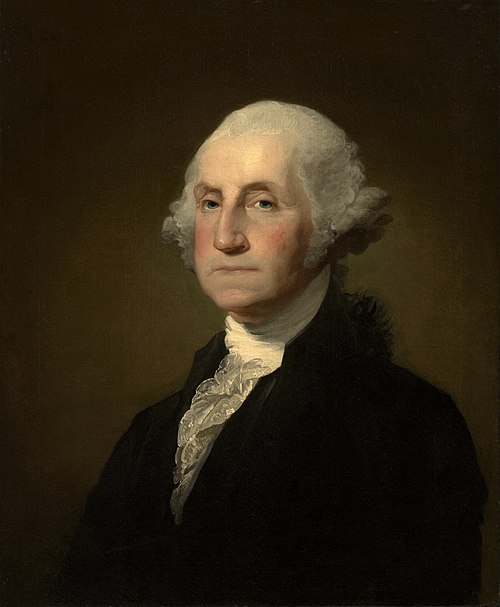
George Washington
91George Washington was the commander of the Continental Army in the American Revolution and the first President of the United States, whose leadership and restraint shaped the new republic.
Why Also a statesman & military leader · Comparable historical impact

Julius Caesar
95Julius Caesar was a Roman general and statesman whose conquest of Gaul and victory in civil war made him dictator of Rome, ending the Republic and paving the way for the Empire.
Why Also a military leader & statesman · Comparable historical impact