Artist · 1452 – 1519
Leonardo da Vinci
If you're interested in Leonardo da Vinci, these historical figures share a similar impact, discipline, philosophy, or era. Each recommendation explains why the connection exists.
Similar Impact & Significance

Benjamin Franklin
90Benjamin Franklin was an American polymath — a founding father, scientist, inventor, writer and diplomat — whose work on electricity and statesmanship made him one of the most admired figures of the 18th century.
Why Also a inventor & scientist · Comparable historical impact

Nikola Tesla
90Nikola Tesla was a Serbian-American inventor and electrical engineer whose pioneering work on alternating current and electromagnetism helped electrify the modern world.
Why Also a inventor & scientist · Comparable historical impact

Aristotle
98Aristotle was a Greek philosopher and polymath whose writings on logic, ethics, biology, politics and metaphysics shaped Western thought for over two millennia.
Why Also a polymath & scientist · Comparable historical impact

Avicenna
90Avicenna was a Persian polymath of the Islamic Golden Age, one of the greatest physicians and philosophers of the medieval world, whose Canon of Medicine was a standard text for six centuries.
Why Also a polymath & scientist · Comparable historical impact

Claude Monet
90Claude Monet was a French painter and the leading founder of Impressionism, whose studies of light and atmosphere — from Impression, Sunrise to the Water Lilies — revolutionized modern painting.
Why Also a artist · Comparable historical impact
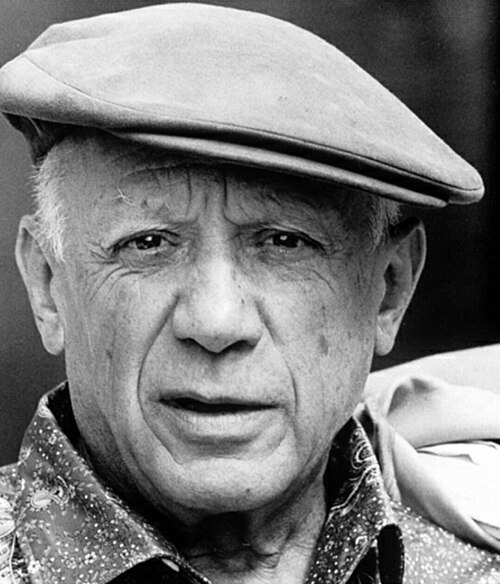
Pablo Picasso
94Pablo Picasso was a Spanish painter and sculptor who co-founded Cubism and ranks among the most influential and prolific artists of the twentieth century, creating works such as Guernica and Les Demoiselles d'Avignon.
Why Also a artist · Comparable historical impact

Rembrandt Harmenszoon van Rijn
91Rembrandt was a Dutch painter and etcher of the Golden Age, regarded as one of the greatest artists in history, celebrated for The Night Watch, his searching self-portraits, and his mastery of light and shadow.
Why Also a artist · Comparable historical impact
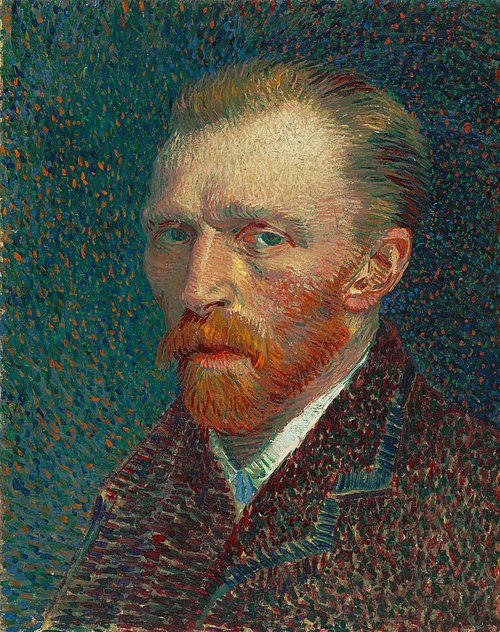
Vincent van Gogh
93Vincent van Gogh was a Dutch Post-Impressionist painter whose intense color, expressive brushwork, and emotional depth made him one of the most influential artists in Western history, though he found little recognition in his own lifetime.
Why Also a artist · Comparable historical impact

Al-Khwarizmi
89Al-Khwarizmi was a Persian mathematician and scholar of the Islamic Golden Age, the "father of algebra", whose name gave us the word "algorithm".
Why Also a scientist · Comparable historical impact

Albert Einstein
99Albert Einstein was a German-born theoretical physicist who developed the theory of relativity, one of the two pillars of modern physics, and won the 1921 Nobel Prize.
Why Also a scientist · Comparable historical impact

Averroes
87Averroes was a philosopher and polymath of Al-Andalus whose commentaries on Aristotle profoundly shaped medieval European philosophy and the relationship between reason and faith.
Why Also a polymath · Comparable historical impact

Charles Darwin
96Charles Darwin was an English naturalist whose theory of evolution by natural selection became the unifying foundation of modern biology and transformed humanity's understanding of life.
Why Also a scientist · Comparable historical impact

Dmitri Mendeleev
88Dmitri Mendeleev was a Russian chemist who created the periodic table of the elements, one of the most important organizing principles in all of science.
Why Also a scientist · Comparable historical impact

James Clerk Maxwell
92James Clerk Maxwell was a Scottish physicist whose equations unified electricity, magnetism and light into a single electromagnetic theory, one of the greatest achievements in the history of physics.
Why Also a scientist · Comparable historical impact
Same Field or Discipline

Michelangelo
95Michelangelo was an Italian Renaissance sculptor, painter and architect, one of the greatest artists in history, creator of the David, the Pietà and the Sistine Chapel ceiling.
Why Also a artist · Worked in anatomy
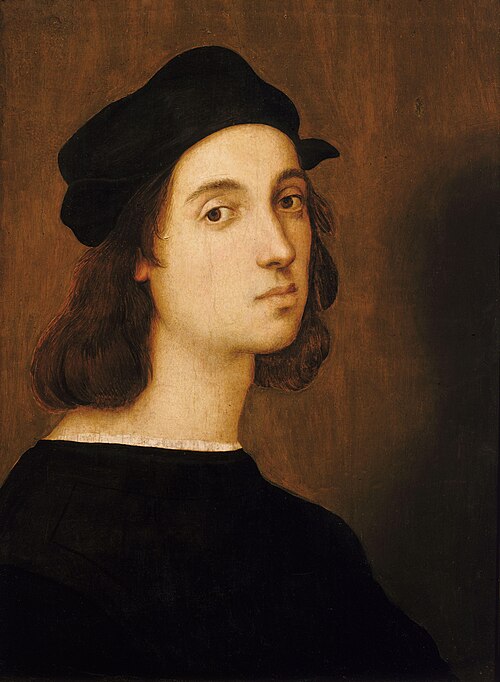
Raffaello Sanzio da Urbino
90Raphael was an Italian painter and architect of the High Renaissance whose works, prized for their harmony and grace, include The School of Athens and a famous series of serene Madonnas.
Why Also a artist · Active in the same era

Archimedes
94Archimedes was an ancient Greek mathematician, physicist and inventor, widely regarded as the greatest mathematician of antiquity and a founder of mathematical physics and engineering.
Why Also a inventor · Worked in engineering

Johannes Gutenberg
93Johannes Gutenberg was a German inventor and printer who introduced movable-type printing to Europe around 1440, an innovation that transformed the spread of knowledge and helped launch the modern world.
Why Also a inventor · Active in the same era

Thomas Edison
88Thomas Edison was an American inventor and businessman whose innovations — including a practical electric light, the phonograph and systems for distributing electricity — helped create the modern industrial world.
Why Also a inventor · Worked in engineering

Galileo Galilei
95Galileo Galilei was an Italian astronomer, physicist and engineer, the "father of modern science", whose telescopic discoveries and championing of heliocentrism transformed our understanding of the cosmos.
Why Also a scientist · Active in the same era

Nicolaus Copernicus
93Nicolaus Copernicus was a Renaissance astronomer who formulated the heliocentric model placing the Sun, not the Earth, at the center of the universe — a revolution in human thought.
Why Also a scientist · Active in the same era

René Descartes
92René Descartes was a French philosopher, mathematician and scientist, the "father of modern philosophy", famous for "I think, therefore I am" and for founding analytic geometry.
Why Also a scientist · Worked in optics

Wright Brothers
85The Wright Brothers, Orville and Wilbur, were American inventors who designed, built and flew the world's first successful powered aeroplane in 1903, launching the age of human flight.
Why Also a inventor · Worked in engineering
