Statesman · 495 BC – 429 BC
Pericles
If you're interested in Pericles, these historical figures share a similar impact, discipline, philosophy, or era. Each recommendation explains why the connection exists.
Similar Impact & Significance

Themistocles
79Themistocles was an Athenian statesman and general whose foresight built the navy that saved Greece, and whose brilliant strategy at the Battle of Salamis destroyed the Persian fleet and turned back Xerxes's invasion.
Why An earlier Athenian leader whose naval power Pericles inherited and built upon.

Socrates
95Socrates was a classical Greek philosopher credited as a founder of Western philosophy, famous for the Socratic method of questioning and for his trial and execution in Athens.
Why The philosopher who flourished in the Athens that Pericles led.

Thucydides
82Thucydides was an Athenian historian and general whose History of the Peloponnesian War set the standard for rigorous, evidence-based history and remains a foundational text of political and military analysis.
Why The historian who recorded Pericles's speeches and the war that followed his age.

Abraham Lincoln
92Abraham Lincoln was the 16th President of the United States, who led the nation through its Civil War, preserved the Union, and abolished slavery before his assassination in 1865.
Why Also a statesman & politician · Comparable historical impact

Cicero
88Cicero was a Roman statesman, orator and philosopher whose speeches and writings defined Latin prose, transmitted Greek philosophy to Rome, and championed the values of the Roman Republic.
Why Also a statesman & orator · Comparable historical impact

Mark Antony
80Mark Antony was a Roman general and statesman, a close ally of Julius Caesar who, after Caesar's assassination, ruled much of the Roman world and allied with Cleopatra, before his defeat by Octavian ended the Roman Republic for good.
Why Also a statesman & politician · Comparable historical impact

Pompey
80Pompey the Great was a Roman general and statesman, one of the leading figures of the late Republic, whose conquests in the East made him Rome's greatest soldier before he was defeated by Julius Caesar in a civil war that ended the Republic.
Why Also a statesman & politician · Comparable historical impact
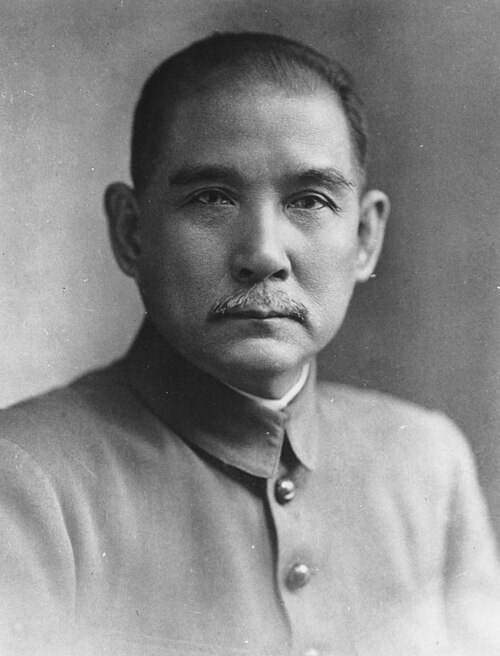
Sun Yat-sen
85Sun Yat-sen was the Chinese revolutionary and statesman who overthrew the Qing dynasty, founded the Republic of China, and became the founding father of both mainland China and Taiwan — revered by both Communists and Nationalists as the father of the Chinese nation.
Why Also a statesman · Comparable historical impact

Adolf Hitler
90Adolf Hitler was the dictator of Nazi Germany from 1933 to 1945, whose ideology of racial supremacy and aggressive expansionism plunged the world into World War II and caused the Holocaust — the genocide of six million Jews and millions of others.
Why Also a politician · Comparable historical impact

Alexander Hamilton
87Alexander Hamilton was the American Founding Father who designed the United States financial system, co-wrote the Federalist Papers, founded the first national bank, served as the first Secretary of the Treasury, and was killed in a duel by Vice President Aaron Burr in 1804.
Why Also a statesman · Comparable historical impact

Augustus
94Augustus was the first Roman emperor, the heir of Julius Caesar who ended a century of civil war, established the Roman Empire, and inaugurated the Pax Romana.
Why Also a statesman · Comparable historical impact

Benito Mussolini
85Benito Mussolini was the Italian fascist dictator who founded fascism as a political movement, ruled Italy from 1922 to 1943, allied with Adolf Hitler in the Axis, and was killed by partisans in 1945 — the inventor of a totalitarian ideology that inspired and shaped the 20th century's darkest political movements.
Why Also a politician · Comparable historical impact

Benjamin Franklin
90Benjamin Franklin was an American polymath — a founding father, scientist, inventor, writer and diplomat — whose work on electricity and statesmanship made him one of the most admired figures of the 18th century.
Why Also a statesman · Comparable historical impact
Same Field or Discipline

Same Era or Civilization

Archimedes
94Archimedes was an ancient Greek mathematician, physicist and inventor, widely regarded as the greatest mathematician of antiquity and a founder of mathematical physics and engineering.
Why Active in the same era · From the same civilization

Euclid
91Euclid was an ancient Greek mathematician, the "father of geometry", whose treatise the Elements is the most influential mathematics textbook ever written.
Why Active in the same era · From the same civilization

Euripides
79Euripides was one of the three great tragedians of classical Athens, whose psychologically searching, often unsettling plays such as Medea and The Bacchae made him the most modern-feeling dramatist of the ancient world.
Why Active in the same era · From the same civilization
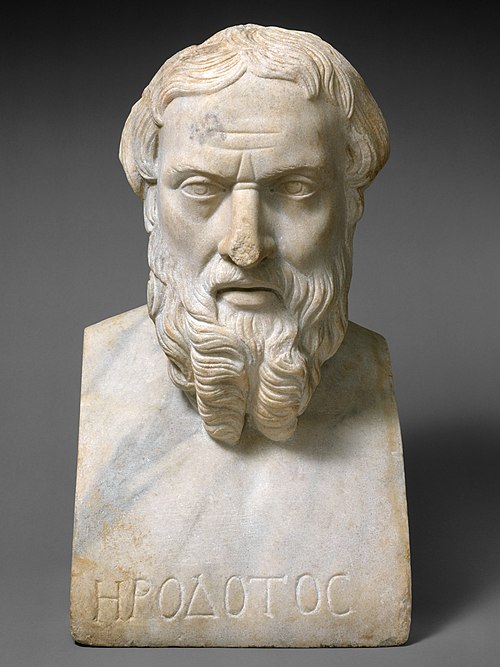
Herodotus
83Herodotus was a Greek writer of the 5th century BC, called the "Father of History" for his Histories, the first known work to systematically investigate and narrate past events as a connected inquiry.
Why Active in the same era · From the same civilization

Hippocrates
88Hippocrates was an ancient Greek physician regarded as the father of Western medicine, who established medicine as a rational discipline distinct from superstition and inspired the Hippocratic Oath.
Why Active in the same era · From the same civilization

Leonidas I
80Leonidas I was a king of Sparta who led a small Greek force in a legendary last stand against the vast Persian army at the Battle of Thermopylae in 480 BC, becoming an enduring symbol of courage and sacrifice.
Why Active in the same era · From the same civilization

Pythagoras
90Pythagoras was an ancient Greek mathematician and philosopher who founded the Pythagorean school and is remembered for the Pythagorean theorem and the idea that number underlies the cosmos.
Why Active in the same era · From the same civilization
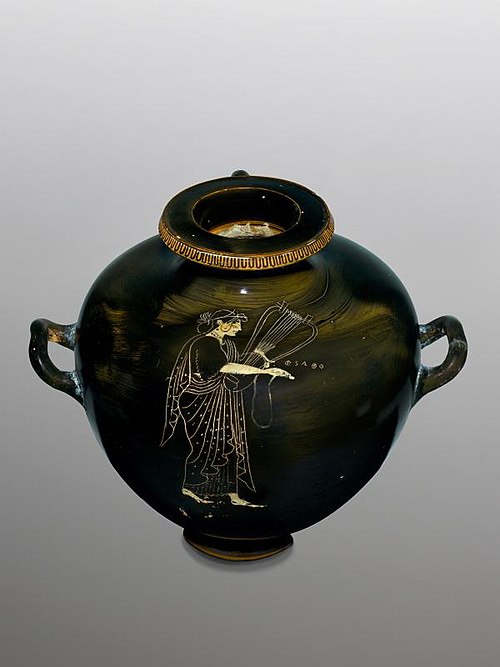
Sappho
78Sappho was an ancient Greek lyric poet from the island of Lesbos, celebrated in antiquity as one of the greatest of all poets and revered for her intimate, intensely personal verse on love and longing.
Why Active in the same era · From the same civilization

Sophocles
81Sophocles was one of the three great tragedians of classical Athens, author of Oedipus Rex and Antigone, whose dramas shaped Western theatre and gave us some of its most enduring stories.
Why Active in the same era · From the same civilization

Zeno of Citium
86Zeno of Citium was an ancient Greek philosopher who founded Stoicism, teaching that virtue and reason are the path to a good life, in lectures given at the Painted Porch (Stoa) in Athens.
Why Active in the same era · From the same civilization