Inventor · 1400 – 1468
Johannes Gutenberg
If you're interested in Johannes Gutenberg, these historical figures share a similar impact, discipline, philosophy, or era. Each recommendation explains why the connection exists.
Similar Impact & Significance
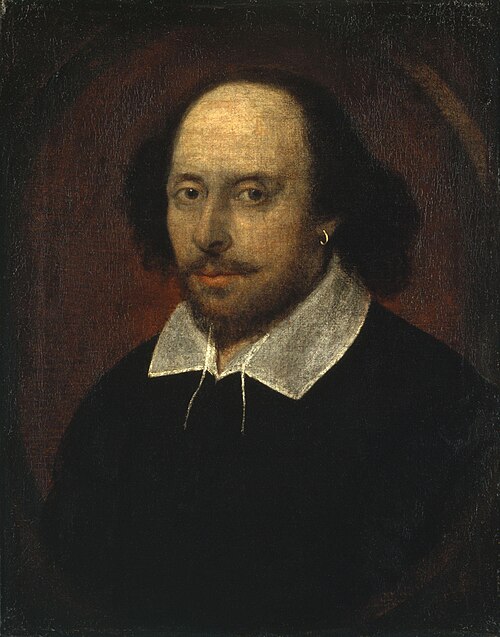
William Shakespeare
96William Shakespeare was an English playwright and poet widely regarded as the greatest writer in the English language and the world's preeminent dramatist.
Why Whose works, like all modern literature, reached the world through the printing Gutenberg pioneered.

Leonardo da Vinci
97Leonardo da Vinci was an Italian Renaissance polymath — painter, inventor, anatomist and engineer — whose curiosity and genius made him the archetype of the 'Renaissance man'.
Why A fellow Renaissance innovator whose age of ideas the printing press helped spread.

Archimedes
94Archimedes was an ancient Greek mathematician, physicist and inventor, widely regarded as the greatest mathematician of antiquity and a founder of mathematical physics and engineering.
Why Also a inventor & engineer · Comparable historical impact

Nikola Tesla
90Nikola Tesla was a Serbian-American inventor and electrical engineer whose pioneering work on alternating current and electromagnetism helped electrify the modern world.
Why Also a inventor & engineer · Comparable historical impact

Thomas Edison
88Thomas Edison was an American inventor and businessman whose innovations — including a practical electric light, the phonograph and systems for distributing electricity — helped create the modern industrial world.
Why Also a inventor & engineer · Comparable historical impact

Wright Brothers
85The Wright Brothers, Orville and Wilbur, were American inventors who designed, built and flew the world's first successful powered aeroplane in 1903, launching the age of human flight.
Why Also a inventor & engineer · Comparable historical impact

Benjamin Franklin
90Benjamin Franklin was an American polymath — a founding father, scientist, inventor, writer and diplomat — whose work on electricity and statesmanship made him one of the most admired figures of the 18th century.
Why Also a inventor · Comparable historical impact

Abu'l-Fath Jalal-ud-din Muhammad Akbar
88Akbar was the third Mughal emperor, who expanded the empire across much of the Indian subcontinent and is remembered for his administrative reforms, religious tolerance and patronage of the arts during a long and powerful reign.
Why Active in the same era · Comparable historical impact

Elizabeth I
89Elizabeth I was Queen of England from 1558 to 1603, whose long and stable reign — the Elizabethan era — saw a golden age of culture, the defeat of the Spanish Armada, and England's rise as a sea power.
Why Active in the same era · Comparable historical impact
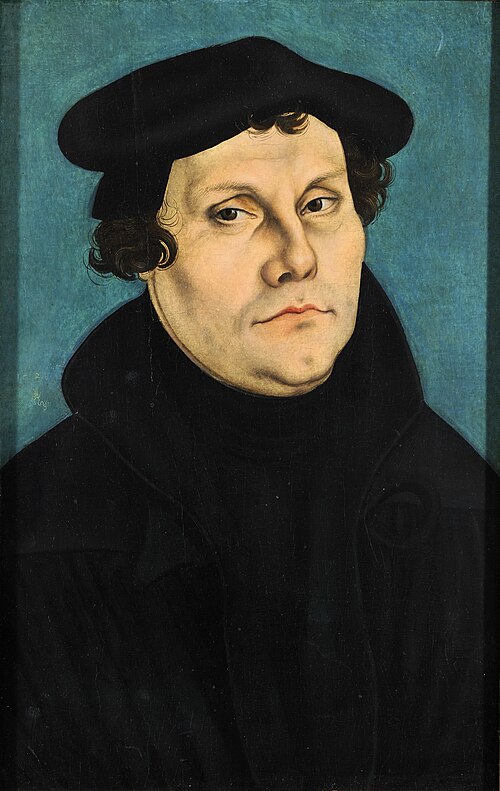
Martin Luther
91Martin Luther was a German theologian and reformer whose challenge to the Catholic Church sparked the Protestant Reformation and reshaped the religious, political and cultural landscape of Europe.
Why Active in the same era · Comparable historical impact

Michelangelo
95Michelangelo was an Italian Renaissance sculptor, painter and architect, one of the greatest artists in history, creator of the David, the Pietà and the Sistine Chapel ceiling.
Why Active in the same era · Comparable historical impact

Miguel de Cervantes
91Miguel de Cervantes was a Spanish writer whose novel Don Quixote is widely regarded as the first modern novel and one of the greatest works in world literature.
Why Active in the same era · Comparable historical impact

Niccolò Machiavelli
88Niccolò Machiavelli was a Renaissance Italian diplomat, political philosopher and writer whose treatise The Prince founded modern political science and gave his name to ruthless statecraft.
Why Active in the same era · Comparable historical impact

Nicolaus Copernicus
93Nicolaus Copernicus was a Renaissance astronomer who formulated the heliocentric model placing the Sun, not the Earth, at the center of the universe — a revolution in human thought.
Why Active in the same era · Comparable historical impact
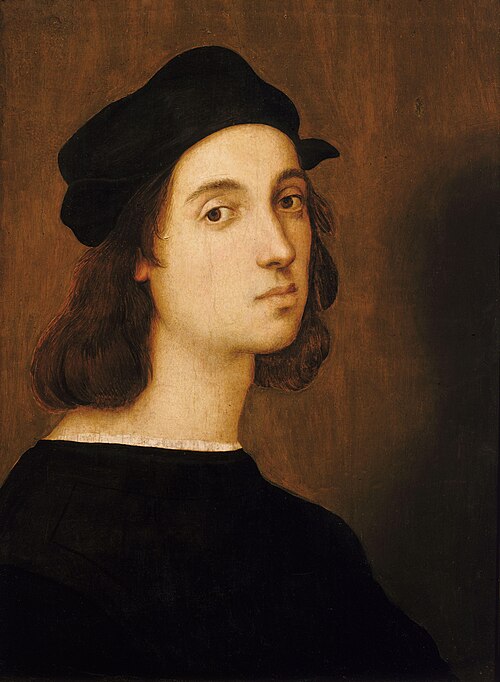
Raffaello Sanzio da Urbino
90Raphael was an Italian painter and architect of the High Renaissance whose works, prized for their harmony and grace, include The School of Athens and a famous series of serene Madonnas.
Why Active in the same era · Comparable historical impact
Suleiman I
90Suleiman the Magnificent was the longest-reigning sultan of the Ottoman Empire, who led it to the height of its power through military conquest, legal reform and a brilliant flowering of art and architecture.
Why Active in the same era · Comparable historical impact

Galileo Galilei
95Galileo Galilei was an Italian astronomer, physicist and engineer, the "father of modern science", whose telescopic discoveries and championing of heliocentrism transformed our understanding of the cosmos.
Why Active in the same era · Comparable historical impact

Hildegard of Bingen
84Hildegard of Bingen was a German Benedictine abbess and one of the most remarkable polymaths of the Middle Ages — a visionary, composer, writer, healer and natural philosopher.
Why From the same civilization · Comparable historical impact

Immanuel Kant
94Immanuel Kant was a German philosopher of the Enlightenment, one of the most influential thinkers in history, who reconciled rationalism and empiricism and transformed ethics, metaphysics and epistemology.
Why Comparable historical impact
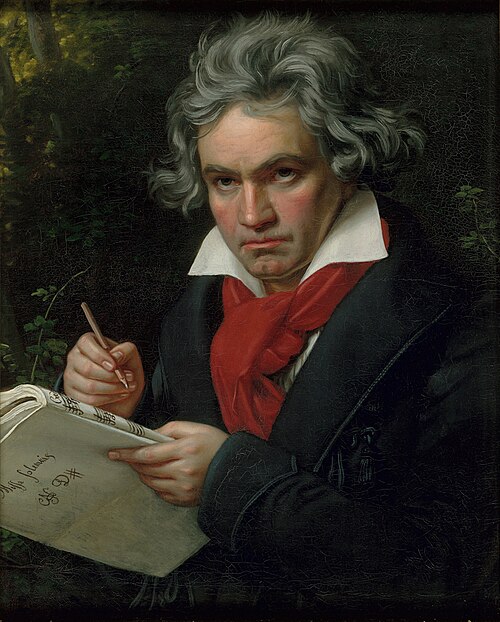
Ludwig van Beethoven
94Ludwig van Beethoven was a German composer and pianist, one of the greatest musicians in history, who bridged the Classical and Romantic eras and composed masterpieces even after going deaf.
Why Comparable historical impact

Abraham Lincoln
92Abraham Lincoln was the 16th President of the United States, who led the nation through its Civil War, preserved the Union, and abolished slavery before his assassination in 1865.
Why Comparable historical impact

Ada Lovelace
84Ada Lovelace was an English mathematician widely regarded as the first computer programmer, who saw that Charles Babbage's Analytical Engine could go beyond calculation to manipulate symbols of any kind.
Why Comparable historical impact

Adam Smith
90Adam Smith was a Scottish Enlightenment philosopher and economist, the father of modern economics, whose work The Wealth of Nations laid the foundations of free-market thought.
Why Comparable historical impact
