Mathematician · 325 BC – 265 BC
Euclid
If you're interested in Euclid, these historical figures share a similar impact, discipline, philosophy, or era. Each recommendation explains why the connection exists.
Similar Impact & Significance

Pythagoras
90Pythagoras was an ancient Greek mathematician and philosopher who founded the Pythagorean school and is remembered for the Pythagorean theorem and the idea that number underlies the cosmos.
Why Euclid systematized the geometry that Pythagoras and earlier Greeks pioneered.

Archimedes
94Archimedes was an ancient Greek mathematician, physicist and inventor, widely regarded as the greatest mathematician of antiquity and a founder of mathematical physics and engineering.
Why A contemporary Greek mathematician who built on Euclidean foundations.

Isaac Newton
99Isaac Newton was an English physicist and mathematician whose laws of motion and universal gravitation laid the foundation of classical mechanics and the Scientific Revolution.
Why Newton modeled the rigorous, axiomatic structure of his Principia on Euclid's Elements.
Same Field or Discipline

Ada Lovelace
84Ada Lovelace was an English mathematician widely regarded as the first computer programmer, who saw that Charles Babbage's Analytical Engine could go beyond calculation to manipulate symbols of any kind.
Why Also a mathematician · Worked in mathematics

Al-Khwarizmi
89Al-Khwarizmi was a Persian mathematician and scholar of the Islamic Golden Age, the "father of algebra", whose name gave us the word "algorithm".
Why Also a mathematician · Worked in mathematics

Alan Turing
91Alan Turing was an English mathematician and computer scientist who founded theoretical computer science, helped break the German Enigma cipher in World War II, and pioneered the study of artificial intelligence.
Why Also a mathematician · Worked in mathematics
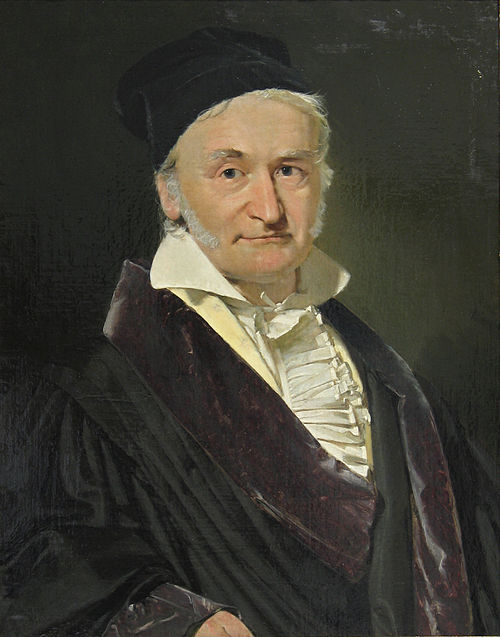
Carl Friedrich Gauss
95Carl Friedrich Gauss was a German mathematician and physicist whose profound contributions to number theory, statistics, geometry, astronomy and magnetism earned him the title "Prince of Mathematicians."
Why Also a mathematician · Worked in mathematics
Hypatia
84Hypatia was a mathematician, astronomer and Neoplatonist philosopher of late-antique Alexandria, the most prominent woman scholar of the ancient world, whose brutal murder came to symbolize the end of classical learning.
Why Also a mathematician · Worked in mathematics

James Clerk Maxwell
92James Clerk Maxwell was a Scottish physicist whose equations unified electricity, magnetism and light into a single electromagnetic theory, one of the greatest achievements in the history of physics.
Why Also a mathematician · Worked in mathematics

Leonhard Euler
93Leonhard Euler was a Swiss mathematician and physicist, the most prolific mathematician in history, whose work shaped modern analysis, number theory, graph theory and mathematical notation.
Why Also a mathematician · Worked in mathematics

René Descartes
92René Descartes was a French philosopher, mathematician and scientist, the "father of modern philosophy", famous for "I think, therefore I am" and for founding analytic geometry.
Why Also a mathematician · Worked in mathematics

Galileo Galilei
95Galileo Galilei was an Italian astronomer, physicist and engineer, the "father of modern science", whose telescopic discoveries and championing of heliocentrism transformed our understanding of the cosmos.
Why Also a mathematician · Worked in mathematics

Nicolaus Copernicus
93Nicolaus Copernicus was a Renaissance astronomer who formulated the heliocentric model placing the Sun, not the Earth, at the center of the universe — a revolution in human thought.
Why Also a mathematician · Worked in mathematics

Omar Khayyam
79Omar Khayyam was a Persian polymath of the Islamic Golden Age — a leading mathematician and astronomer — who is remembered in the West above all for the Rubaiyat, a collection of quatrains on life, fate and pleasure.
Why Also a mathematician · Worked in mathematics
Same Era or Civilization

Alexander the Great
96Alexander the Great was the king of Macedon who built one of the largest empires in history by his early thirties, spreading Greek culture across three continents.
Why Active in the same era · From the same civilization

Aristotle
98Aristotle was a Greek philosopher and polymath whose writings on logic, ethics, biology, politics and metaphysics shaped Western thought for over two millennia.
Why Active in the same era · From the same civilization
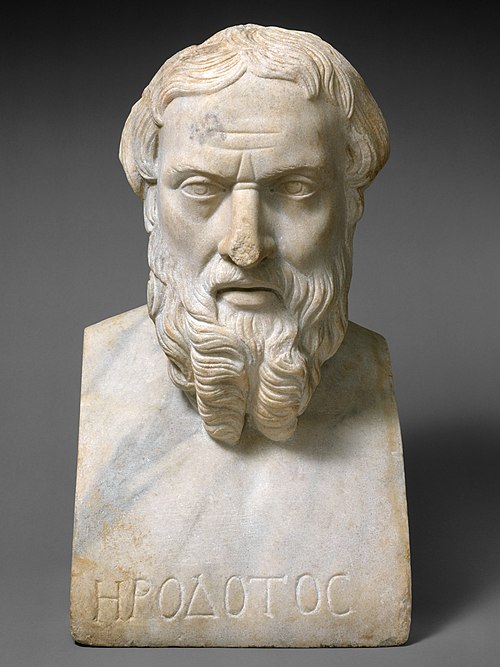
Herodotus
83Herodotus was a Greek writer of the 5th century BC, called the "Father of History" for his Histories, the first known work to systematically investigate and narrate past events as a connected inquiry.
Why Active in the same era · From the same civilization

Hippocrates
88Hippocrates was an ancient Greek physician regarded as the father of Western medicine, who established medicine as a rational discipline distinct from superstition and inspired the Hippocratic Oath.
Why Active in the same era · From the same civilization

Homer
95Homer was the legendary ancient Greek poet to whom the great epics the Iliad and the Odyssey are attributed, foundational works of Western literature.
Why Active in the same era · From the same civilization

Plato
96Plato was a Greek philosopher who founded the Academy in Athens, wrote the foundational dialogues of Western philosophy, and developed the influential theory of Forms.
Why Active in the same era · From the same civilization

Socrates
95Socrates was a classical Greek philosopher credited as a founder of Western philosophy, famous for the Socratic method of questioning and for his trial and execution in Athens.
Why Active in the same era · From the same civilization

Thucydides
82Thucydides was an Athenian historian and general whose History of the Peloponnesian War set the standard for rigorous, evidence-based history and remains a foundational text of political and military analysis.
Why Active in the same era · From the same civilization

Zeno of Citium
86Zeno of Citium was an ancient Greek philosopher who founded Stoicism, teaching that virtue and reason are the path to a good life, in lectures given at the Painted Porch (Stoa) in Athens.
Why Active in the same era · From the same civilization

Sophocles
81Sophocles was one of the three great tragedians of classical Athens, author of Oedipus Rex and Antigone, whose dramas shaped Western theatre and gave us some of its most enduring stories.
Why Active in the same era · From the same civilization