Physicist · 1871 – 1937
Ernest Rutherford
Key Takeaways
- Rutherford discovered that atoms have a dense nucleus through his gold foil experiment (1909).
- He identified alpha and beta radiation and demonstrated radioactive transmutation.
- He was the first to split the atom (1919).
- His nuclear model of the atom became the foundation of modern atomic physics.
Ernest Rutherford aimed alpha particles at gold foil and found that the atom had a nucleus — a discovery that overthrew the prevailing “plum pudding” model of the atom and created nuclear physics. When he told his students what the results meant, he reportedly said it was as if he had fired artillery shells at tissue paper and they had bounced back.
The nuclear atom
In 1909, Rutherford’s gold foil experiment showed that most alpha particles passed straight through gold foil, but some bounced back at large angles. The only explanation was that most of the atom was empty space, with a tiny, dense, positively charged nucleus at the center. This model — refined by his student Niels Bohr — became the foundation of modern atomic theory. Rutherford had already won the Nobel Prize in Chemistry in 1908 for demonstrating that radioactivity involved the actual transmutation of one element into another.
Splitting the atom
In 1919 Rutherford became the first person to deliberately split an atom — bombarding nitrogen with alpha particles and producing oxygen and hydrogen. He ran the Cavendish Laboratory in Cambridge as the most productive physics laboratory in the world, training a generation of scientists including Bohr, Chadwick (who discovered the neutron), and Kapitza. The nuclear energy he glimpsed — he called energy extraction from the atom “moonshine” in 1933 — was proved real by his students and successors within a decade.
Discovered the nuclear atom through the gold foil experiment, distinguished alpha and beta radiation, demonstrated radioactive transmutation of elements, and trained the generation of physicists including Niels Bohr who developed quantum mechanics and nuclear physics.
Historical influence score: 90/100
Influence
Rutherford's nuclear model of the atom and his discoveries in radioactivity created the foundations of nuclear physics — the science that led to nuclear power and nuclear weapons.
Legacy
Called the 'Father of Nuclear Physics,' element 104 (Rutherfordium) is named for him; his Cavendish Laboratory became the most productive research institution in 20th-century physics.
Major Works
- Radioactivity (1904)
- The gold foil experiment results (1909)
- The splitting of the atom (1919)
Little-Known Facts
- He was awarded the Nobel Prize in Chemistry, not Physics — he found this ironic given that he was a physicist who had discovered that chemists' elements could actually transform into other elements through radioactive decay.
- He famously remarked that 'all science is either physics or stamp collecting' — a jibe at chemistry and biology.
Myths & Misconceptions
Did Rutherford build an atomic bomb?
No — he discovered the nuclear structure of the atom and split it (1919), but he believed in 1933 that extracting useful energy from the atom was 'moonshine.' He died in 1937 before the Manhattan Project began.
Connections
Frequently Asked Questions
Who was Ernest Rutherford?
Ernest Rutherford (1871–1937) was the New Zealand physicist who discovered the nuclear structure of the atom, identified radioactive decay, and became the father of nuclear physics.
Citations & Sources
People Like Ernest

Niels Bohr
90Niels Bohr was a Danish physicist who created the first quantum model of the atom and became a leading architect of quantum mechanics through the Copenhagen interpretation.
Why His student and collaborator who built on Rutherford's nuclear model to develop the quantum model of atomic structure.

Albert Einstein
99Albert Einstein was a German-born theoretical physicist who developed the theory of relativity, one of the two pillars of modern physics, and won the 1921 Nobel Prize.
Why His contemporary whose special relativity and E=mc² provided the theoretical framework for understanding nuclear energy.
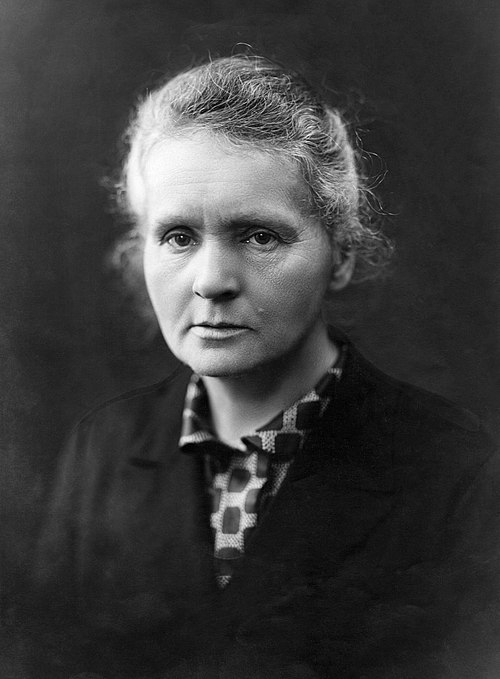
Marie Curie
92Marie Curie was a Polish-French physicist and chemist who pioneered research on radioactivity and became the first person to win Nobel Prizes in two different sciences.
Why A fellow pioneer of radioactivity research whose work on radium paralleled and intersected with Rutherford's own.

Erwin Schrödinger
86Erwin Schrödinger was an Austrian physicist who formulated the wave equation governing quantum systems and devised the famous Schrödinger's cat thought experiment.
Why Also a physicist & scientist · Active in the same era

James Clerk Maxwell
92James Clerk Maxwell was a Scottish physicist whose equations unified electricity, magnetism and light into a single electromagnetic theory, one of the greatest achievements in the history of physics.
Why Also a physicist & scientist · From the same civilization

Max Planck
89Max Planck was a German physicist who originated quantum theory by introducing the quantum of action, a discovery that launched modern physics and earned him the 1918 Nobel Prize.
Why Also a physicist & scientist · Active in the same era