Physician · 1749 – 1823
Edward Jenner
Key Takeaways
- Jenner developed the world's first vaccine — against smallpox — in 1796.
- He tested it on an 8-year-old boy, James Phipps, who was then exposed to smallpox and did not develop it.
- His vaccine eventually led to the eradication of smallpox in 1980.
- He is considered the founder of immunology and one of the greatest benefactors of humanity.
Edward Jenner made an observation that saved hundreds of millions of lives. Country doctors in Gloucestershire knew that milkmaids who caught cowpox seemed not to get smallpox. Jenner took that folk knowledge and turned it into science.
The first vaccine
In May 1796 Jenner took material from a cowpox sore on the hands of milkmaid Sarah Nelmes and inoculated an 8-year-old boy, James Phipps. Six weeks later he exposed James to smallpox directly. The boy did not develop it. Jenner published his findings in 1798 under the title An Inquiry into the Causes and Effects of the Variolae Vaccinae — coining the word vaccine from the Latin for cow. Smallpox, which had killed around 400,000 Europeans a year and blinded or disfigured many more survivors, had met its nemesis.
The greatest medical gift
The vaccine spread across the world with remarkable speed. Napoleon, despite being at war with Britain, had his entire army vaccinated and called Jenner “one of the greatest men in history.” Louis Pasteur built on Jenner’s principle to develop vaccines against cholera, anthrax, and rabies, creating modern immunology. The ultimate tribute came in 1980: the World Health Organization declared smallpox eradicated — the only human disease ever eliminated from the earth. Jenner’s observation made it possible.
Developed the smallpox vaccine in 1796 using cowpox inoculation, successfully tested it on a child, published his findings, and launched the field of vaccinology — the greatest single medical advance in terms of lives saved.
Historical influence score: 92/100
Influence
Jenner's vaccine concept saved more human lives than any other medical intervention in history — and his method of vaccination led ultimately to the eradication of smallpox, the only human disease ever deliberately exterminated.
Legacy
Called the man who saved more lives than any other person in history, his vaccine principle is the foundation of modern immunology and public health.
Major Works
- An Inquiry into the Causes and Effects of the Variolae Vaccinae (1798)
Little-Known Facts
- Napoleon, despite being at war with Britain, had his army vaccinated with Jenner's cowpox vaccine and called Jenner 'one of the greatest men in history.'
- The word 'vaccine' comes from the Latin 'vacca' (cow) — a tribute to the cowpox that Jenner used for his first vaccination.
Myths & Misconceptions
Was Jenner the first to use inoculation?
Variolation — inoculating with actual smallpox material — had been practiced in China, Africa, and the Ottoman Empire for centuries before Jenner. His innovation was using the much safer cowpox material, which conferred immunity without the risks of actual smallpox.
Connections
Frequently Asked Questions
Who was Edward Jenner?
Edward Jenner (1749–1823) was the English physician who developed the world's first vaccine against smallpox in 1796, saving hundreds of millions of lives and founding the field of immunology.
Citations & Sources
People Like Edward

Louis Pasteur
90Louis Pasteur was a French chemist and microbiologist whose work on germ theory, vaccination, and pasteurization revolutionized medicine and saved countless lives.
Why The French scientist who built on Jenner's vaccination principle to develop vaccines against multiple diseases and create the germ theory of disease.

Hippocrates
88Hippocrates was an ancient Greek physician regarded as the father of Western medicine, who established medicine as a rational discipline distinct from superstition and inspired the Hippocratic Oath.
Why The ancient physician whose tradition of careful observation and treating the patient Jenner continued in his systematic investigation of smallpox immunity.
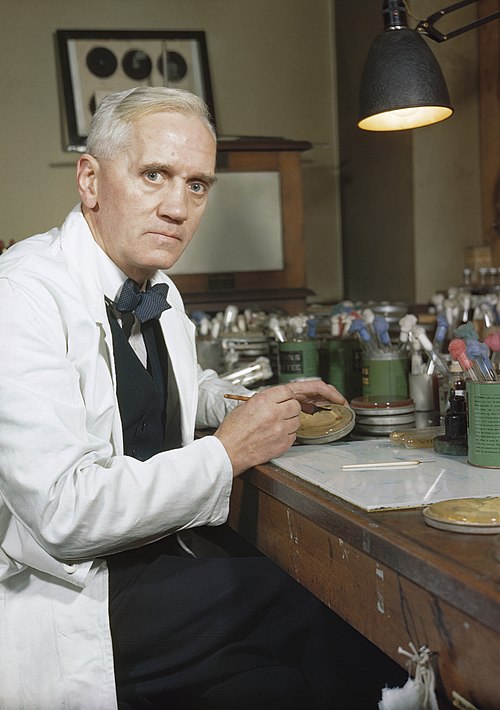
Alexander Fleming
92Alexander Fleming was the Scottish bacteriologist who discovered penicillin in 1928 — the world's first antibiotic — by noticing that mold was killing bacteria in a contaminated culture plate, an observation that ultimately saved an estimated 200 million lives.
Why A later medical pioneer whose discovery of penicillin paralleled Jenner's vaccine in saving lives through the observation of natural phenomena.

Ernest Rutherford
90Ernest Rutherford was the New Zealand-born physicist who discovered the nuclear structure of the atom, demonstrated radioactive decay, and pioneered nuclear physics — establishing the framework that led to nuclear energy and the atomic bomb.
Why Also a scientist · Active in the same era

James Watt
90James Watt was the Scottish inventor and engineer whose improvements to the steam engine in the 1760s and 1780s made it vastly more efficient and practical, powering the Industrial Revolution and transforming the world's economy.
Why Also a scientist · Active in the same era

Avicenna
90Avicenna was a Persian polymath of the Islamic Golden Age, one of the greatest physicians and philosophers of the medieval world, whose Canon of Medicine was a standard text for six centuries.
Why Also a physician & scientist · Comparable historical impact