Inventor · 1736 – 1819
James Watt
Key Takeaways
- Watt's improvements to the steam engine made it practical and efficient enough to power industry.
- His invention of the separate condenser (1765) dramatically reduced fuel consumption.
- His rotary steam engine (1782) could power machinery — not just pump water.
- The unit of power — the watt — is named after him.
James Watt transformed a clunking pump into the engine of the world. His improvements to the steam engine were so profound — reducing fuel consumption by three quarters, adding rotary motion, enabling self-regulation — that they turned steam from a niche pumping device into the power source for an industrial revolution that changed everything.
The breakthrough
In 1763 Watt was asked to repair a Newcomen steam engine model at Glasgow University. As he fixed it he understood its fundamental inefficiency: the cylinder had to be alternately heated and cooled with every stroke, wasting enormous amounts of energy. His solution — the separate condenser, a separate chamber where the steam was condensed, keeping the cylinder hot — came to him during a walk on Glasgow Green in 1765 and reduced fuel consumption by 75%. He patented it in 1769.
Powering the revolution
Working with businessman Matthew Boulton in Birmingham, Watt developed the rotary steam engine (1782) — converting the up-down piston motion into rotary motion that could turn mill wheels and factory machinery. His engines spread across Britain’s textile mills, mines, and ironworks, then across the world. The unit of power — the watt — is named in his honor. The Industrial Revolution that Watt helped power transformed human society more thoroughly than any event since the agricultural revolution: creating cities, factories, railways, and global trade on a scale never before seen.
Invented the separate condenser, the rotary steam engine, and the double-acting engine, making the steam engine efficient enough to power factories, mills, and eventually locomotives — turning steam into the engine of the Industrial Revolution.
Historical influence score: 90/100
Influence
Watt's steam engine powered the Industrial Revolution — the greatest transformation in human economic life since the invention of agriculture, which mechanized production, built factories, and ultimately lifted billions from poverty.
Legacy
Named in the SI unit of power, his improvements to the steam engine powered the world — his engine is arguably the most consequential invention of the last five centuries.
Major Works
- Steam engine with separate condenser (1769 patent)
- Rotary steam engine (1782)
- Double-acting steam engine
- Centrifugal governor (speed regulator)
Little-Known Facts
- The idea for the separate condenser came to him during a Sunday walk on Glasgow Green — he worked out the physics in his head before reaching home.
- He invented the term 'horsepower' to help industrialists understand how many horses his engines could replace.
Myths & Misconceptions
Did James Watt invent the steam engine?
No — Thomas Newcomen built the first practical steam engine in 1712. Watt improved it so dramatically — reducing fuel consumption by 75% and adding rotary motion — that his version was effectively a new invention that made steam power practical for industry.
Connections
Frequently Asked Questions
Who was James Watt?
James Watt (1736–1819) was the Scottish engineer whose improvements to the steam engine — especially the separate condenser and rotary motion — made it efficient enough to power the Industrial Revolution.
Citations & Sources
People Like James

Isaac Newton
99Isaac Newton was an English physicist and mathematician whose laws of motion and universal gravitation laid the foundation of classical mechanics and the Scientific Revolution.
Why The scientist whose physics underpinned the thermodynamic understanding Watt applied in engineering the steam engine.

Thomas Edison
88Thomas Edison was an American inventor and businessman whose innovations — including a practical electric light, the phonograph and systems for distributing electricity — helped create the modern industrial world.
Why A later inventor who used the electrical power generation that Watt's steam revolution enabled, and whose dynamos used the same principles.

Charles Darwin
96Charles Darwin was an English naturalist whose theory of evolution by natural selection became the unifying foundation of modern biology and transformed humanity's understanding of life.
Why A contemporary of Watt's Birmingham circle (the Lunar Society) that brought together scientists and industrialists.

Nikola Tesla
90Nikola Tesla was a Serbian-American inventor and electrical engineer whose pioneering work on alternating current and electromagnetism helped electrify the modern world.
Why Also a inventor & engineer · Active in the same era

Wright Brothers
85The Wright Brothers, Orville and Wilbur, were American inventors who designed, built and flew the world's first successful powered aeroplane in 1903, launching the age of human flight.
Why Also a inventor & engineer · Active in the same era
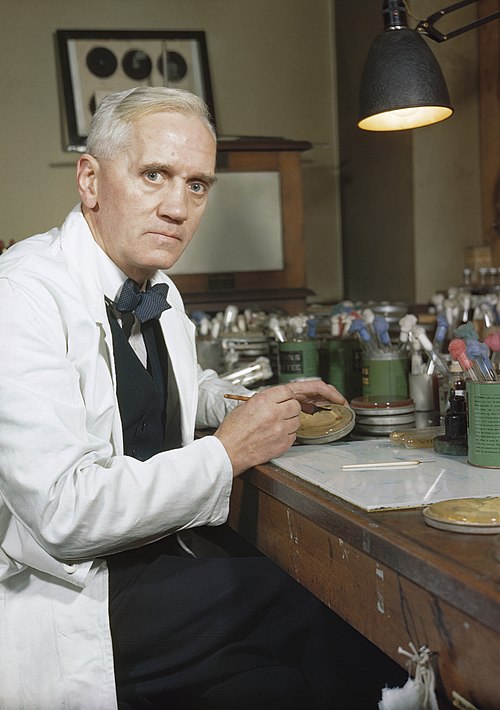
Alexander Fleming
92Alexander Fleming was the Scottish bacteriologist who discovered penicillin in 1928 — the world's first antibiotic — by noticing that mold was killing bacteria in a contaminated culture plate, an observation that ultimately saved an estimated 200 million lives.
Why Also a scientist · Active in the same era