General · 1890 – 1970
Charles de Gaulle
If you're interested in Charles de Gaulle, these historical figures share a similar impact, discipline, philosophy, or era. Each recommendation explains why the connection exists.
Similar Impact & Significance

Napoleon III
79Napoleon III was the nephew of Napoleon Bonaparte who became the first elected president of France and then its last emperor, modernizing Paris and French industry before his empire collapsed with defeat in the Franco-Prussian War of 1870.
Why An earlier French leader whose Second Empire left France defeated and humiliated — the inverse of the national restoration de Gaulle sought.

Napoleon Bonaparte
94Napoleon Bonaparte was a French military and political leader who rose during the French Revolution, crowned himself Emperor, and dominated European affairs for over a decade.
Why The French imperial figure de Gaulle both studied deeply and consciously avoided emulating, pursuing French greatness through republicanism rather than autocracy.

Winston Churchill
90Winston Churchill was the British statesman who led the United Kingdom to victory in World War II — and a prolific historian and writer whose books and speeches won him the Nobel Prize in Literature, a rare honour for a man of action.
Why His wartime ally and frequent adversary, with whom his relationship was essential but perpetually stormy.

Mark Antony
80Mark Antony was a Roman general and statesman, a close ally of Julius Caesar who, after Caesar's assassination, ruled much of the Roman world and allied with Cleopatra, before his defeat by Octavian ended the Roman Republic for good.
Why Also a general & statesman · Comparable historical impact

Pompey
80Pompey the Great was a Roman general and statesman, one of the leading figures of the late Republic, whose conquests in the East made him Rome's greatest soldier before he was defeated by Julius Caesar in a civil war that ended the Republic.
Why Also a general & statesman · Comparable historical impact

Scipio Africanus
81Scipio Africanus was a Roman general who defeated Hannibal at the Battle of Zama to win the Second Punic War, one of the greatest commanders of antiquity and the savior of the Roman Republic in its darkest hour.
Why Also a general & statesman · Comparable historical impact
Same Field or Discipline

Mustafa Kemal Atatürk
91Mustafa Kemal Atatürk was the military commander who defeated the Allied partition of the Ottoman Empire after World War I, founded the Republic of Turkey in 1923, and then transformed it through sweeping secular modernization reforms that reshaped Turkish society.
Why Also a general & statesman · Active in the same era

Franklin D. Roosevelt
92Franklin D. Roosevelt was the 32nd President of the United States who led the country through the Great Depression with the New Deal and through most of World War II, serving an unprecedented four terms and reshaping the role of the federal government in American life.
Why Also a president & statesman · Active in the same era

Abraham Lincoln
92Abraham Lincoln was the 16th President of the United States, who led the nation through its Civil War, preserved the Union, and abolished slavery before his assassination in 1865.
Why Also a president & statesman · Active in the same era

Chiang Kai-shek
82Chiang Kai-shek was the Chinese Nationalist leader who unified China in the late 1920s, led the country through the Japanese invasion in World War II, but lost the Chinese Civil War to Mao Zedong and retreated to Taiwan, which he ruled until his death.
Why Also a general & statesman · Active in the same era

Duke of Wellington
87The Duke of Wellington was the British general who defeated Napoleon Bonaparte at the Battle of Waterloo in 1815, ending the Napoleonic Wars, and who subsequently served as Prime Minister of Britain — the only man to hold both the highest military and civilian offices in British history.
Why Also a general & statesman · Active in the same era
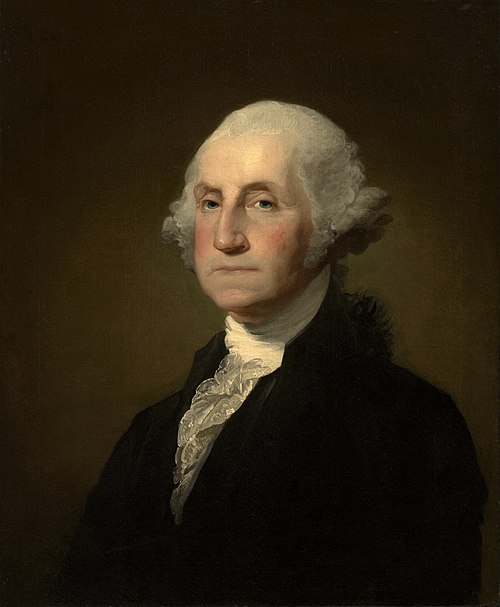
George Washington
91George Washington was the commander of the Continental Army in the American Revolution and the first President of the United States, whose leadership and restraint shaped the new republic.
Why Also a statesman & president · Active in the same era

Ho Chi Minh
88Ho Chi Minh was the Vietnamese revolutionary leader who led the resistance against French colonial rule and then American military intervention, founding the Democratic Republic of Vietnam and becoming the unifying symbol of Vietnamese independence.
Why Also a statesman & president · Active in the same era

Joseph Stalin
91Joseph Stalin was the Soviet dictator who industrialized the USSR, led it to victory in World War II, and built a vast empire in Eastern Europe — but also presided over a totalitarian state that killed millions through purges, gulags, and engineered famine.
Why Also a general & statesman · Active in the same era

Nelson Mandela
92Nelson Mandela was a South African anti-apartheid revolutionary and statesman who, after 27 years in prison, became the country's first democratically elected president and a global symbol of reconciliation.
Why Also a statesman & president · Active in the same era

Simón Bolívar
88Simón Bolívar was the South American general and statesman who liberated six nations from Spanish colonial rule, earning the title El Libertador and shaping the independence of Venezuela, Colombia, Ecuador, Peru, Panama, and Bolivia.
Why Also a general & statesman · Active in the same era

Theodore Roosevelt
85Theodore Roosevelt was the 26th President of the United States, a soldier, conservationist and reformer — and a remarkably prolific author who wrote around forty books on history, nature, politics and exploration alongside his public career.
Why Also a statesman & president · Active in the same era

Thomas Jefferson
88Thomas Jefferson was an American statesman, the principal author of the Declaration of Independence and third President of the United States, who was also a prolific writer, architect and scholar whose Notes on the State of Virginia was a landmark of early American letters.
Why Also a statesman & president · Active in the same era

Giuseppe Garibaldi
84Giuseppe Garibaldi was the Italian nationalist military leader who united southern Italy with the north through his bold expedition of the Thousand, becoming the military hero of Italian unification and one of the most celebrated revolutionary figures of the 19th century.
Why Also a general · Active in the same era

Toussaint Louverture
87Toussaint Louverture was the Haitian revolutionary leader who rose from slavery to lead the only successful slave revolt in history, defeating French, Spanish, and British armies to lay the foundations for Haiti's independence as the world's first Black republic.
Why Also a general · Active in the same era
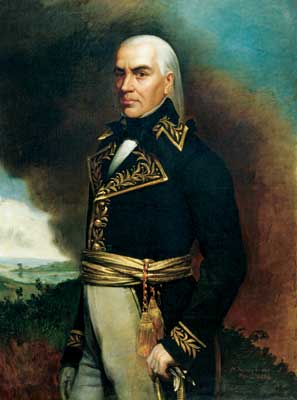
Francisco de Miranda
78Francisco de Miranda was the Venezuelan revolutionary who became the forerunner of Spanish American independence, fighting across three continents before returning home to lead Venezuela's first republic — a visionary who preceded Bolívar and inspired the liberation of Latin America.
Why Also a general & statesman · Active in the same era

Haile Selassie I
85Haile Selassie was the Emperor of Ethiopia who modernized his country, became the symbol of African resistance to European colonialism after surviving Mussolini's invasion, championed African unity at the UN and as founder of the African Union, and is venerated as a messiah by the Rastafari movement.
Why Also a statesman · Active in the same era

Tecumseh
83Tecumseh was the Shawnee leader who built the largest Native American confederacy in history to resist US expansion, allied with the British in the War of 1812, and was killed at the Battle of the Thames — becoming the greatest pan-Indian leader America ever faced.
Why Also a statesman · Active in the same era

Alexander Hamilton
87Alexander Hamilton was the American Founding Father who designed the United States financial system, co-wrote the Federalist Papers, founded the first national bank, served as the first Secretary of the Treasury, and was killed in a duel by Vice President Aaron Burr in 1804.
Why Also a statesman · Active in the same era