Tsar · 1868 – 1918
Nicholas II
If you're interested in Nicholas II, these historical figures share a similar impact, discipline, philosophy, or era. Each recommendation explains why the connection exists.
Similar Impact & Significance

Vladimir Lenin
92Vladimir Lenin was the Marxist revolutionary who led the Bolshevik seizure of power in Russia in 1917, founded the Soviet Union, and created the first communist state — reshaping the course of the 20th century.
Why The revolutionary whose Bolsheviks overthrew the tsarist system Nicholas had refused to reform, and whose government ultimately ordered Nicholas's execution.

Joseph Stalin
91Joseph Stalin was the Soviet dictator who industrialized the USSR, led it to victory in World War II, and built a vast empire in Eastern Europe — but also presided over a totalitarian state that killed millions through purges, gulags, and engineered famine.
Why The Soviet successor who built the communist state on the ashes of Nicholas's empire.

Queen Victoria
85Queen Victoria was the longest-reigning British monarch of her era, who presided over the height of the British Empire and the Victorian age of industrialization, reform, and global expansion, becoming a grandmother to most of Europe's royal houses.
Why His first cousin once removed (through their grandmother) — the intermarried European royalty whose family ties made WWI particularly tragic.

Peter the Great
85Peter the Great was the Russian tsar who transformed Russia into a major European power, modernizing its army, government and society along Western lines and founding the new capital of Saint Petersburg.
Why Also a tsar & emperor · Comparable historical impact

Abu'l-Fath Jalal-ud-din Muhammad Akbar
88Akbar was the third Mughal emperor, who expanded the empire across much of the Indian subcontinent and is remembered for his administrative reforms, religious tolerance and patronage of the arts during a long and powerful reign.
Why Also a emperor & ruler · Comparable historical impact

Ashoka the Great
90Ashoka was the third emperor of the Maurya Empire who, after a devastating war, embraced Buddhism and non-violence, becoming one of history's most remarkable rulers.
Why Also a emperor & ruler · Comparable historical impact

Atahualpa
78Atahualpa was the last independent ruler of the Inca Empire, who had just won a civil war for the throne when he was captured and executed by the Spanish conquistador Francisco Pizarro, ending Inca rule over the Andes.
Why Also a emperor & ruler · Comparable historical impact

Babur
81Babur was the Central Asian conqueror who founded the Mughal Empire, a descendant of Tamerlane and Genghis Khan who, after losing his ancestral lands, invaded India and established one of the greatest empires in its history.
Why Also a emperor & ruler · Comparable historical impact

Chandragupta Maurya
85Chandragupta Maurya was the founder of the Maurya Empire, who united most of the Indian subcontinent for the first time and established one of the ancient world's great states.
Why Also a emperor & ruler · Comparable historical impact

Charlemagne
89Charlemagne was the King of the Franks who united much of Western Europe and was crowned Emperor in 800 AD, reviving the idea of a Roman empire in the West and sparking a cultural revival.
Why Also a emperor & ruler · Comparable historical impact
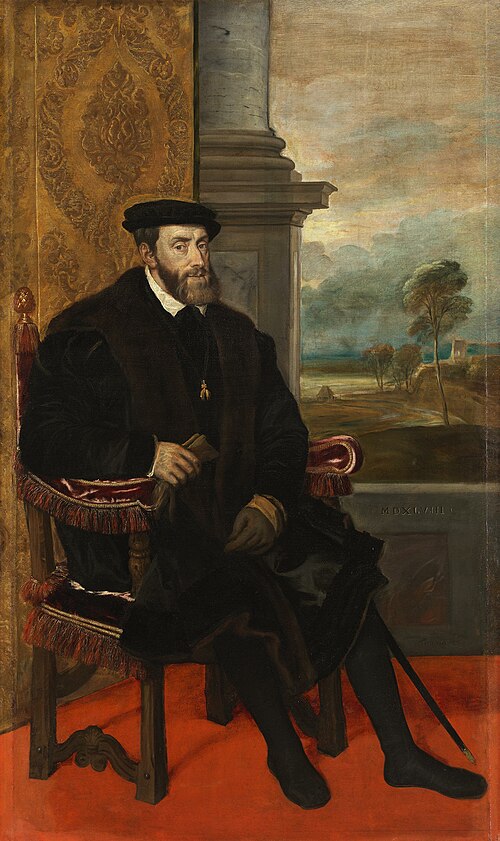
Charles V
83Charles V was the Holy Roman Emperor and king of Spain who ruled the largest European empire since Charlemagne, struggling to hold together a vast realm against the rise of Protestantism, France, and the Ottoman Empire before abdicating his crowns.
Why Also a emperor & ruler · Comparable historical impact

Constantine the Great
87Constantine the Great was the Roman emperor who became the first to embrace Christianity, ended its persecution, and founded Constantinople as a new capital — decisions that reshaped the Roman world and the future of Europe.
Why Also a emperor & ruler · Comparable historical impact

Emperor Taizong of Tang
82Emperor Taizong of Tang was one of the greatest emperors in Chinese history, whose reign launched the golden age of the Tang dynasty, combining military conquest with wise, benevolent government that became a model for later rulers.
Why Also a emperor & ruler · Comparable historical impact

Frederick Barbarossa
80Frederick Barbarossa was the Holy Roman Emperor who sought to restore imperial power over Germany and Italy, a towering figure of the 12th century whose long reign and legendary death on crusade made him a German national myth.
Why Also a emperor & ruler · Comparable historical impact

Hadrian
80Hadrian was a Roman emperor, one of the "Five Good Emperors", who consolidated rather than expanded the empire, traveled tirelessly through its provinces, and built the great frontier wall in Britain that still bears his name.
Why Also a emperor & ruler · Comparable historical impact

Justinian I
84Justinian I was the Byzantine emperor who sought to restore the glory of Rome, reconquering lost western lands, codifying Roman law in the Corpus Juris Civilis, and building the magnificent church of Hagia Sophia.
Why Also a emperor & ruler · Comparable historical impact

Kangxi Emperor
81The Kangxi Emperor was the longest-reigning emperor in Chinese history, a ruler of the Qing dynasty who consolidated Manchu rule over China, expanded the empire, and presided over an era of prosperity, stability and learning.
Why Also a emperor & ruler · Comparable historical impact

Kublai Khan
83Kublai Khan was the grandson of Genghis Khan who completed the Mongol conquest of China and founded the Yuan dynasty, ruling the largest realm of his age and welcoming travelers such as Marco Polo to his fabled court.
Why Also a emperor & ruler · Comparable historical impact

Liu Bang
83Liu Bang was a peasant who rose to become the founder of the Han dynasty, one of the longest and greatest dynasties in Chinese history, establishing a model of imperial government that would endure for two thousand years.
Why Also a emperor & ruler · Comparable historical impact

Mansa Musa
82Mansa Musa was the ruler of the Mali Empire at its height in the 14th century, remembered as one of the wealthiest individuals in history and famed for a lavish pilgrimage to Mecca that announced West Africa's riches to the world.
Why Also a emperor & ruler · Comparable historical impact
Same Field or Discipline

Haile Selassie I
85Haile Selassie was the Emperor of Ethiopia who modernized his country, became the symbol of African resistance to European colonialism after surviving Mussolini's invasion, championed African unity at the UN and as founder of the African Union, and is venerated as a messiah by the Rastafari movement.
Why Also a emperor & ruler · Active in the same era

Ivan the Terrible
82Ivan the Terrible was the first Tsar of Russia, who centralized power, expanded Russian territory into Siberia and the Volga region, and created the Russian autocratic state — but also unleashed a reign of terror that earned him his epithet.
Why Also a tsar & ruler · From the same civilization

Kaiser Wilhelm II
82Kaiser Wilhelm II was the last German Emperor and King of Prussia, whose erratic and belligerent foreign policy helped plunge Europe into World War I, ending with his abdication in 1918 and the collapse of the German Empire.
Why Also a emperor & ruler · Active in the same era

Napoleon III
79Napoleon III was the nephew of Napoleon Bonaparte who became the first elected president of France and then its last emperor, modernizing Paris and French industry before his empire collapsed with defeat in the Franco-Prussian War of 1870.
Why Also a emperor & ruler · Active in the same era