Abolitionist · 1797 – 1883
Sojourner Truth
Key Takeaways
- Sojourner Truth was born into slavery and escaped to freedom in 1826.
- She became one of the most powerful orators against slavery and for women's rights.
- Her "Ain't I a Woman?" speech (1851) challenged the exclusion of Black women from the women's rights movement.
- She met Abraham Lincoln at the White House and advised on policy for formerly enslaved people.
Sojourner Truth was born a slave and died a free woman who had addressed presidents. Between those two facts lies one of the most remarkable lives of the 19th century.
From slavery to the platform
Born Isabella Baumfree in New York state, she spent her first three decades enslaved — witnessing and experiencing the full brutality of the system. She escaped to freedom in 1826, took her freedom to court when her son was illegally sold south, and won — one of the first Black Americans to successfully sue a white man. In 1843 she changed her name to Sojourner Truth and became an itinerant preacher and abolitionist speaker, her deep voice and uncompromising testimony drawing crowds across the North.
Ain’t I a Woman?
Her most famous moment came at the 1851 Ohio Women’s Rights Convention. In the face of arguments that women were too weak and delicate for the vote, she delivered an improvised speech pointing out that she had been enslaved, beaten, and had endured everything a man could endure — “Ain’t I a woman?” Her argument was decades ahead of its time: that the women’s rights movement could not ignore race, and that Black women’s experience exposed the limits of feminist arguments based on fragility and privilege. She met Abraham Lincoln at the White House in 1864, recruited Black soldiers for the Union, and continued advocating until her death in 1883.
Escaped slavery, became a pioneering abolitionist and women's rights speaker, advised Abraham Lincoln, and delivered some of the most powerful speeches of the 19th century on the intersection of race and gender.
Political Achievements
- Became one of the most effective orators against slavery in the pre-Civil War United States.
- Advocated for women's suffrage at the Ohio Women's Rights Convention (1851).
- Recruited Black soldiers for the Union Army during the Civil War.
Historical influence score: 85/100
Influence
Sojourner Truth pioneered the understanding that race and gender oppression were inseparable, an insight that she articulated decades before the concept of intersectionality was named.
Legacy
An icon of both abolitionism and feminism, her 'Ain't I a Woman?' speech remains one of the most powerful statements of the connection between racial and gender equality.
Little-Known Facts
- She was illiterate throughout her life — her autobiography was dictated to a friend.
- She successfully sued for her son's return after he was illegally sold into slavery in the South — one of the first Black Americans to win such a case.
Myths & Misconceptions
Did Sojourner Truth say 'Ain't I a Woman?'
The famous phrase comes from a reconstruction of her speech published twelve years later — the contemporary account uses different language, though the core argument about the exclusion of Black women from gender equality claims was central to her actual speech.
Connections
Frequently Asked Questions
Who was Sojourner Truth?
Sojourner Truth (c. 1797–1883) was an American abolitionist and women's rights activist who escaped slavery and became a pioneering orator, famous for her challenge to the exclusion of Black women from the women's rights movement.
Citations & Sources
People Like Sojourner

Harriet Tubman
83Harriet Tubman was an American abolitionist who escaped slavery and then risked her life repeatedly to lead dozens of enslaved people to freedom via the Underground Railroad, becoming one of the great heroes of the fight against slavery.
Why Her fellow formerly enslaved activist who fought for freedom through direct action while Truth fought through words.

Frederick Douglass
84Frederick Douglass was an American abolitionist, orator and writer who escaped slavery to become the most powerful voice of the antislavery movement and one of the foremost advocates for equality and human rights in the 19th century.
Why Her fellow abolitionist and former slave whose oratory complemented her own and whose paths crossed throughout the movement.

Susan B. Anthony
88Susan B. Anthony was the American civil rights leader who devoted her life to women's suffrage and abolition, co-founded the National Woman Suffrage Association, was arrested for illegally voting in 1872, and became the face of the movement that won women the vote fourteen years after her death.
Why Her suffragist colleague who shared platforms and campaigns, though their alliance was complicated by questions of racial inclusion.

Harriet Beecher Stowe
84Harriet Beecher Stowe was the American author whose novel Uncle Tom's Cabin (1852) galvanized the abolitionist movement in the North and became the best-selling novel of the 19th century, helping precipitate the Civil War.
Why Also a abolitionist · Active in the same era
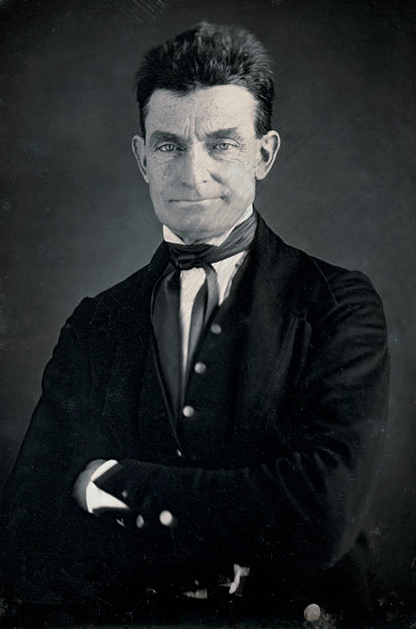
John Brown
81John Brown was the American abolitionist who believed that slavery could only be ended by armed violence, led the raid on the federal arsenal at Harpers Ferry in 1859, was hanged for treason, and became the most polarizing and prophetic figure of the American antislavery movement.
Why Also a abolitionist · Active in the same era

Eleanor Roosevelt
88Eleanor Roosevelt was the longest-serving First Lady of the United States, a human rights champion who chaired the UN commission that drafted the Universal Declaration of Human Rights, and redefined the role of first lady as an independent political force.
Why Active in the same era · From the same civilization