Dictator · 1883 – 1945
Benito Mussolini
If you're interested in Benito Mussolini, these historical figures share a similar impact, discipline, philosophy, or era. Each recommendation explains why the connection exists.
Similar Impact & Significance

Adolf Hitler
90Adolf Hitler was the dictator of Nazi Germany from 1933 to 1945, whose ideology of racial supremacy and aggressive expansionism plunged the world into World War II and caused the Holocaust — the genocide of six million Jews and millions of others.
Why His fascist ally and ideological successor, who took Mussolini's innovations further and more catastrophically.

Napoleon III
79Napoleon III was the nephew of Napoleon Bonaparte who became the first elected president of France and then its last emperor, modernizing Paris and French industry before his empire collapsed with defeat in the Franco-Prussian War of 1870.
Why An earlier Italian-involved French ruler whose imperial style influenced Mussolini's aesthetics of power.

Julius Caesar
95Julius Caesar was a Roman general and statesman whose conquest of Gaul and victory in civil war made him dictator of Rome, ending the Republic and paving the way for the Empire.
Why The ancient Roman he consciously evoked in his speeches and imagery, attempting to present fascism as the resurrection of Roman glory.

Mark Antony
80Mark Antony was a Roman general and statesman, a close ally of Julius Caesar who, after Caesar's assassination, ruled much of the Roman world and allied with Cleopatra, before his defeat by Octavian ended the Roman Republic for good.
Why Also a politician · Comparable historical impact

Pericles
84Pericles was an Athenian statesman who led the city during its golden age, strengthening its democracy, building the Parthenon and championing the arts, in an era so brilliant it is often called the Age of Pericles.
Why Also a politician · Comparable historical impact

Pompey
80Pompey the Great was a Roman general and statesman, one of the leading figures of the late Republic, whose conquests in the East made him Rome's greatest soldier before he was defeated by Julius Caesar in a civil war that ended the Republic.
Why Also a politician · Comparable historical impact

Themistocles
79Themistocles was an Athenian statesman and general whose foresight built the navy that saved Greece, and whose brilliant strategy at the Battle of Salamis destroyed the Persian fleet and turned back Xerxes's invasion.
Why Also a politician · Comparable historical impact

Anne Frank
81Anne Frank was a German-Dutch Jewish girl whose diary, written while hiding from the Nazis in occupied Amsterdam, became one of the most widely read accounts of the Holocaust and a lasting testament to humanity amid persecution.
Why Active in the same era · Comparable historical impact

Franklin D. Roosevelt
92Franklin D. Roosevelt was the 32nd President of the United States who led the country through the Great Depression with the New Deal and through most of World War II, serving an unprecedented four terms and reshaping the role of the federal government in American life.
Why Active in the same era · Comparable historical impact

Winston Churchill
90Winston Churchill was the British statesman who led the United Kingdom to victory in World War II — and a prolific historian and writer whose books and speeches won him the Nobel Prize in Literature, a rare honour for a man of action.
Why Active in the same era · Comparable historical impact

Agatha Christie
81Agatha Christie was an English writer, the best-selling novelist of all time, whose ingenious detective stories featuring Hercule Poirot and Miss Marple made her the undisputed "Queen of Crime".
Why Active in the same era · Comparable historical impact

Alan Turing
91Alan Turing was an English mathematician and computer scientist who founded theoretical computer science, helped break the German Enigma cipher in World War II, and pioneered the study of artificial intelligence.
Why Active in the same era · Comparable historical impact
Same Field or Discipline

Giuseppe Garibaldi
84Giuseppe Garibaldi was the Italian nationalist military leader who united southern Italy with the north through his bold expedition of the Thousand, becoming the military hero of Italian unification and one of the most celebrated revolutionary figures of the 19th century.
Why Also a politician · Active in the same era

Maximilien Robespierre
86Maximilien Robespierre was the French revolutionary leader who dominated the Committee of Public Safety during the Reign of Terror, using revolutionary justice to execute thousands including Louis XVI — before being overthrown and guillotined himself in Thermidor.
Why Also a politician · Active in the same era

Abraham Lincoln
92Abraham Lincoln was the 16th President of the United States, who led the nation through its Civil War, preserved the Union, and abolished slavery before his assassination in 1865.
Why Also a politician · Active in the same era

Ernest Hemingway
82Ernest Hemingway was an American novelist and short-story writer whose spare, understated prose style revolutionized 20th-century fiction, winning the Nobel Prize in Literature for works such as The Old Man and the Sea.
Why Also a journalist · Active in the same era
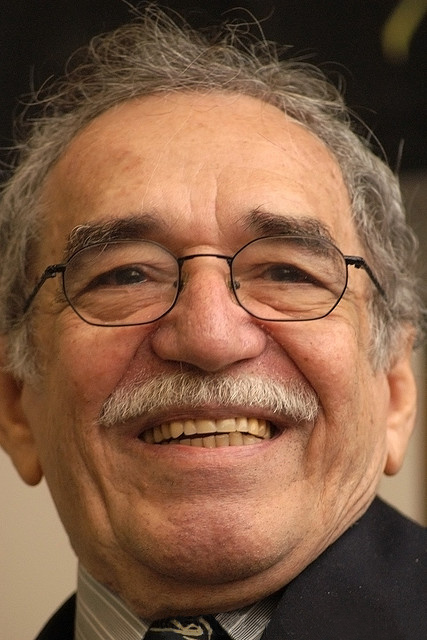
Gabriel García Márquez
81Gabriel García Márquez was a Colombian novelist, the most celebrated figure of Latin American literature, whose masterpiece One Hundred Years of Solitude made magical realism world-famous and won him the Nobel Prize in Literature.
Why Also a journalist · Active in the same era

George Orwell
84George Orwell was an English writer and journalist whose novels Nineteen Eighty-Four and Animal Farm became the defining warnings against totalitarianism, giving the world terms such as "Big Brother", "doublethink" and "Orwellian".
Why Also a journalist · Active in the same era

Joseph Stalin
91Joseph Stalin was the Soviet dictator who industrialized the USSR, led it to victory in World War II, and built a vast empire in Eastern Europe — but also presided over a totalitarian state that killed millions through purges, gulags, and engineered famine.
Why Also a dictator · Active in the same era

Napoleon Bonaparte
94Napoleon Bonaparte was a French military and political leader who rose during the French Revolution, crowned himself Emperor, and dominated European affairs for over a decade.
Why Also a politician · Active in the same era

Walt Whitman
81Walt Whitman was an American poet whose collection Leaves of Grass broke from traditional verse to celebrate democracy, the body and the self in sweeping free verse, making him a founding father of modern American poetry.
Why Also a journalist · Active in the same era

Woodrow Wilson
84Woodrow Wilson was the 28th President of the United States who led the country through World War I, proposed the League of Nations — the first international organization for collective security — and articulated the principle of national self-determination that reshaped the post-war world.
Why Also a politician · Active in the same era
Same Era or Civilization

Charles de Gaulle
89Charles de Gaulle was the French military and political leader who refused to accept France's defeat in 1940, led the Free French resistance from London, liberated Paris, and later founded the Fifth Republic as president, restoring French national pride and global standing.
Why Active in the same era · From the same civilization

Toussaint Louverture
87Toussaint Louverture was the Haitian revolutionary leader who rose from slavery to lead the only successful slave revolt in history, defeating French, Spanish, and British armies to lay the foundations for Haiti's independence as the world's first Black republic.
Why Active in the same era · From the same civilization