Activist · 1887 – 1940
Marcus Mosiah Garvey Jr.
Key Takeaways
- Garvey founded the UNIA — the largest Black mass organization in history, with millions of members by the 1920s.
- He championed Black economic self-sufficiency and the "Back to Africa" movement.
- J. Edgar Hoover considered him so dangerous the FBI launched its first major campaign against a Black leader to destroy him.
- His ideas directly inspired Malcolm X, Nelson Mandela, Kwame Nkrumah, and the Rastafari movement.
Marcus Garvey arrived in New York in 1916 with a suitcase and a vision: that Black people across the world were not a dispersed, defeated people but a nation — a great nation whose history had been erased and whose future could be rebuilt. Within five years he had built the largest Black mass organization in history.
The UNIA
The Universal Negro Improvement Association (UNIA), founded in Jamaica in 1914 and reestablished in New York, became by the early 1920s a movement with millions of members across the United States, the Caribbean, Latin America, and Africa. Garvey’s newspaper, The Negro World, reached hundreds of thousands. His parades in Harlem drew crowds of hundreds of thousands. He launched the Black Star Line, a shipping company owned and staffed by Black people, as proof that Black economic independence was possible. His message was electric: Black people were not beggars asking for inclusion in white society; they were a people with a glorious African past, building a glorious future.
Destruction and legacy
The UNIA’s size and Garvey’s rhetoric — he spoke of liberating Africa from colonial rule — alarmed J. Edgar Hoover, who launched the FBI’s first major campaign against a Black leader. In 1923, Garvey was convicted of mail fraud in connection with the Black Star Line and sentenced to five years in prison; he served two before being deported to Jamaica. He died in London in 1940, relatively obscure, having never returned to the United States or Africa. But his ideas outlived his movement. Nelson Mandela cited him; Kwame Nkrumah carried his Pan-Africanism into Ghana’s independence; Martin Luther King Jr. inherited his mass-movement energy. The Rastafari movement made him a prophet. His words — “Up, you mighty race; accomplish what you will” — became a permanent fixture of Black liberation thought.
Founded the Universal Negro Improvement Association (UNIA), the largest Black mass movement in history with millions of members; launched the Black Star Line shipping company; championed the "Back to Africa" movement; and laid the ideological foundation for Pan-Africanism, the Civil Rights Movement, and Black pride.
Historical influence score: 84/100
Influence
Garvey's movement was the first mass mobilization of Black people across national boundaries — his assertion that Black people were a great people with a great history whose dignity had been stolen became the ideological foundation for every subsequent movement for Black liberation.
Legacy
One of the most influential Black leaders in history — the 'first prophet of Black pride,' his ideas flowed directly into Pan-Africanism, the Civil Rights Movement, Black Power, and the Rastafari movement, which regards him as a prophet. Jamaica's first National Hero.
Controversies
- His mail fraud conviction (1923) is widely regarded by historians as politically motivated — the FBI under J. Edgar Hoover targeted him specifically.
- He controversially met with Ku Klux Klan leaders, arguing that racial separatism was preferable to integration, which alienated Black integrationists like W.E.B. Du Bois.
- The Black Star Line shipping venture failed financially, which damaged his credibility.
Little-Known Facts
- His prophecy 'Look for me in the whirlwind or the storm' became associated with the 1930 coronation of Haile Selassie — Rastafarians interpreted it as predicting the revelation of the Black Messiah.
- Malcolm X's father was a Garveyite preacher — Garvey's ideas were literally in the air Malcolm breathed as a child.
Myths & Misconceptions
Was the Back to Africa movement meant literally?
Not as mass emigration for everyone — Garvey envisioned a vanguard of trained, educated Black professionals and leaders returning to build a strong African nation that could be a homeland and defender for all people of African descent globally, similar to Zionism's relationship to world Jewry.
Connections
Frequently Asked Questions
Who was Marcus Garvey?
Marcus Garvey (1887–1940) was the Jamaican activist who built the largest Black mass movement in history, championed Pan-Africanism and Black self-determination, and inspired generations of leaders from Malcolm X to Nelson Mandela — Jamaica's greatest national hero.
Citations & Sources
People Like Marcus

Nelson Mandela
92Nelson Mandela was a South African anti-apartheid revolutionary and statesman who, after 27 years in prison, became the country's first democratically elected president and a global symbol of reconciliation.
Why A later Pan-Africanist leader directly inspired by Garvey's vision of Black dignity and African sovereignty — Mandela credited Garvey as a founding influence.
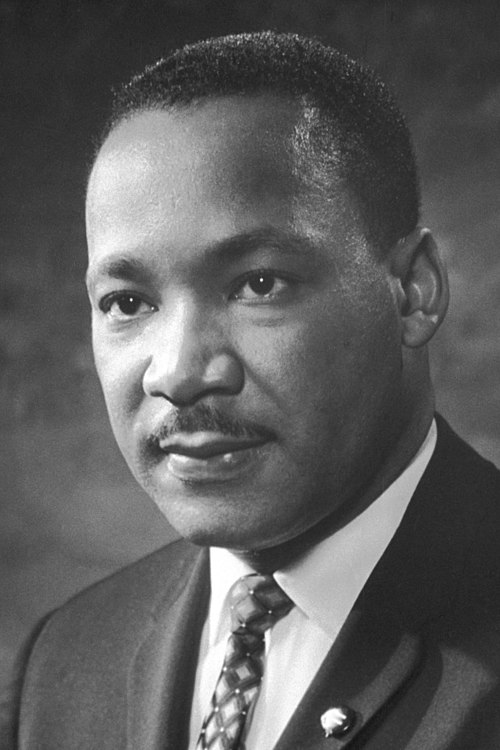
Martin Luther King Jr.
95Martin Luther King Jr. was an American Baptist minister and civil rights leader who championed nonviolent resistance to racial injustice and became the most prominent voice of the movement for equality in the United States.
Why The Civil Rights leader who inherited Garvey's mass movement energy and moral framework, though differing in strategy — King built on the foundation Garvey laid.

Mansa Musa
82Mansa Musa was the ruler of the Mali Empire at its height in the 14th century, remembered as one of the wealthiest individuals in history and famed for a lavish pilgrimage to Mecca that announced West Africa's riches to the world.
Why The medieval African ruler whose wealth and power symbolized the Africa of greatness that Garvey urged Black people to reconnect with and rebuild.

Frederick Douglass
84Frederick Douglass was an American abolitionist, orator and writer who escaped slavery to become the most powerful voice of the antislavery movement and one of the foremost advocates for equality and human rights in the 19th century.
Why Also a activist & orator · Active in the same era

Amelia Earhart
84Amelia Earhart was the American aviator who became the first woman to fly solo across the Atlantic in 1932, setting multiple speed and altitude records, and who disappeared over the Pacific in 1937 while attempting to become the first woman to circumnavigate the globe.
Why Also a activist · Active in the same era

Harriet Beecher Stowe
84Harriet Beecher Stowe was the American author whose novel Uncle Tom's Cabin (1852) galvanized the abolitionist movement in the North and became the best-selling novel of the 19th century, helping precipitate the Civil War.
Why Also a activist · Active in the same era