King · 1274 – 1329
Robert the Bruce
Key Takeaways
- Robert secured Scottish independence from England through military victory.
- His victory at Bannockburn (1314) was the decisive battle of the Wars of Scottish Independence.
- The Declaration of Arbroath (1320) is one of history's earliest statements of national sovereignty.
- Scottish independence was formally recognized by England in 1328.
Robert the Bruce won Scottish independence through perseverance after catastrophic defeat. He had submitted to England, had his allies executed, and faced near-total military collapse — and he came back to win.
The struggle
Robert was crowned King of Scotland in 1306, immediately defeated by the English, and spent months as a fugitive in the western islands and Ireland. He returned, rebuilt his forces through guerrilla warfare, and recaptured castle after castle. When Edward II invaded with a massive army in 1314, Robert met him at Bannockburn — and won a decisive victory over a force that had him outnumbered roughly three to one. The English army was routed; English claims to Scotland’s submission collapsed.
The Declaration and the treaty
The Declaration of Arbroath (1320) — a letter from Scotland’s nobility to the Pope asserting Scottish sovereignty — contains one of history’s most celebrated statements of freedom: “For as long as a hundred of us remain alive, we will never on any conditions be brought under English rule.” After years of raiding and negotiation, England formally recognized Scottish independence in the Treaty of Edinburgh-Northampton (1328). Robert died the following year, having achieved his life’s work. William Wallace had lit the spark; Robert carried it to victory.
Crowned king of Scotland, led the Scottish resistance against English domination, won the decisive Battle of Bannockburn (1314), and secured Scottish independence through the Declaration of Arbroath and the Treaty of Edinburgh-Northampton.
Military Feats
- Won the Battle of Bannockburn (1314) against Edward II's much larger English army.
- Conducted guerrilla warfare across Scotland for years before the decisive victory.
- Led raids into northern England to force peace terms.
Political Achievements
- Reunited the Scottish nobility around his kingship.
- Secured the Declaration of Arbroath (1320) — a letter to the pope asserting Scottish sovereignty.
- Achieved recognition of Scottish independence in the Treaty of Edinburgh-Northampton (1328).
Historical influence score: 83/100
Influence
Robert the Bruce established Scottish independence and identity, creating the political foundation for the distinct Scottish nation that would eventually merge with England only through negotiated union in 1707.
Legacy
Scotland's greatest king, celebrated in Robert Burns's poem 'Scots Wha Hae' and the Declaration of Arbroath's ringing statement of liberty — his legacy inspired Scottish nationalism for seven centuries.
Little-Known Facts
- The legend of the spider — that a spider's patient perseverance after repeated failure inspired Robert to try again after defeats — has no contemporary source but has become inseparable from his story.
- His heart was reportedly carried on crusade to the Holy Land by Sir James Douglas after his death, as Robert had requested — though Douglas died in Spain before reaching Jerusalem.
Myths & Misconceptions
Was Robert always committed to Scottish independence?
He actually submitted to English authority multiple times early in the wars and initially competed against William Wallace rather than supporting him — his commitment to independence developed and solidified over years of conflict and personal transformation.
Connections
Frequently Asked Questions
Who was Robert the Bruce?
Robert the Bruce (1274–1329) was the Scottish king who won Scottish independence from England, defeating Edward II at Bannockburn in 1314 and securing recognition of sovereignty in 1328.
Citations & Sources
People Like Robert

William Wallace
82William Wallace was the Scottish knight who led the first great uprising against English rule, winning the Battle of Stirling Bridge in 1297, serving as Guardian of Scotland, and enduring a brutal execution that made him the enduring martyr-hero of Scottish independence.
Why His predecessor in the Scottish independence struggle, whose rebellion Robert eventually continued and brought to successful conclusion.
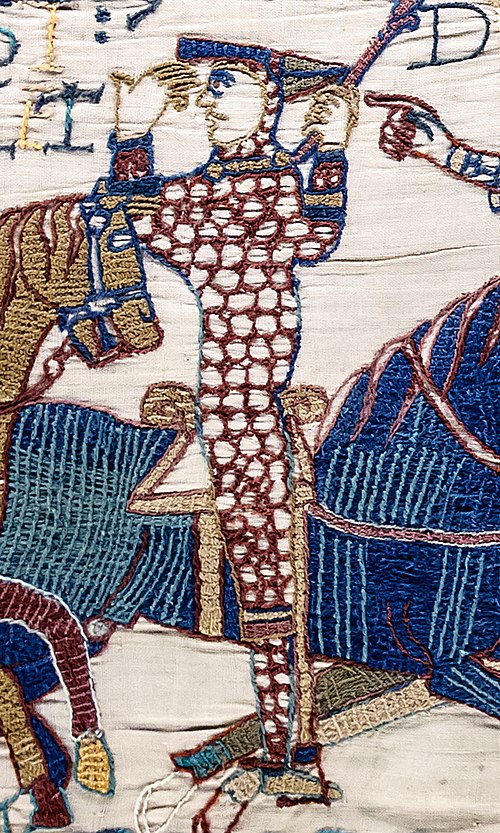
William the Conqueror
84William the Conqueror was the Duke of Normandy who invaded England in 1066, won the Battle of Hastings, and became its king, transforming English society, language and government in one of the most consequential conquests in history.
Why The Norman king whose conquest of England established the Anglo-Norman power whose domination of Scotland Robert eventually overthrew.

Richard the Lionheart
80Richard the Lionheart was the king of England and a leading commander of the Third Crusade, a warrior-king whose courage and skill in battle against Saladin made him one of the most famous monarchs of the Middle Ages.
Why An earlier English king in whose era the Scottish-English rivalry that Robert inherited was established.

Alfred the Great
80Alfred the Great was the king of Wessex who defended Anglo-Saxon England against the Vikings, reformed law, learning and defense, and is the only English monarch ever called "the Great".
Why Also a king & military leader · Active in the same era

Clovis I
80Clovis I was the king who united the Frankish tribes into a single kingdom and converted to Catholic Christianity, founding the Merovingian dynasty and laying the foundations of medieval France.
Why Also a king & military leader · Active in the same era

Charlemagne
89Charlemagne was the King of the Franks who united much of Western Europe and was crowned Emperor in 800 AD, reviving the idea of a Roman empire in the West and sparking a cultural revival.
Why Also a ruler & king · Active in the same era