General · 585 – 642
Khalid ibn al-Walid
If you're interested in Khalid ibn al-Walid, these historical figures share a similar impact, discipline, philosophy, or era. Each recommendation explains why the connection exists.
Similar Impact & Significance

Umar ibn al-Khattab
84Umar ibn al-Khattab was the second Rashidun caliph, one of the most powerful and influential leaders in Islamic history, under whom the early Muslim state expanded into a vast empire and developed its foundational institutions of government.
Why The caliph under whom Khalid won many of his greatest victories.

Hannibal Barca
91Hannibal Barca was a Carthaginian general regarded as one of the greatest military commanders in history, famed for crossing the Alps with war elephants to invade Italy during the Second Punic War.
Why Another commander of antiquity ranked among the greatest military minds in history.

Saladin
86Saladin was a Kurdish Muslim sultan who founded the Ayyubid dynasty, united Egypt and Syria, and famously recaptured Jerusalem from the Crusaders, earning renown even among his enemies for his chivalry.
Why A later celebrated Muslim general who, like Khalid, became a legend of Islamic military history.

Scipio Africanus
81Scipio Africanus was a Roman general who defeated Hannibal at the Battle of Zama to win the Second Punic War, one of the greatest commanders of antiquity and the savior of the Roman Republic in its darkest hour.
Why Also a general & military leader · Comparable historical impact

Mehmed II
88Mehmed II was the Ottoman sultan who conquered Constantinople in 1453, ending the Byzantine Empire and the Middle Ages, transforming the city into Istanbul and making the Ottoman Empire the dominant power of the Eastern Mediterranean.
Why Also a military leader · Comparable historical impact

Tamerlane
81Tamerlane was a Turco-Mongol conqueror who built a vast empire from Central Asia, the last of the great steppe conquerors, whose brilliant and brutal campaigns made him master of much of the Islamic world while his capital Samarkand flourished.
Why Also a military leader · Comparable historical impact

Attila the Hun
80Attila the Hun was the fearsome ruler of the Hunnic Empire who terrorized the late Roman world in the 5th century, leading devastating invasions across Europe that earned him the name the "Scourge of God".
Why Also a military leader · Comparable historical impact

Babur
81Babur was the Central Asian conqueror who founded the Mughal Empire, a descendant of Tamerlane and Genghis Khan who, after losing his ancestral lands, invaded India and established one of the greatest empires in its history.
Why Also a military leader · Comparable historical impact

Charles Martel
81Charles Martel was the Frankish military leader who halted the Muslim advance into Western Europe at the Battle of Tours in 732, laying the foundations of the Carolingian dynasty that his grandson Charlemagne would raise to empire.
Why Also a military leader · Comparable historical impact

Duke of Wellington
87The Duke of Wellington was the British general who defeated Napoleon Bonaparte at the Battle of Waterloo in 1815, ending the Napoleonic Wars, and who subsequently served as Prime Minister of Britain — the only man to hold both the highest military and civilian offices in British history.
Why Also a general · Comparable historical impact
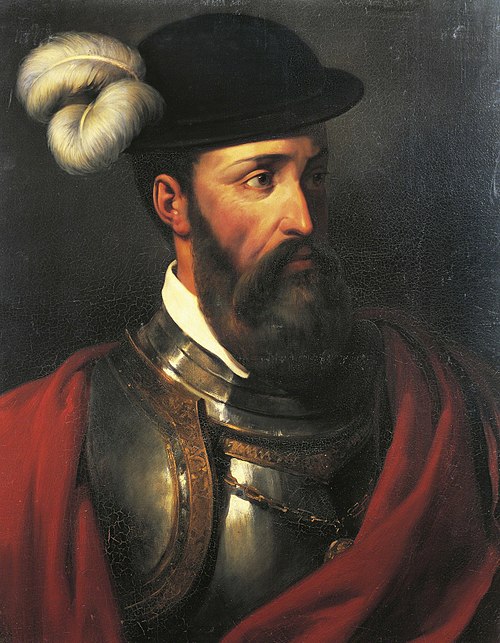
Francisco Pizarro
79Francisco Pizarro was the Spanish conquistador who conquered the Inca Empire, capturing and executing the emperor Atahualpa and seizing the riches of the Andes for Spain in one of the most consequential — and brutal — conquests in history.
Why Also a military leader · Comparable historical impact

Frederick the Great
83Frederick the Great was the king of Prussia who made it a major European power through brilliant generalship and enlightened reform, a warrior-king and patron of the arts who embodied the ideal of the "enlightened despot".
Why Also a military leader · Comparable historical impact

Geronimo
81Geronimo was the Apache leader whose decade-long guerrilla resistance against the United States and Mexico made him the most feared and pursued Native American fighter of the 19th century, requiring 5,000 US troops to finally capture 38 warriors.
Why Also a military leader · Comparable historical impact

Gjergj Kastrioti Skanderbeg
81Skanderbeg was the Albanian nobleman who defected from the Ottoman army, united the Albanian princes, and defended Albania against three decades of Ottoman campaigns — becoming the symbol of Albanian national identity and a celebrated Christian hero across 15th-century Europe.
Why Also a military leader · Comparable historical impact

Hernán Cortés
80Hernán Cortés was a Spanish conquistador who led the expedition that overthrew the Aztec Empire, bringing much of Mexico under Spanish rule and inaugurating centuries of colonial domination.
Why Also a military leader · Comparable historical impact

Joan of Arc
85Joan of Arc was a peasant girl who, believing herself guided by divine visions, led French forces to crucial victories in the Hundred Years' War before being captured, tried and burned at the stake — and later made a saint.
Why Also a military leader · Comparable historical impact

Leonidas I
80Leonidas I was a king of Sparta who led a small Greek force in a legendary last stand against the vast Persian army at the Battle of Thermopylae in 480 BC, becoming an enduring symbol of courage and sacrifice.
Why Also a military leader · Comparable historical impact

Mark Antony
80Mark Antony was a Roman general and statesman, a close ally of Julius Caesar who, after Caesar's assassination, ruled much of the Roman world and allied with Cleopatra, before his defeat by Octavian ended the Roman Republic for good.
Why Also a general · Comparable historical impact

Philip II of Macedon
82Philip II of Macedon was the king who transformed Macedon into the dominant power of Greece, reforming its army into a fearsome military machine and laying the foundations for the conquests of his son, Alexander the Great.
Why Also a military leader · Comparable historical impact

Pompey
80Pompey the Great was a Roman general and statesman, one of the leading figures of the late Republic, whose conquests in the East made him Rome's greatest soldier before he was defeated by Julius Caesar in a civil war that ended the Republic.
Why Also a general · Comparable historical impact

Ramesses II
84Ramesses II was the most powerful pharaoh of Egypt's New Kingdom, whose 66-year reign brought military campaigns, colossal building projects and a prosperity that earned him the title Ramesses the Great.
Why Also a military leader · Comparable historical impact

Richard the Lionheart
80Richard the Lionheart was the king of England and a leading commander of the Third Crusade, a warrior-king whose courage and skill in battle against Saladin made him one of the most famous monarchs of the Middle Ages.
Why Also a military leader · Comparable historical impact

Shaka Zulu
80Shaka Zulu was the founder and greatest king of the Zulu Kingdom, a military revolutionary whose new tactics and weapons transformed warfare in southern Africa and forged a small clan into a powerful nation.
Why Also a military leader · Comparable historical impact

Shivaji
80Shivaji was the warrior-king who founded the Maratha Empire in western India, a brilliant guerrilla commander who challenged the mighty Mughal Empire and built a state celebrated for its administration and naval power.
Why Also a military leader · Comparable historical impact